WHAT “ENERGY” MEANS HERE, AND WHY THE PHONE BAN MATTERS
If Transforming Energy has a thesis, it isn’t “Marina Abramović is important.” It’s that presence is scarce, and museums can become laboratories for reclaiming it.
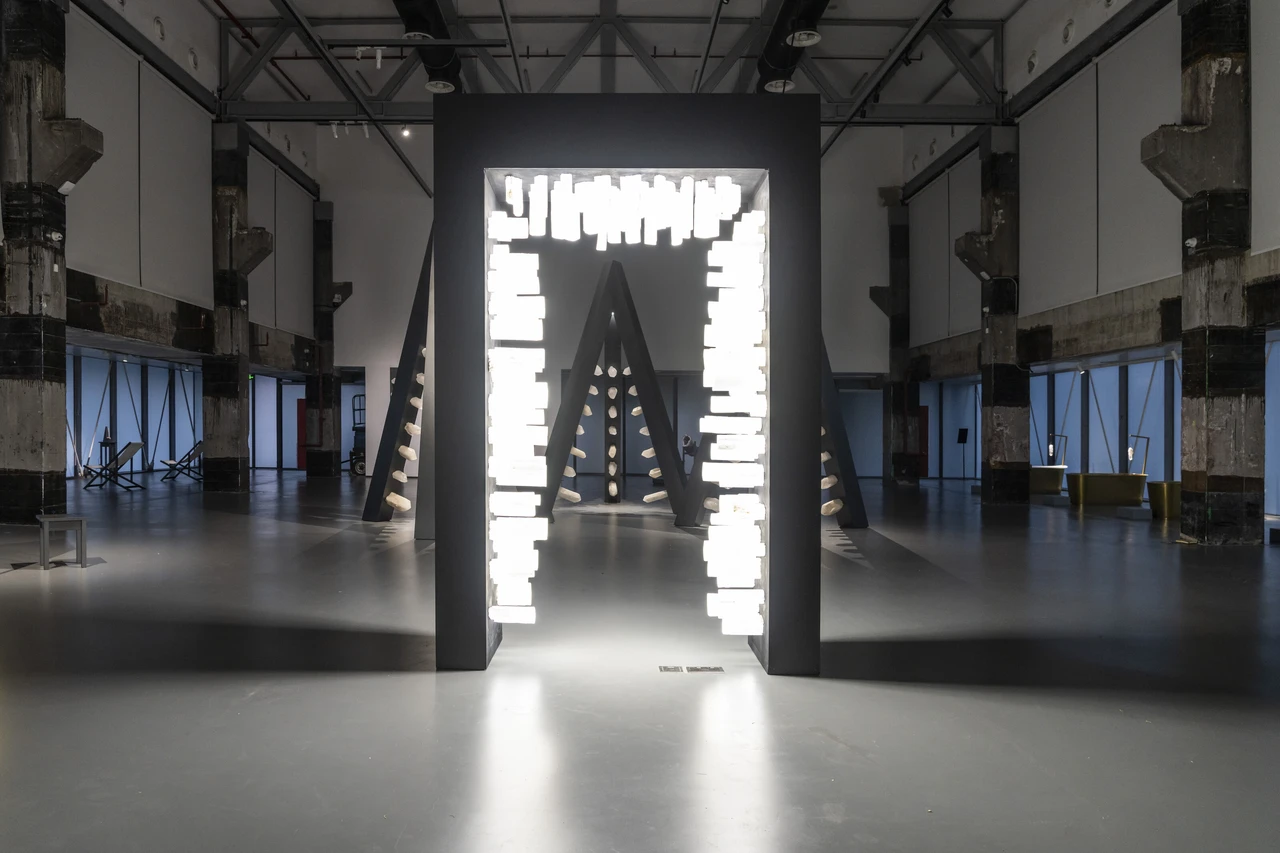
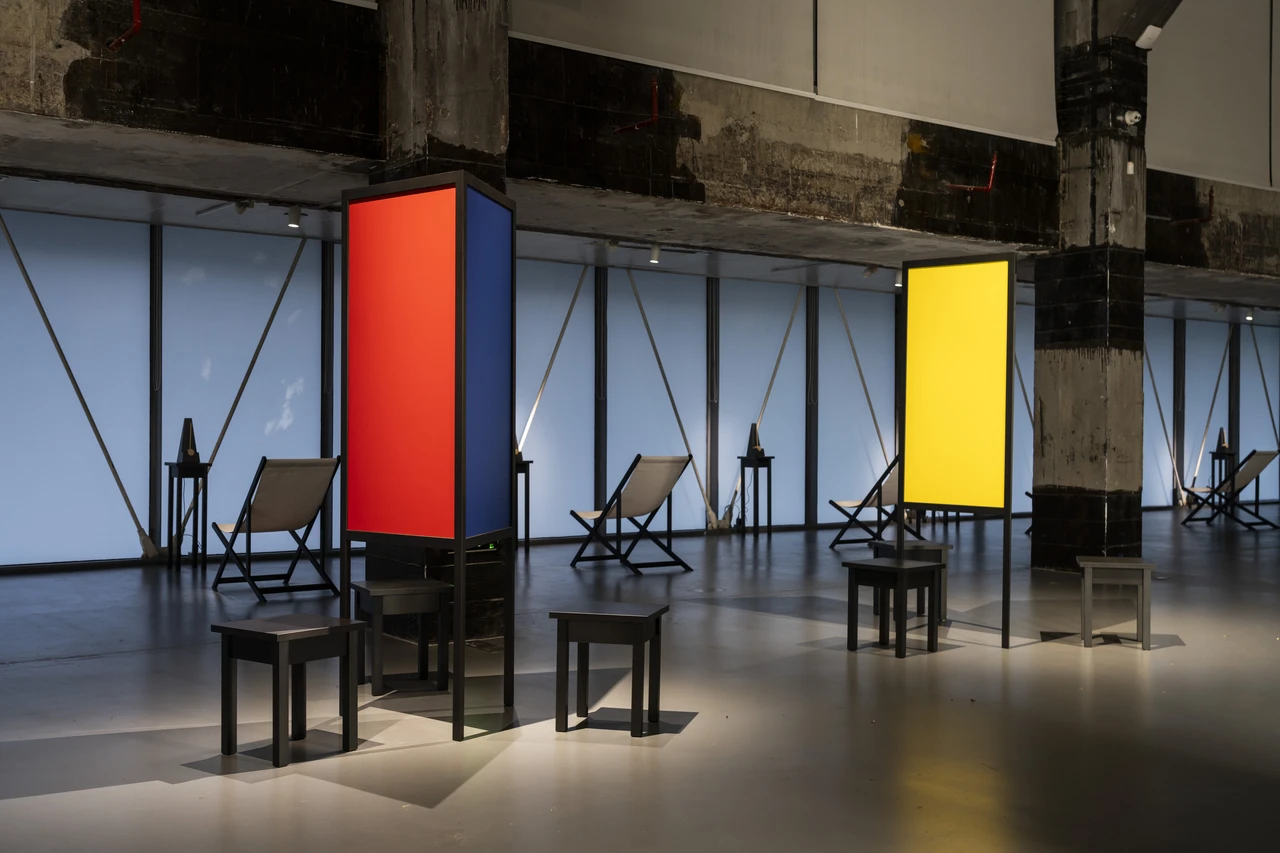
At the core is a set of interactive Transitory Objects, described in project materials as stone structures, including beds, embedded with crystals, meant to be activated by sitting, lying, or standing, in what Abramović calls a transmission of energy. Abramović insisted on language in the press conference: they are not sculptures. They are “transitory” because you experience the moment, and the object, she said, is “not necessary anymore.”
Baitel translated the idea into a three-part hierarchy: the structure is a setup for the minerals, the minerals are a setup for the energy, and the energy is the real takeaway. Abramović framed it as a refusal of compromise, not an avoidance strategy. "Performance is energy between performer and audience, immaterial, invisible, but deeply emotional." The point was to transfer that feeling.
In Shanghai, they added a rule that still lands like provocation: visitors had to “bend the telephone,” a detox from technology. Baitel called it “unheard of in China,” where technology is “part of their body.” Abramović reinforced the logic in Venice terms: arrive with an open mind, a willing soul, no telephone. Pocket your watch. Don’t calculate time. Surrender to the experience. Follow instructions. “I’m giving you experience if you give me time,” she said. “If you don’t give me time, I can’t give you anything.”
This is where the exhibition stops reading like spiritual décor and becomes an ethical demand. It asks for consent, not only to participate, but to be changed by an encounter you can’t scroll past.
THE SHANGHAI REHEARSAL, THE DISCIPLINE OF STRANGERS, AND THE MYTH OF THE LEGEND
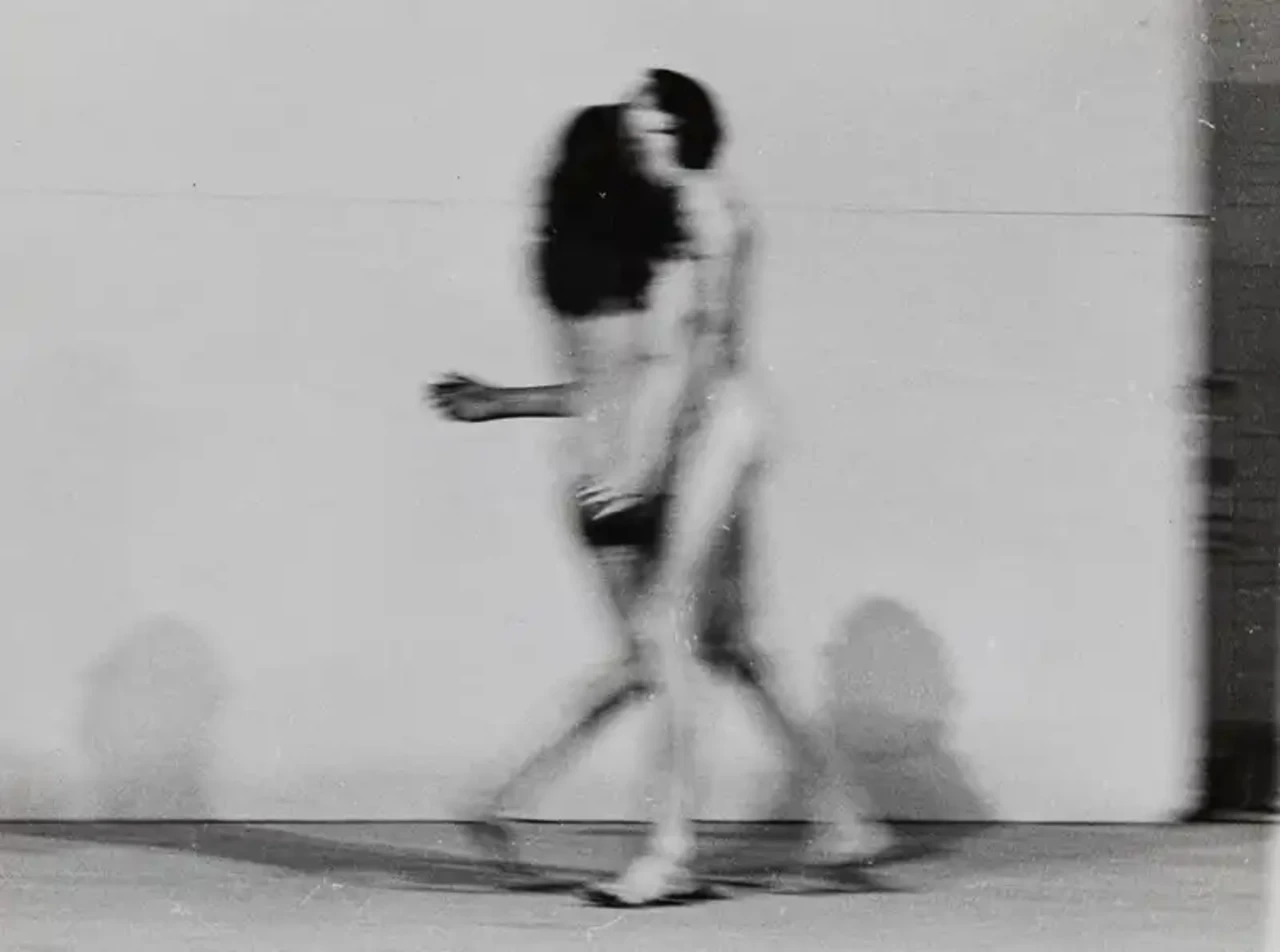
The press conference made clear just how carefully the Shanghai presentation was built. Baitel described a first section offering historical background: Abramović’s communist upbringing, her parents, what she read, what ideologies she absorbed, and how she became the artist she is. He described discovering a “treasure” of more than 3,000 images from The Great Wall Walk, never presented before, shown so audiences could understand what the show was built on.
Then came existing Transitory Objects from the past three decades, organized around positions of the body, lying, sitting, standing. Finally, a third zone Baitel called the “spa”: new Transitory Objects created for China and now traveling to Venice, larger in scale and ambition.
Abramović’s most telling anecdote wasn’t about fame. It was about time as discipline. She described a work with five metal doors. The instruction: stand in front of a door, slowly open it, but do not exit; then slowly close it, but do not enter. Repeat for three hours. People did it, she said. In her view, that willingness to submit to duration is something Western audiences increasingly lack.
Baitel added that Shanghai revealed Abramović has a large fan base in China. There were lines around the museum, and even longer waits for the third part of the exhibition, because visitors could stay as long as they wanted. Abramović noted her biography, Walking Through Walls, was translated into Mandarin, and she refused to call visitors “the public.” They were “friends.” The show wasn’t made to be watched. It was made to be inhabited.
THE MYTH PIECES RETURN, AND THE MUSEUM BECOMES THE MIRROR
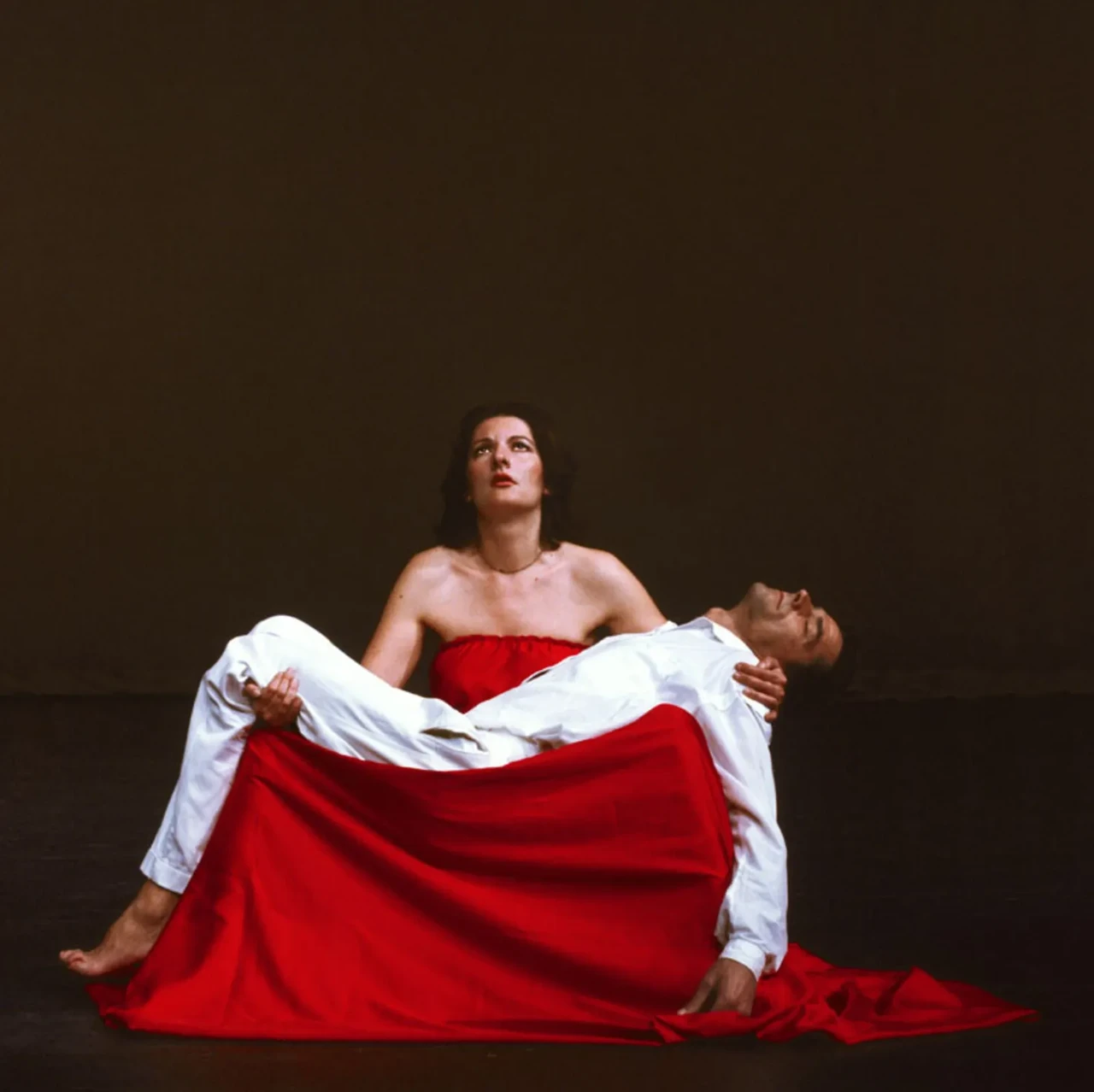
The Venice project isn’t limited to Transitory Objects. Materials list a constellation of canonical works: Rhythm 0 (1974), Imponderabilia (1977), Light/Dark (1977), Balkan Baroque (1997), Carrying the Skeleton (2008), alongside projections of historic performances and new creations made for the occasion. Baitel confirmed that, compared with Shanghai, Venice is adding artworks from Abramović’s history, including performance pieces and videos, to offer a fuller story.
This is where the Accademia context shifts from prestigious to dangerous. In a museum built for contemplation, Rhythm 0 changes its charge. The work is often reduced to the mythology of its premise: a table of objects, a body offered to the public’s will, a social experiment that still makes people flinch. Placed amid centuries of painted bodies, the question sharpens. It’s no longer only “what did Abramović do.” It becomes: what do we do when permission is given?
And Balkan Baroque, already tied to Venice through the Golden Lion of 1997, returns with an additional layer: time. A work about war memory and bodily endurance now sits inside a city that sells beauty as commodity, and inside a year when the artist herself is turning 80. The museum becomes a mirror, not for the past, but for the kind of spectator we’ve become.