THE ELEGANCE OF SURFACE, THE MODERNITY OF MYTH: ERTÉ

THE ELEGANCE OF SURFACE, THE MODERNITY OF MYTH: ERTÉ

Labirinto della Masone hosts Erté’s Art Deco universe, where fashion, theater, and print turn style into a way of thinking about the image-saturated present.

ALESSIA CALIENDO

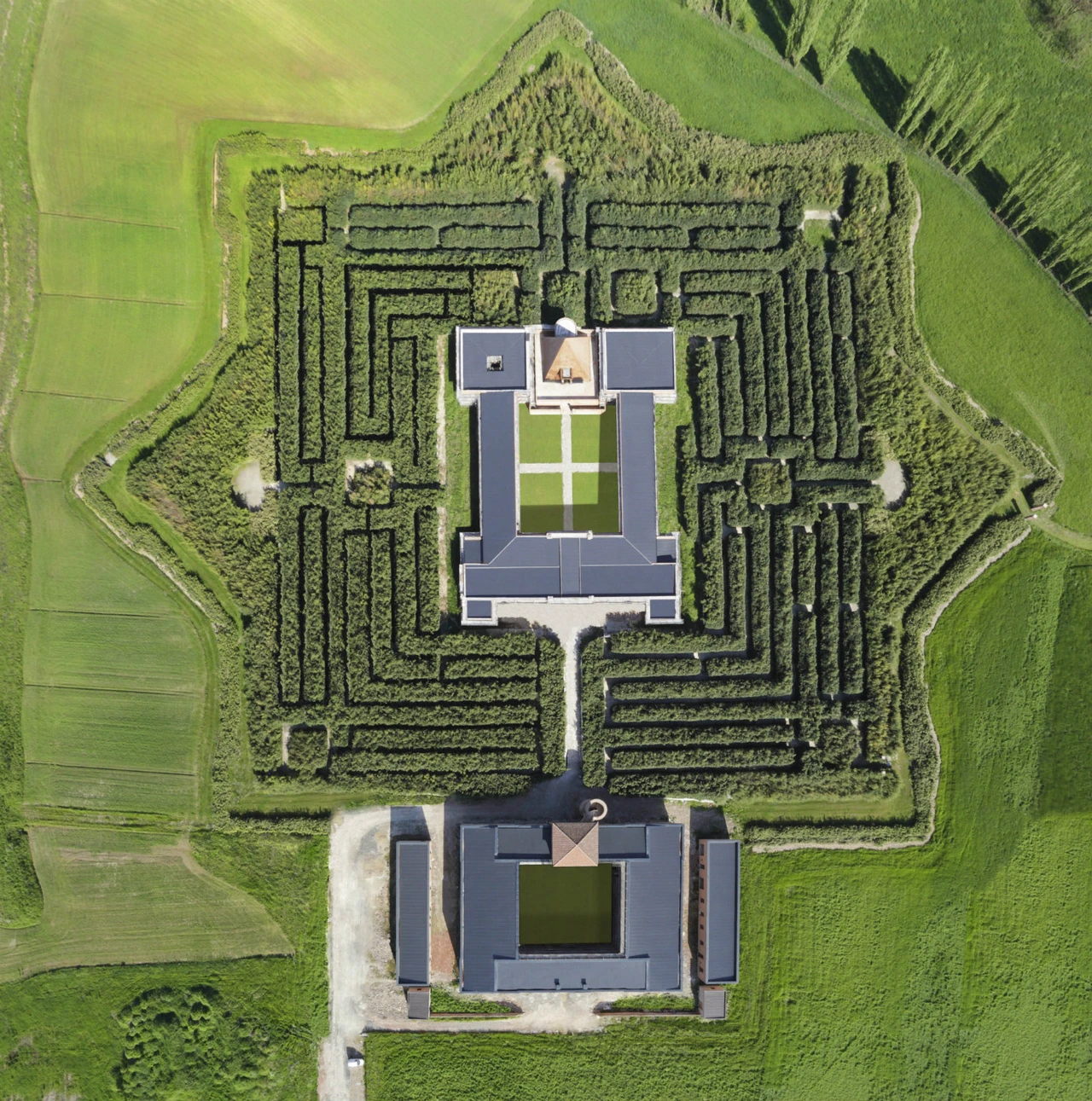
A labyrinth, the world’s largest built from bamboo, invites you to get lost with pleasure, then asks you to look closely at what we too quickly dismiss as appearance. In spring 2026 (March 28 to June 28, 2026), the Labirinto della Masone in Fontanellato (near Parma, Italy) hosts Erté. Lo stile è tutto, curated by Valerio Terraroli and organized by Elisa Rizzardi. The show is not simply a revival. It returns his universe to a moment when surface has again become the main stage where identity, desire, and power negotiate their shapes.


WHY ERTÉ, WHY NOW


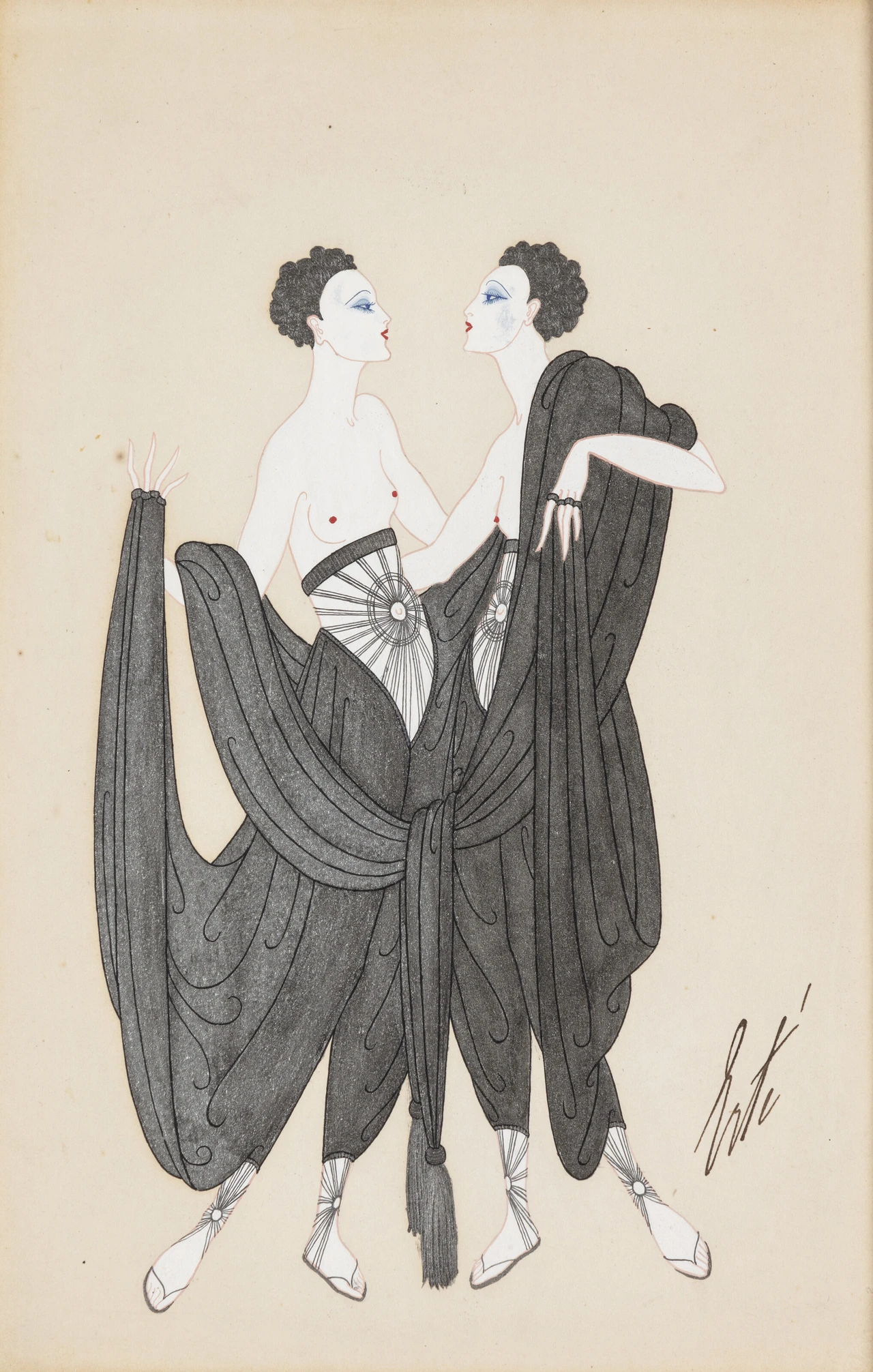
Erté, born Roman Petrovič Tyrtov (St. Petersburg, 1892; Paris, 1990), built a career on disciplined seduction. A polymath by training and temperament, he moved between fashion illustration, set design, costume, and jewelry, and his work now sits in institutions from the Metropolitan Museum of Art in New York to the Victoria and Albert Museum in London. His women stretch into symbols, his ornament is never random, his elegance precise rather than soft. Today, when the digital image edits bodies and biographies in real time, that precision feels newly legible. The exhibition leans into his most fertile decades, from the 1910s through the 1930s, when his vocabulary crystallized. Art Deco, too often treated as an ornamental interlude, reads today as a parallel modernity with its own ethics. It did not destroy the past; it refined it. It did not reject the market; it learned how to speak inside it.

Erté becomes paradigmatic here because his work concentrates the tensions of the interwar years: art and industry, emancipation and spectacle, myth and consumption, elegance and crisis. The uncomfortable question follows naturally: is he the ultimate celebrant of surface, or an inadvertent analyst of the society of images that was just being born?
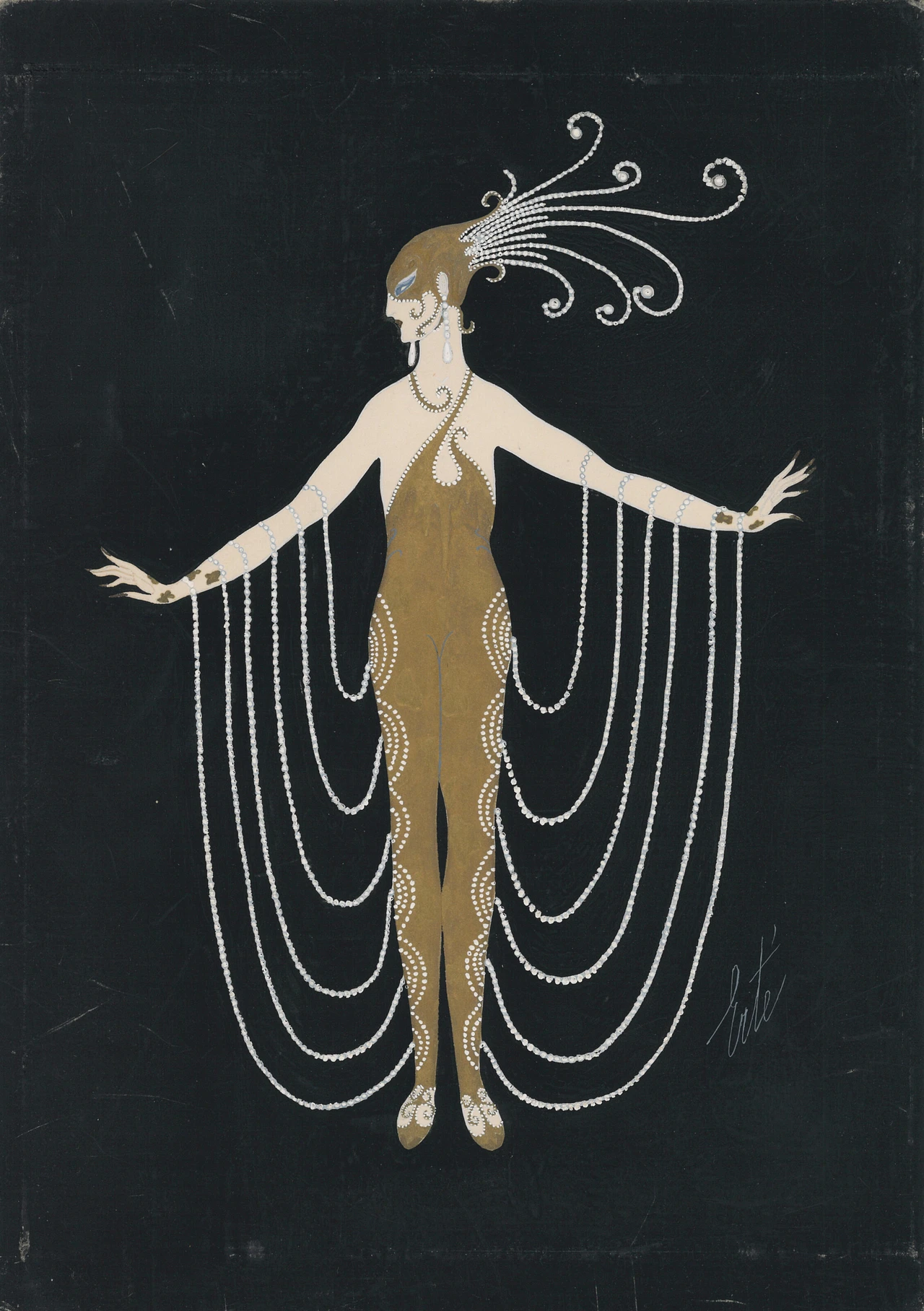
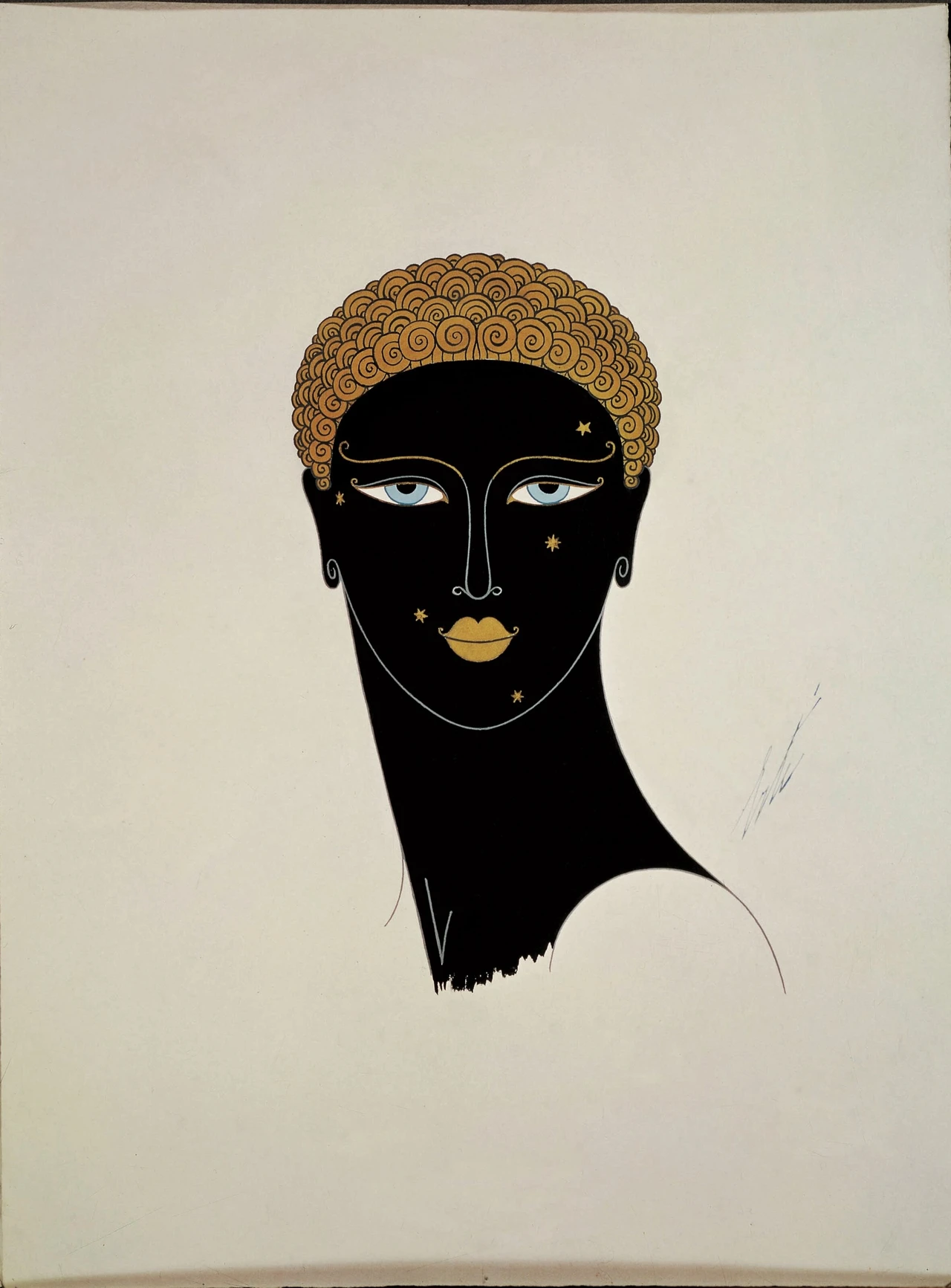
On the left: Erté – Romain de Tirtoff (1892–1990), Mannequin Head for Pierre Imans in “The Queen of Sheba,” 1927. Franco Maria Ricci Collection, Labirinto della Masone, Fontanellato (PR), © Chalk & Vermilion LLC / SIAE. On the right: Erté – Romain de Tirtoff (1892–1990), The Luminous Genie of Aladdin’s Lamp, “The Thousand and Second Night of Baghdad,” The Marvelous Orient, 1917. Private collection, Milan, © Chalk & Vermilion LLC / SIAE. 


A SIGNATURE INVENTED AS A SELF


His pseudonym is an artwork in miniature. In Paris, Tyrtov naturalized his name into Romain de Tirtoff, then turned his initials, R.T., into the French sound Erté. It is a modern gesture—identity as design, biography becoming a graphic sign that can travel across magazines, theaters, and shop windows. This self-invention is not destructive. It is selective, a belief that the future can be built by refining the line rather than breaking it.

The apprenticeship with Paul Poiret (1913 to 1914) is a threshold. Poiret transformed fashion into theater, the runway into an event, the garment into a statement about how a body should move through a room. Erté absorbed that lesson and pushed it toward abstraction. In his drawings, clothing is not simply worn; it becomes architecture—sometimes a column, sometimes a small temple, sometimes an ideogram. The result is a form of total art that is not utopian, but worldly: art entering daily life through elegance, and turning discipline into pleasure.


HARPER’S BAZAAR, SERIALITY, AND THE PERSISTENCE OF AURA


In 1915, Erté began his long collaboration with Harper’s Bazaar, producing around two hundred covers up to 1937. The magazine’s seasonal rhythm could have forced sameness. Instead, it sharpened a recognizable language, each cover a variation on a single proposition: the modern woman as icon. Inside mass reproduction, he preserved coherence.

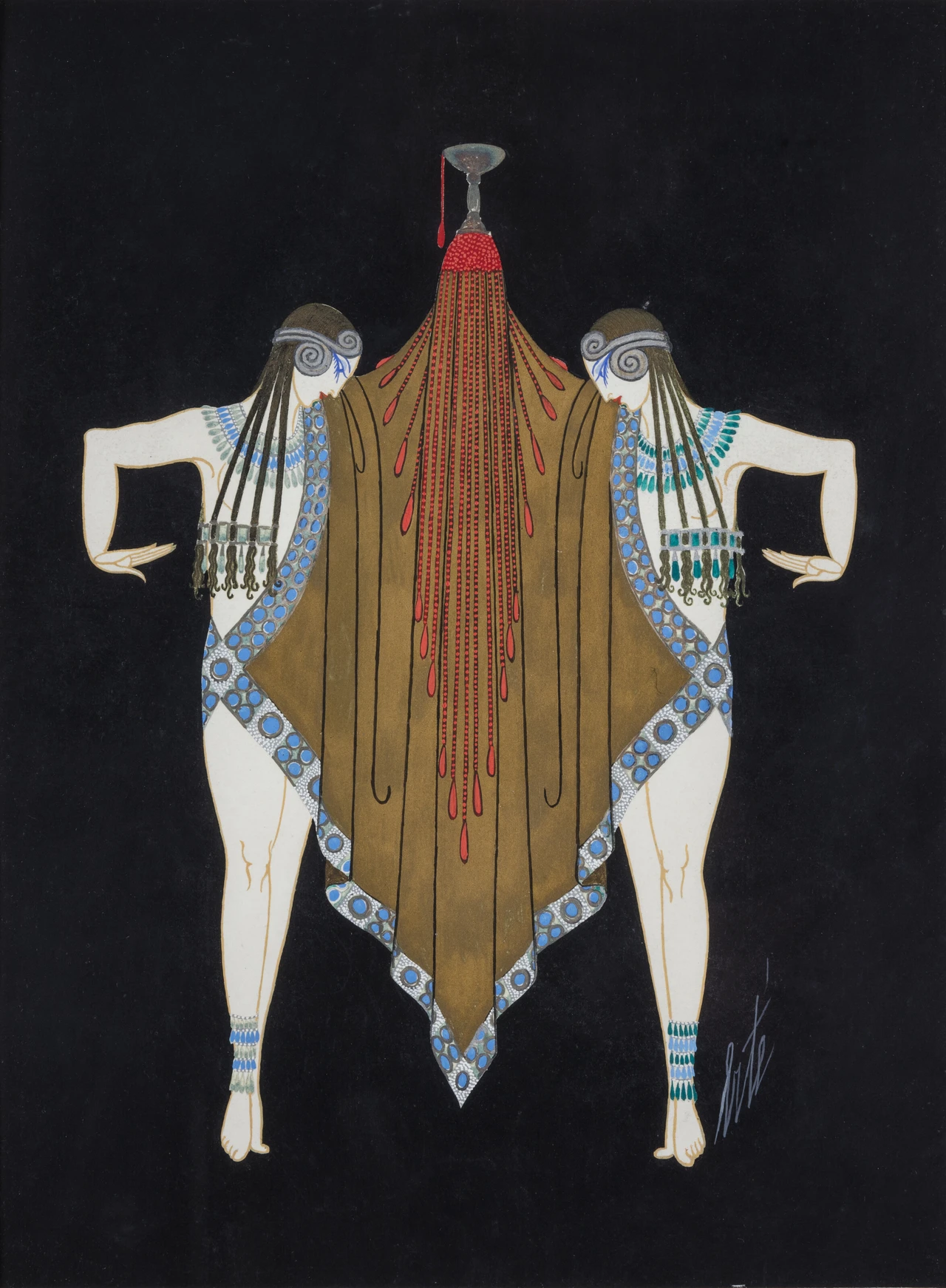
From print, the line moves into space. Erté designed sets and costumes for legendary figures such as Mata Hari, Marion Davies, and Mistinguett, and for productions that shaped popular imagination, including the Folies Bergère. He reached New York in 1922, collaborating for years with producer George White, and arrived in Hollywood in 1925 to create scenes and costumes for silent films. These environments were not neutral entertainment. They helped manufacture the modern star system, with the diva at its center.

Terraroli notes that the Deco world Erté embodied—glittering, disinhibited, erotically ambiguous, and exquisitely refined—would soon be swept away by Europe’s political collapse and the Second World War. That fragility matters. It reminds us that style can be both shelter and symptom, a form of order built against instability.

On the left: Erté – Romain de Tirtoff (1892–1990), Les Fleurs du Mal: The Vanilla Pods, 1916, ink and tempera on board, 27 × 18.5 cm. Franco Maria Ricci Collection, Labirinto della Masone, Fontanellato (PR), © Chalk & Vermilion LLC / SIAE. On the right: Erté – Romain de Tirtoff (1892–1990), Group Advancing Before Salomé, design for “Bacchanale,” 1927, tempera on paper, 38.5 × 28.5 cm. Franco Maria Ricci Collection, Labirinto della Masone, Fontanellato (PR), © Chalk & Vermilion LLC / SIAE. 

WOMEN AS ABSTRACTION, SURFACE AS ONTOLOGY


Erté’s female figures live between two readings that refuse to settle. On one side, they can look like objectified ornament. On the other, they appear as autonomous emblems, bodies turned into signs that do not ask for intimacy. The ambiguity is structural, and that is why he remains contemporary. In a culture where selves are curated and performed, surface does not hide essence; it often replaces it. Style becomes ontological, a way of being, not just a way of dressing.

Presenting Erté inside Franco Maria Ricci’s labyrinth is more than a picturesque choice. A labyrinth is a figure of modern experience: desire without straight lines, meaning reached through detours. Ricci’s complex, open since 2015 and spread across eight hectares, was born from a promise he made in 1977 to Jorge Luis Borges, who loved the labyrinth as both esoteric sign and metaphor of the human condition. The exhibition, designed by Maddalena Casalis, gathers over 150 works, from drawings and pochoir to lithographs, photographs, documents, and film materials. Twenty-eight works come from the Franco Maria Ricci collection, recently expanded with four additional drawings that will be shown here, alongside significant loans from Italian and international private collections and the Victoria and Albert Museum in London.

Ricci’s bond with Erté is also editorial. In 1970, he published a major Italian monograph on the artist for I segni dell’uomo, with a text by Roland Barthes and Erté’s own recollections. Barthes argued that Erté’s mythology is so complete it suspends the usual question: did the artist invent the woman of his time, or did he simply capture her? That suspension is precisely the point. Erté is both witness and founder, both recorder and producer of an image regime.

Labirinto della Masone

A CONTEMPORARY ECHO, CUT FROM PAPER


To underline that this is not a closed chapter, the exhibition includes three creations by Caterina Crepax, an artist trained as an architect who makes paper garments that function as sculptures. For this show, she created three new dresses inspired by three Erté sketches, a dialogue across a century where preciousness shifts from fabric to idea, from atelier to conceptual construction. It insists that surface is still a field of experimentation, not a relic.

Erté forces a rethink of the old modernist prejudice against ornament. In his work, luxury is not excess; it is control: an economy of line, calibrated voids, color disciplined into hierarchy. His greatness is not rupture; it is coherence. In a century obsessed with breaking forms, he chose the continuous line and built an entire mythology on its surface. Today, that choice feels less like escapism and more like a lens. The exhibition leads you back to the same question: what do we do with the images that do not merely represent us, but actively make us?

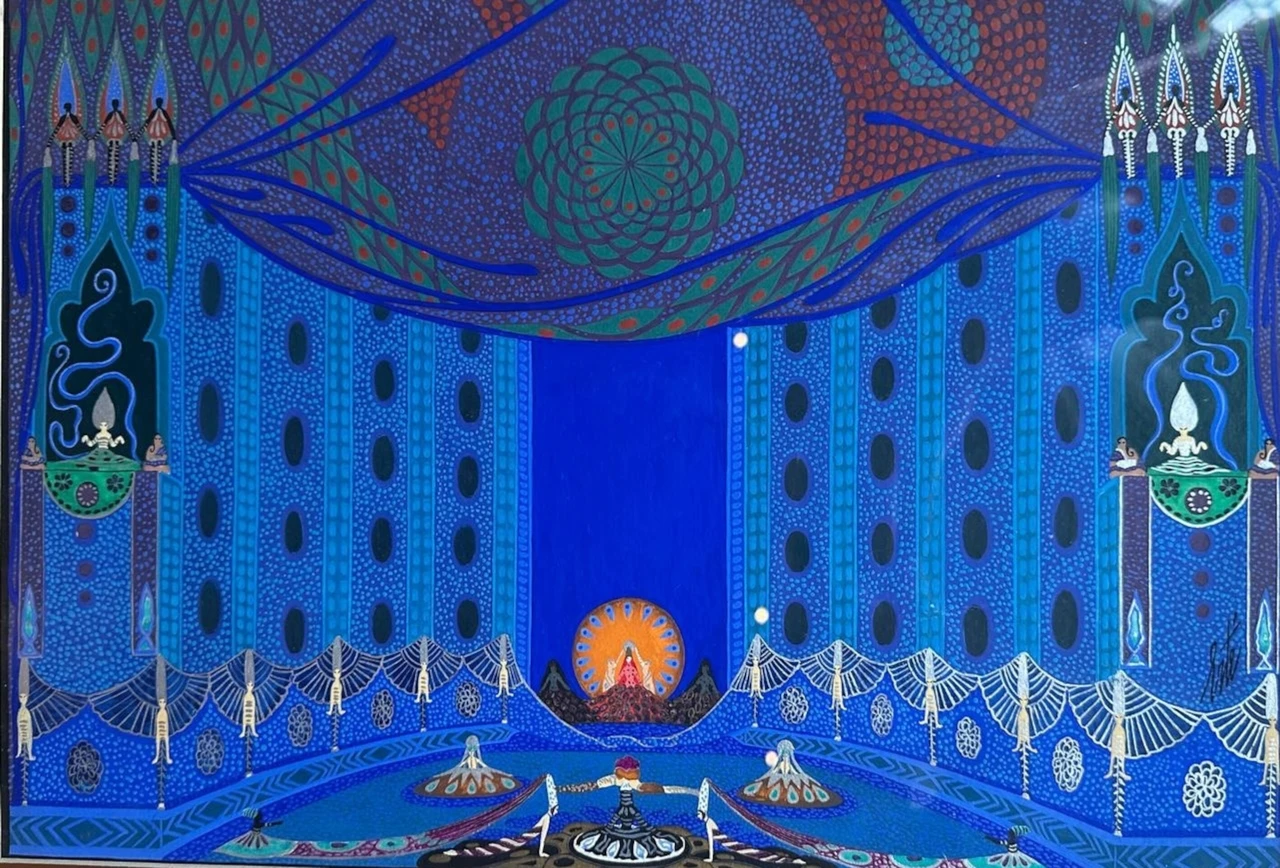
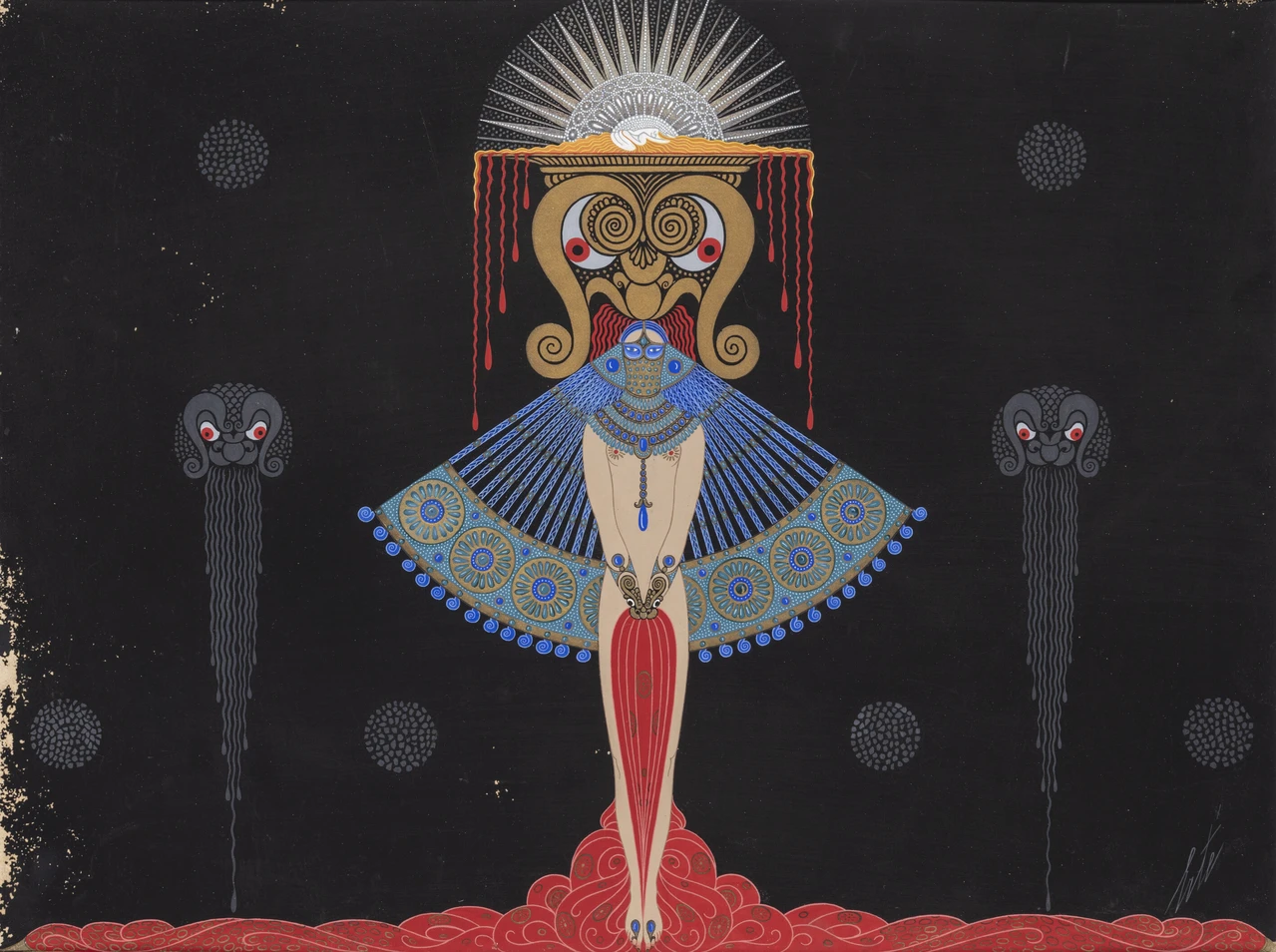
Erté – Romain de Tirtoff (1892–1990), Set Design, Hindu Count, Folies Bergère, 1922, gouache on paper, 51 × 41 cm. Private collection, London, © Chalk & Vermilion LLC / SIAE. On the cover : Erté – Romain de Tirtoff (1892–1990), Salomé, 1926. Franco Maria Ricci Collection, Labirinto della Masone, Fontanellato (PR), © Chalk & Vermilion LLC / SIAE.

Subscribe to our free newsletter!