ARMANI AFTER ARMANI. THE QUIET POWER OF A HOUSE THAT REFUSES TO SHOUT

ARMANI AFTER ARMANI. THE QUIET POWER OF A HOUSE THAT REFUSES TO SHOUT

The first menswear chapter after Giorgio Armani leans into cangiante light, jewel tones, and tactile surfaces, proving a legacy can evolve without raising its voice.

ALESSIA CALIENDO

It rarely happens in fashion, that moment when the room is waiting for a crack. At Armani, the crack never came. Instead, the clothes caught the light and changed, slightly and insistently, like a surface that refuses to be pinned down.

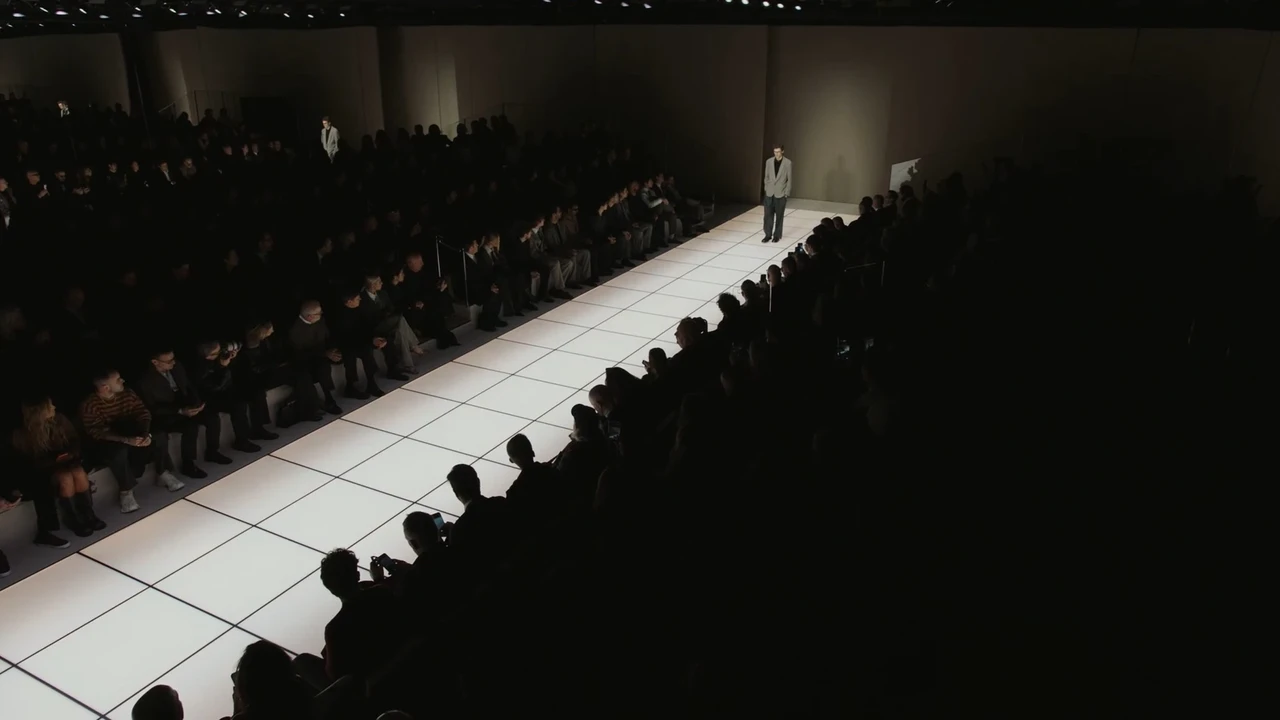
Cangiante is an Italian word used to describe things that appear consistent, yet shift depending on angle and light. For Fall/Winter 2026–2027, it became Armani’s headline, and not only because the collection leaned into iridescent, silk-rich textures. There’s a deeper reason the term resonated. This show, presented at the close of Milan Fashion Week, was the first menswear runway staged without Giorgio Armani’s direct involvement, following his death in September 2025. In other houses, that kind of threshold invites a loud reset. Here, the message was quieter and more strategic: the codes remain, but the surface is allowed to move.


COLOR AS A SIGNAL, NOT A SURRENDER


If you want the headline in one glance, it's color. Not the kind that performs for a camera, but the kind that earns its place through restraint.

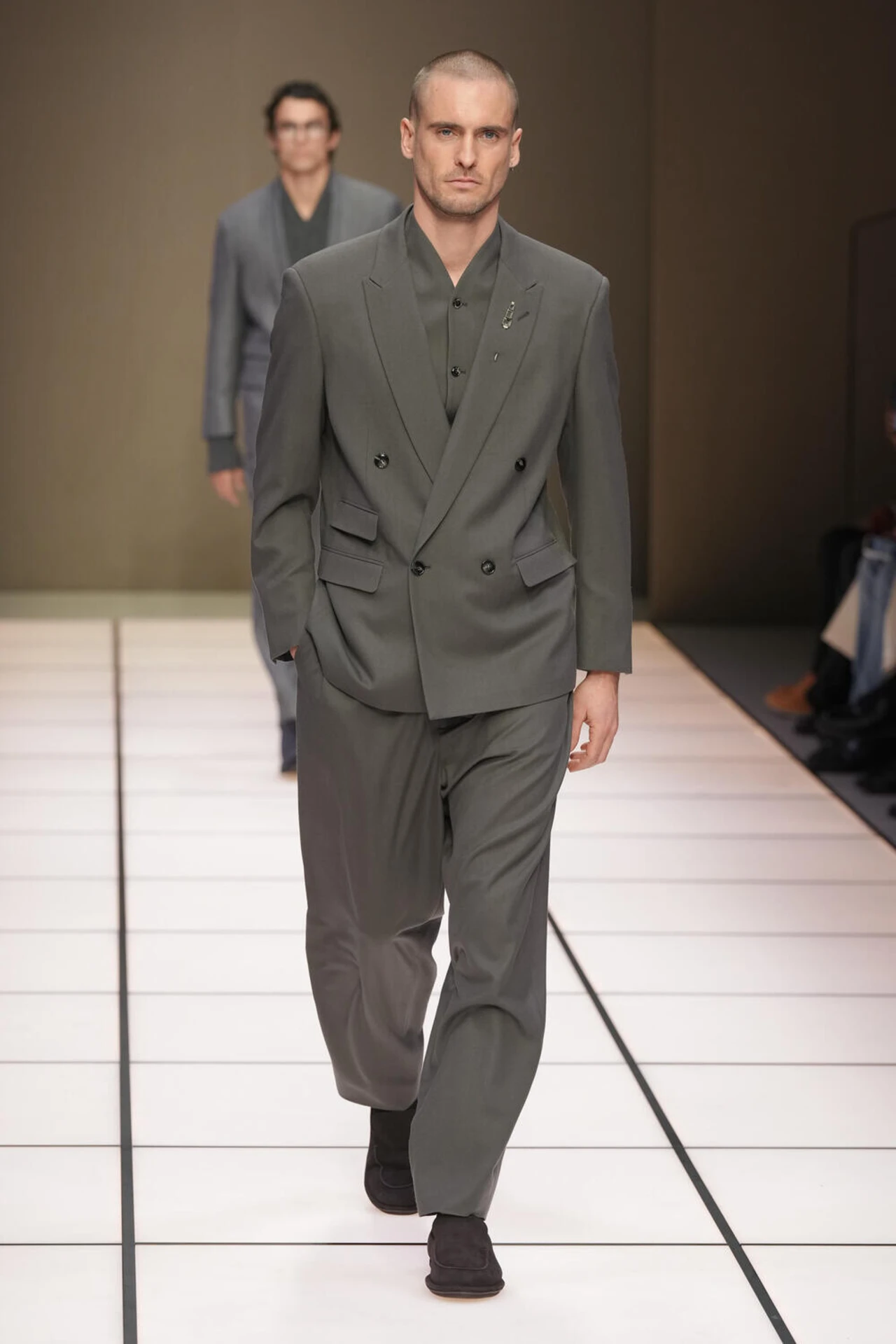
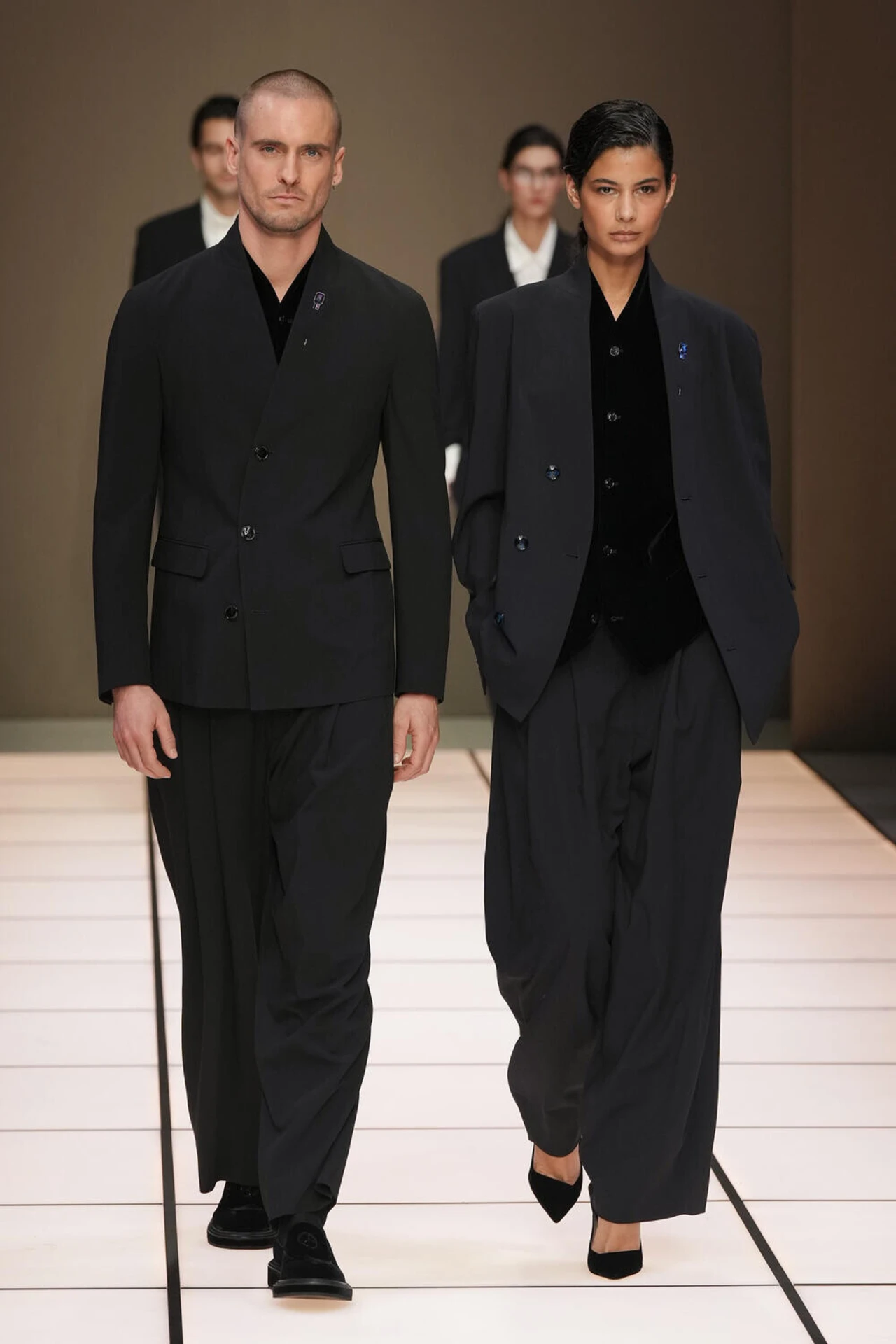
Jewel tones, amethyst, lapis, sapphire, and a steady olive,appeared against Armani’s familiar architecture of grays, inky blues, sand, and black.

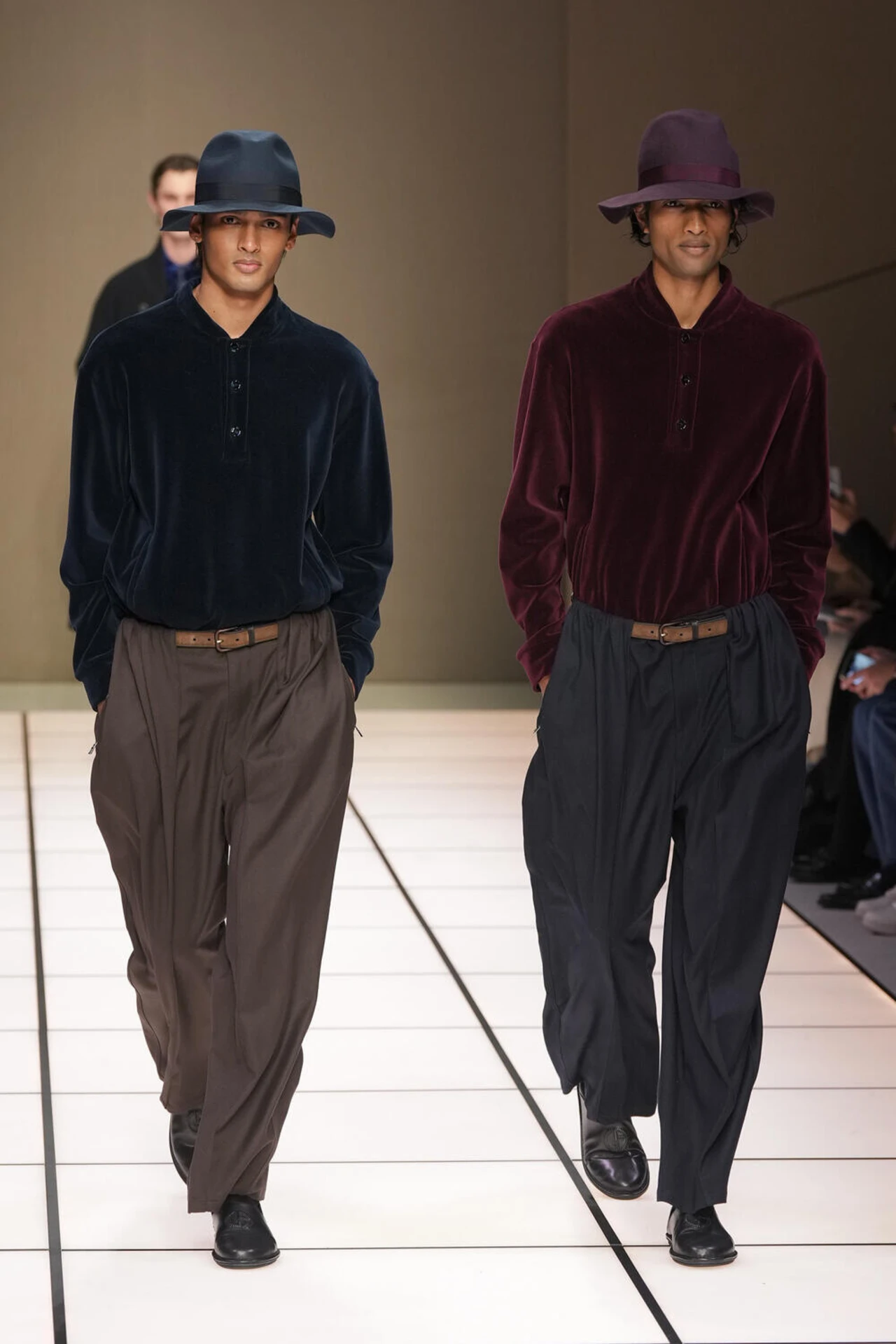
That matters because Armani’s authority has long lived in understatement, in the famously tempered spectrum some call greige. The shift away from that signature neutrality, even if partial, reads like a decision. A house in transition can either overexplain itself, or it can let a lapis velvet jacket do the talking.
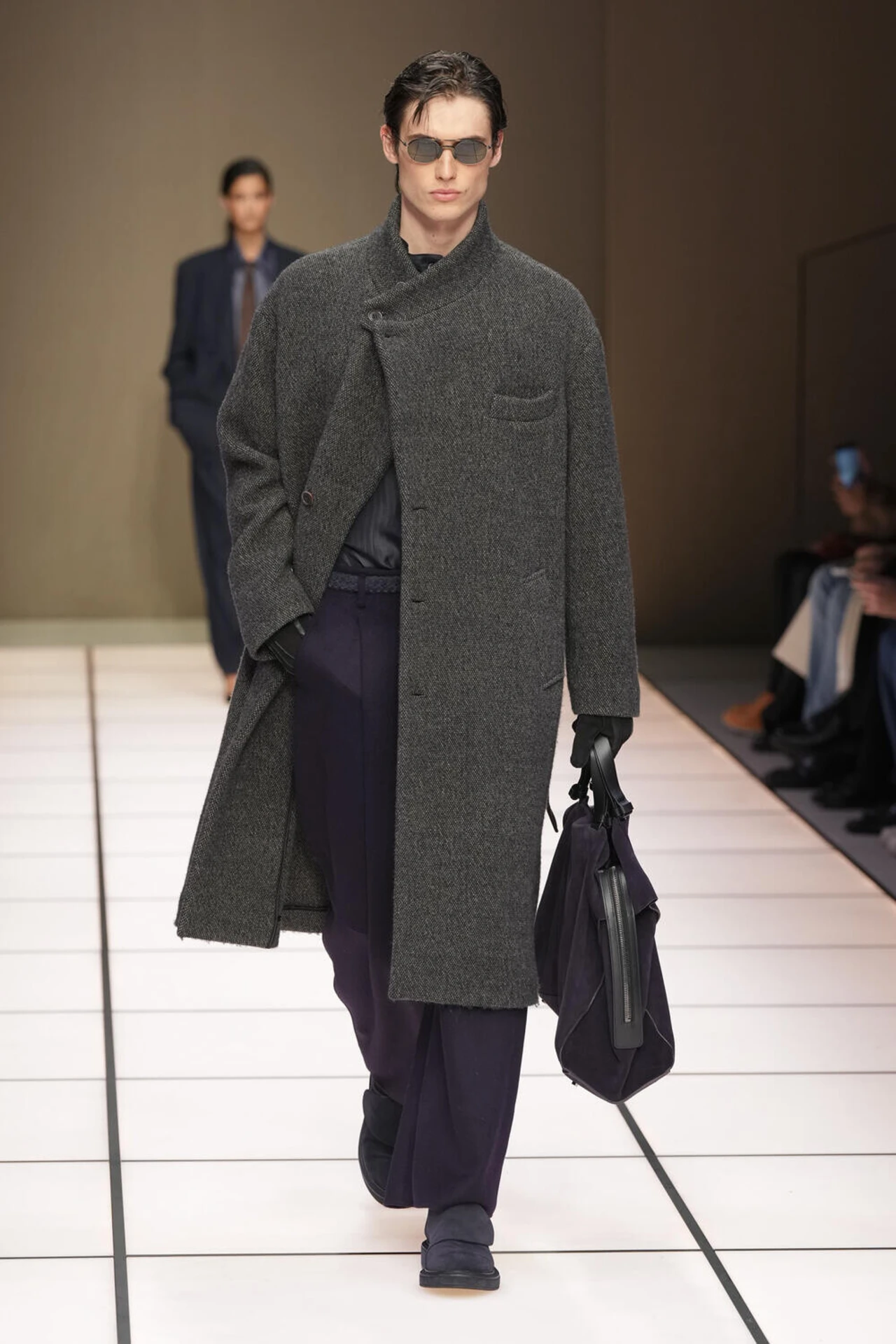
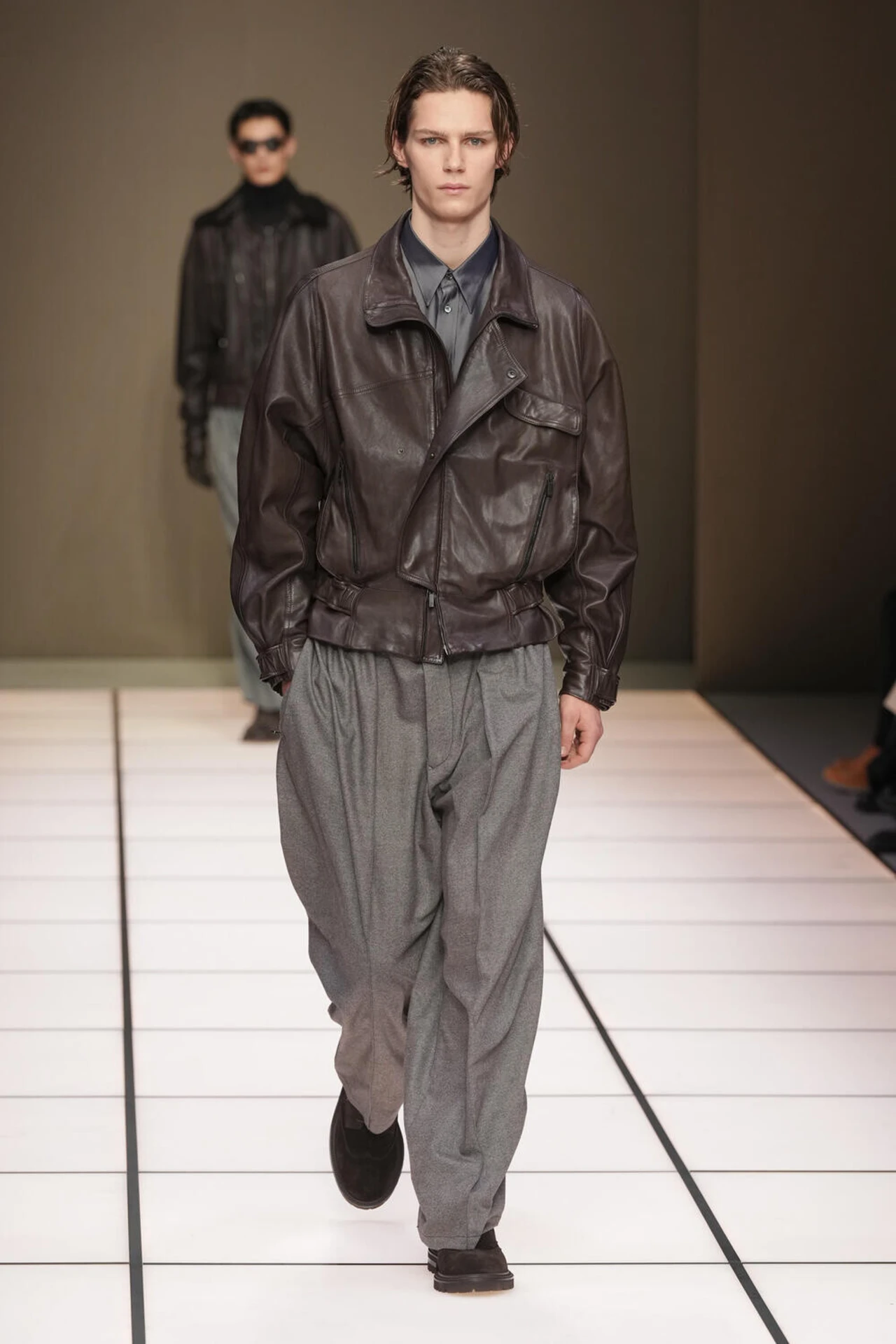
On the runway: Unai Bartra.

THE SILHOUETTE STAYS FLUID, THE ENERGY CHANGES


The silhouettes didn’t chase shock value. They moved the way Armani has always wanted men to move: easy, unforced, elegant without noise.

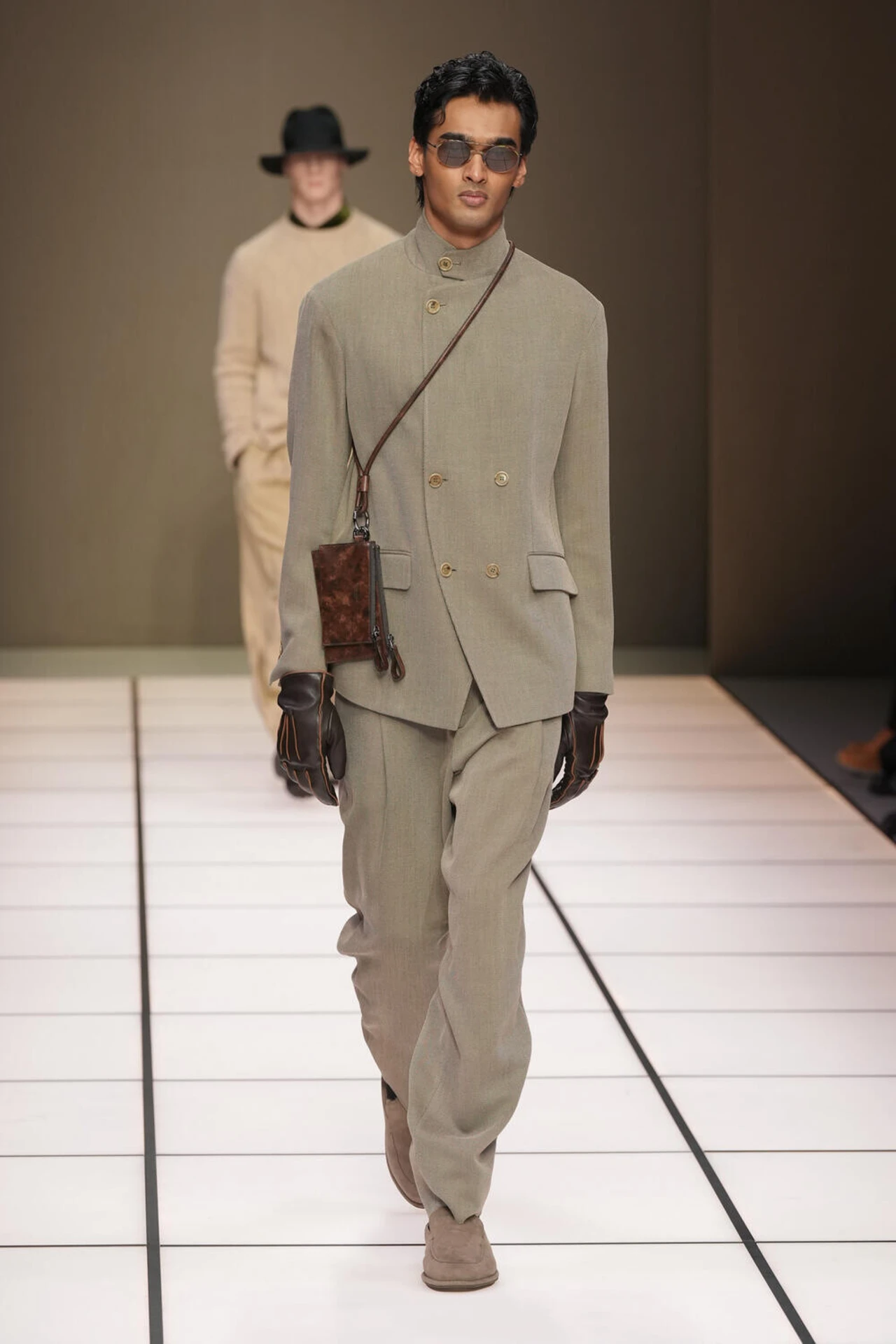
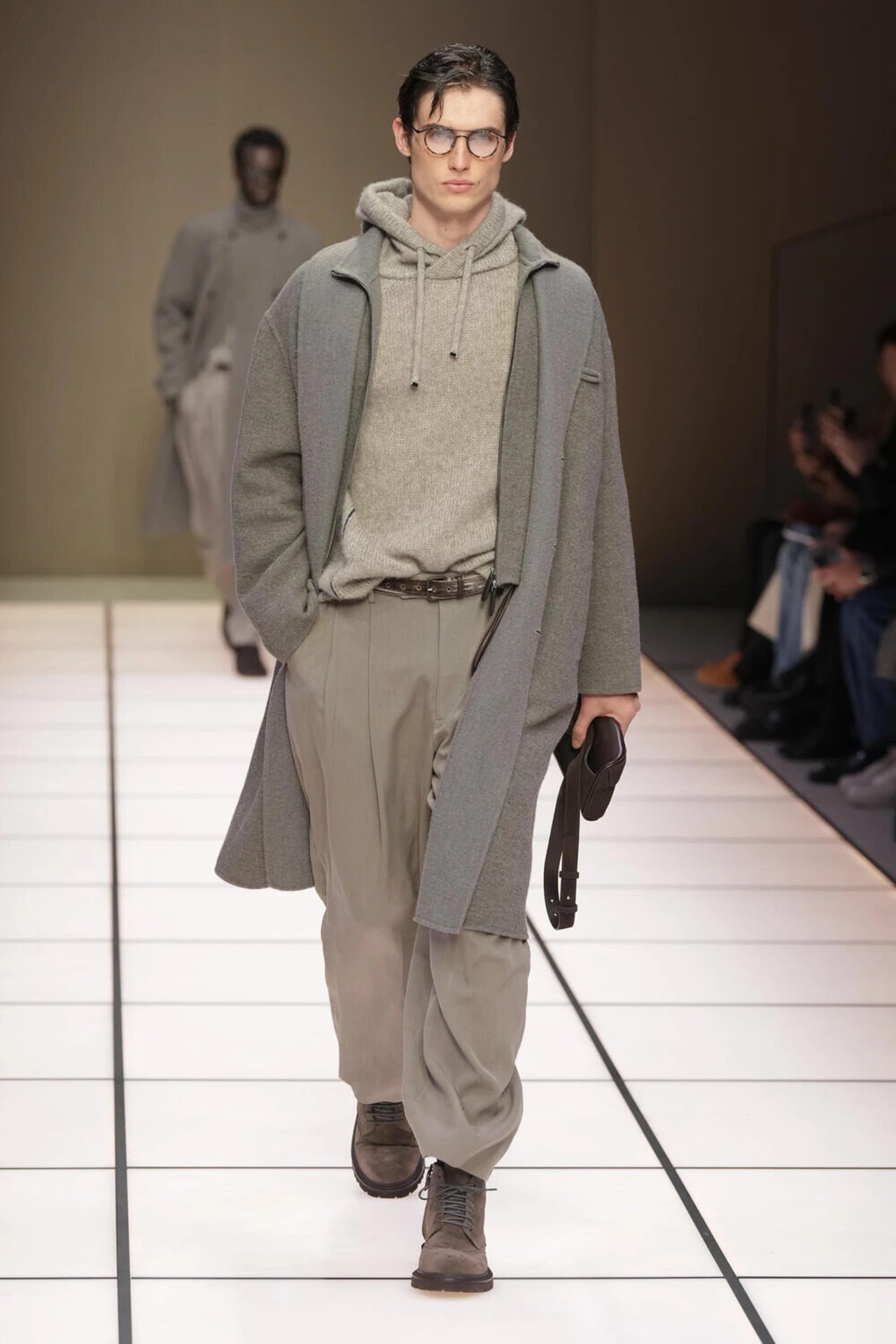
Blousons and relaxed bombers, low-buttoned jackets, enveloping coats, wide trousers falling over suede shoes and boots, shirts that sometimes skipped the collar entirely. The line suggested the city, then the mountains, then the evening, without shifting its tone.

And yet, the atmosphere wasn’t identical to the past. There was a more upbeat mood, almost celebratory, and a hint of Eighties Armani in the styling: leather, hats, and that particular confident looseness that feels urban rather than nostalgic.

It wasn’t a revival. It was memory, edited.


THE REAL LUXURY IS THE HAND, NOT THE HEADLINE


Armani’s most modern stance is also its oldest. In an era that loves to declare “quiet luxury” while shouting with price tags and algorithm-friendly symbols, Armani insists that the real signal is tactile.

Velvet, crepe, chenille, brushed cashmere, felted wool, matte leather. Surfaces that absorb light, then return it.

Some of the most intelligent gestures played with illusion and contradiction: glossy pile paired with matte leather, materials that look like one thing and behave like another, silk that nods to denim, shearling treated to feel unexpectedly plush.

This is where Cangiante becomes more than a mood-board word. It’s a method, and also a philosophy. Identity is not a logo. It is a sensation.

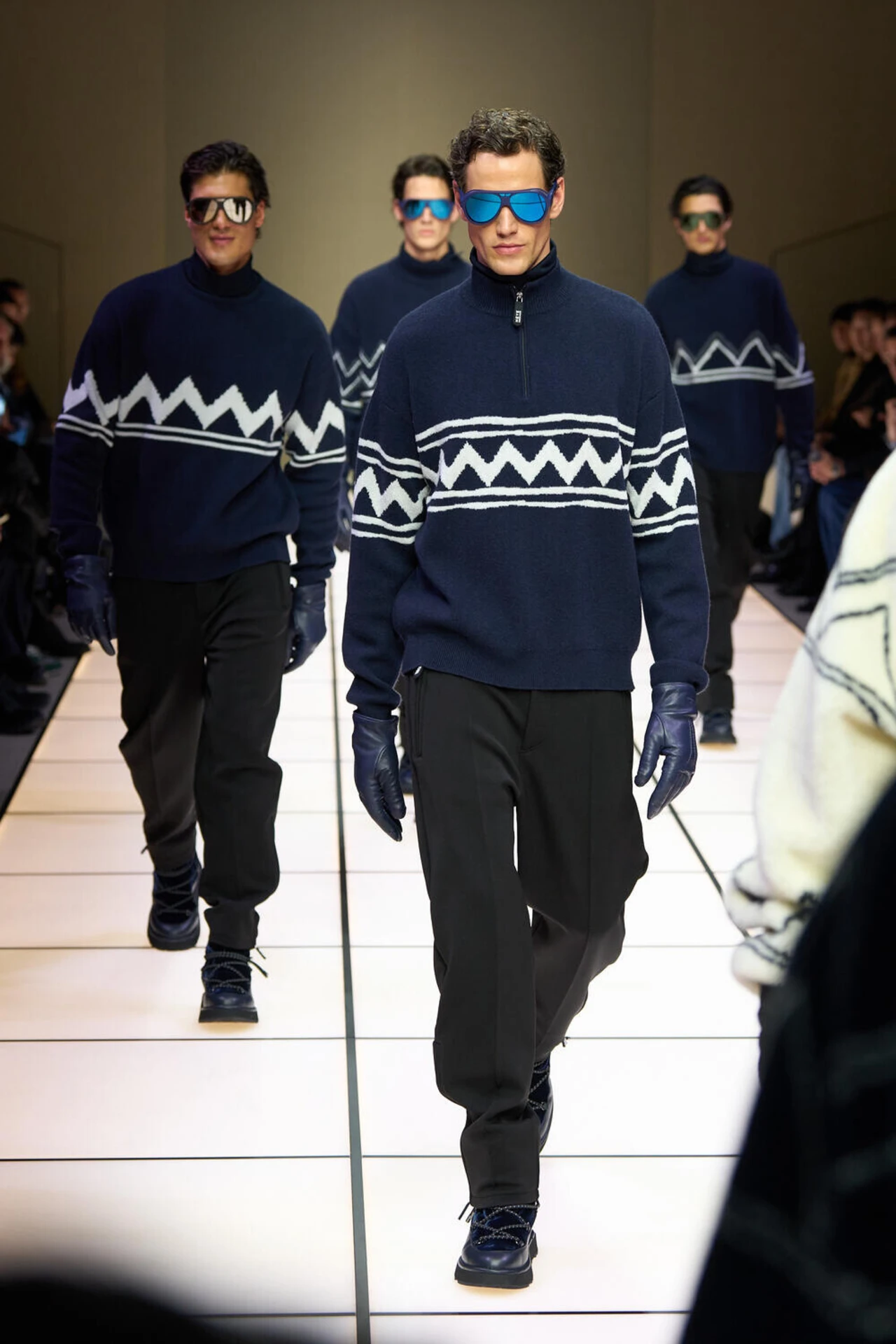
On the runway: Maxime Daunay.

ALANUI ENTERS THE ARMANI SENTENCE


Inside this controlled world, the collaboration with Alanui worked because it didn’t fight for attention. It added pattern the Armani way, as punctuation rather than graffiti.

Alanui, founded in 2016 by siblings Carlotta and Nicolo Oddi, built its mythology around the cardigan and the idea of travel. Its name translates from Hawaiian as “large path.” In Armani’s hands, that path becomes less bohemian postcard and more nocturnal map: rhythmic stripes, a shawl collar, dense fringe kept short and deliberate, a belt tied like a gesture rather than a statement.

Two brands with very different temperaments meet on shared ground. The romance of movement, real or imagined.


THE ABSENCE IN THE ROOM, AND THE FUTURE IN THE FRONT ROW


The most consequential detail of the show was invisible. Armani, the man, was not there. The house was.

Leo Dell’Orco, a decades-long collaborator, stepped into the role with the kind of restraint that signals confidence. He took his bow alongside Armani’s nephew, Gianluca, reinforcing the idea of continuity as a structure, not a slogan.

That continuity has a business shadow too. Reporting around the brand has pointed to governance steps and a possible future sale of a stake, which makes the runway function as more than culture.

It becomes proof of stability. For clients, for staff, for partners, for anyone watching the house as an institution that must outlive its founder.

On the runway: Neil Varel.

So the provocation is simple, and slightly uncomfortable.


What if the most radical thing Armani can do right now is not to change?


What if modernity, here, is the discipline of staying Armani, while letting the light hit differently?

On the runway : James Moody and Edoardo Langone.

Subscribe to our free newsletter!