INSIDE A FAMILY CLOSET WHERE MENSWEAR LEARNS TO REMEMBER

INSIDE A FAMILY CLOSET WHERE MENSWEAR LEARNS TO REMEMBER

Soft, elongated tailoring meets Trofeo wool and tactile layers, as Zegna Winter 2026 treats menswear like a lived-in archive, designed to be kept, worn, and reworked.

ALESSIA CALIENDO

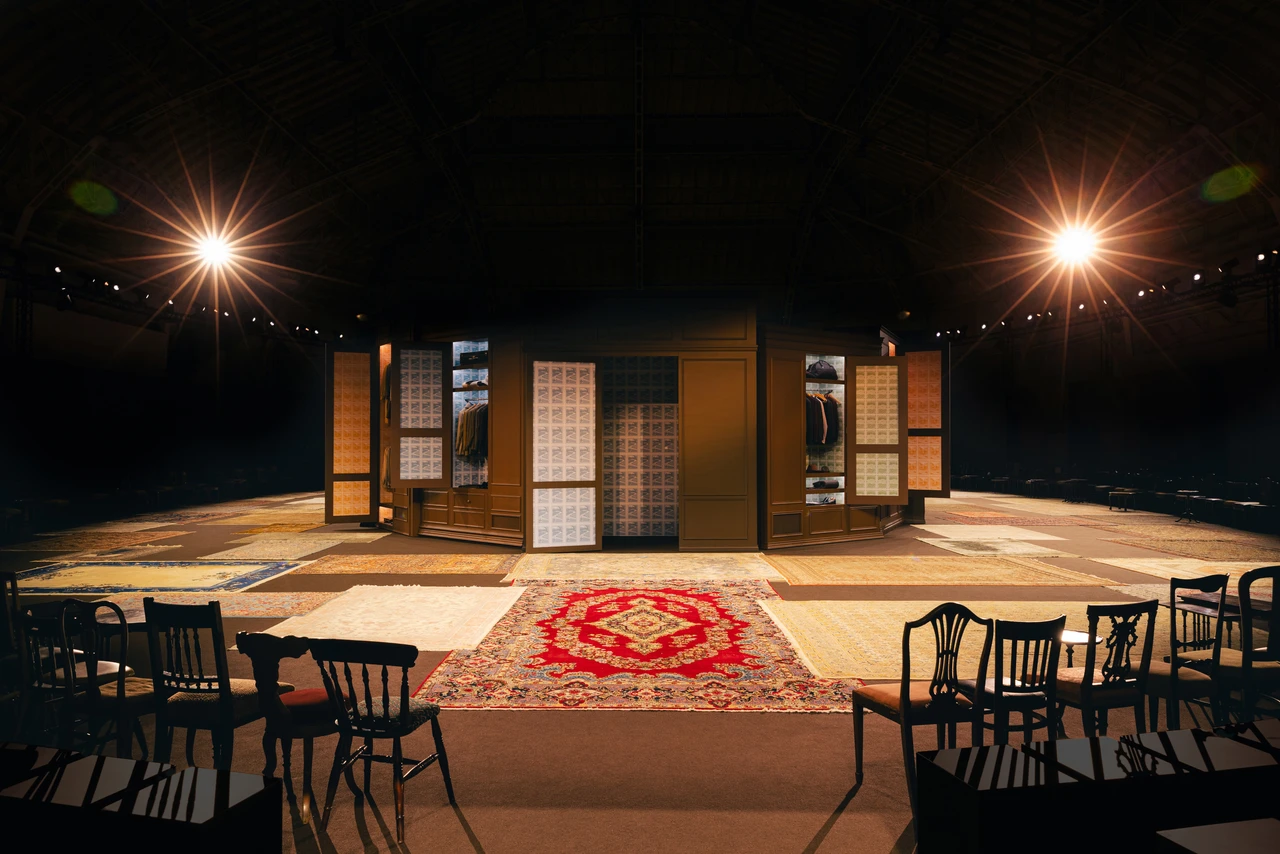
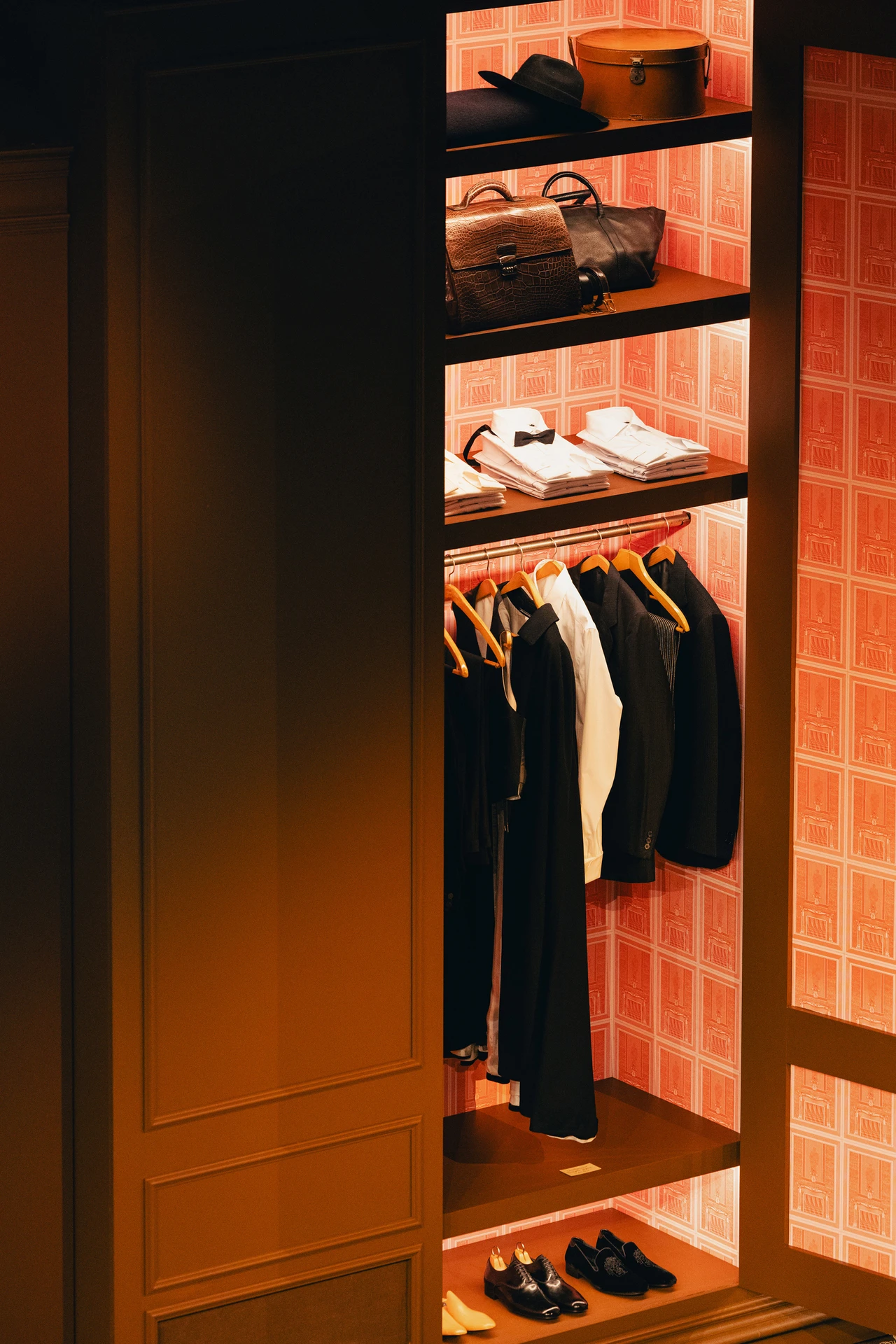
Milan, January 16, 2026. Zegna opens the season with a proposition that feels almost disarming in its simplicity, the most intimate architecture in menswear  a family closet. Not a metaphor painted onto a set, but an imagined wardrobe filled with real objects drawn from the Zegna family’s own keeping, pieces belonging to Gildo Zegna (Executive Chairman of the Group) and Paolo Zegna, both third-generation, alongside garments inherited from their forebears. The collection is framed as an act of love for weaving and wearing, so intense that the thought of throwing anything away becomes, by definition, unbearable.

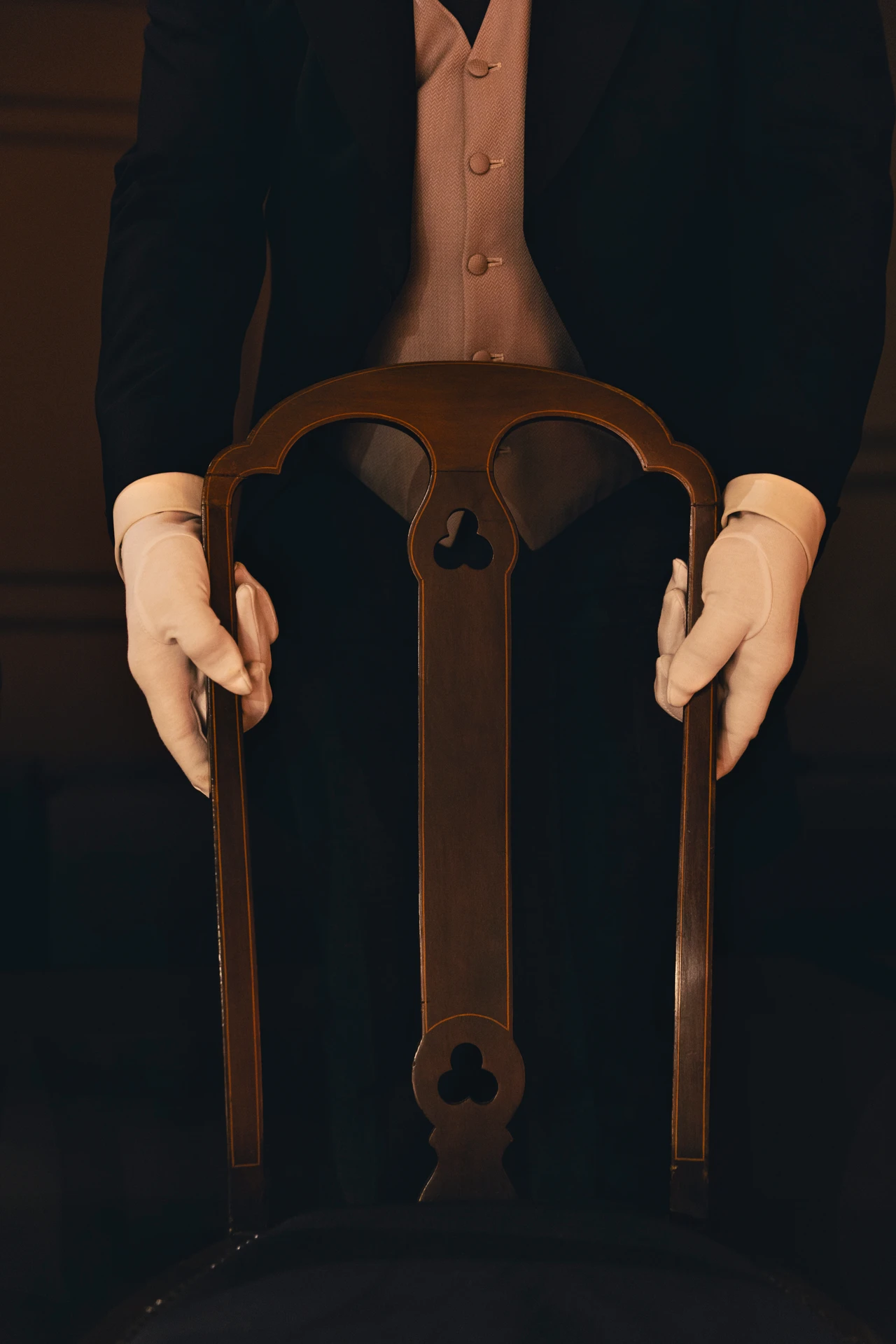
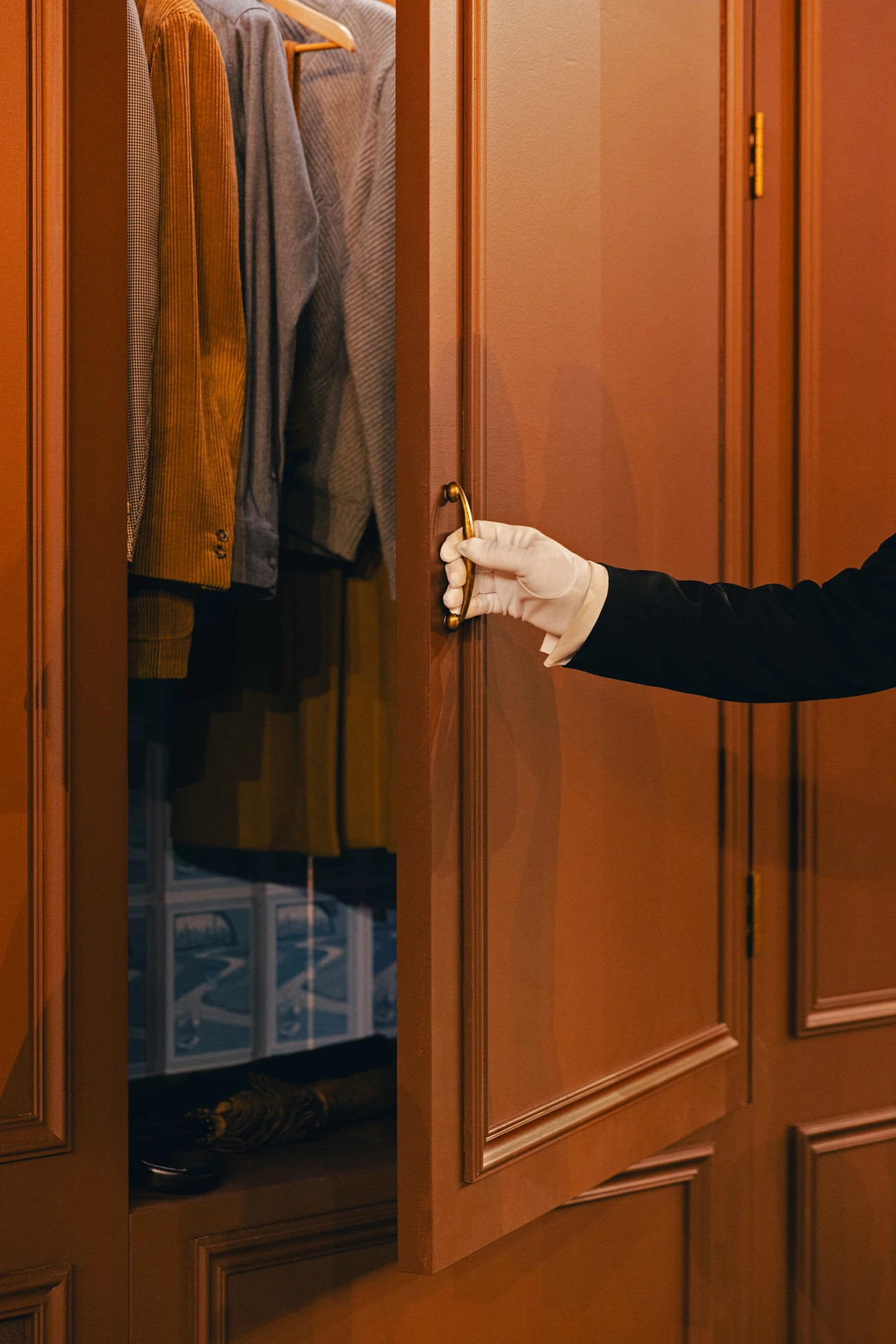
A closet is far more than storage. It is a protective chamber that recognizes duration, supports value, and preserves the beauty of loved objects, holding their existence in suspension until they are released again. Within that frame, wearing becomes an act of continuity, a quiet exchange between generations that leaves traces of life on cloth, then passes those traces on.


This is where Alessandro Sartori’s Winter 2026 collection lives, inside that exchange. It is a show about elegance, yes, but also about stewardship, about the refusal to discard what still carries meaning. In a culture trained to treat novelty as oxygen, Zegna proposes something rarer :patience. Briefly, it feels radical.
A MUSEUM CASE, A LIVING GARMENT


At the center of the imagined wardrobe sits a museum-like vitrine with “ABITO N. 1”, the first suit made in the 1930s, Su Misura, for Count Ermenegildo Zegna, in 100% Australian wool. The gesture is not sentimental. It is methodological. The house places a single object under glass to remind us that menswear has always been a technology of time, cut to be worn, stored, taken out, worn again.

Sartori describes clothes as a deliberate outer layer, a personal record we write across a lifetime. “As a consciously chosen outer layer, clothes are the pages of a diary we write throughout our existence”. 

His interest is the jolt of wonder when an item reappears, a father’s jacket, a grandfather’s coat, an uncle’s piece, and the sudden urge to study an older way of dressing, then risk something new on your own body. The dialogue is silent, between posture and fabric, between habit and the possibility of changing it.

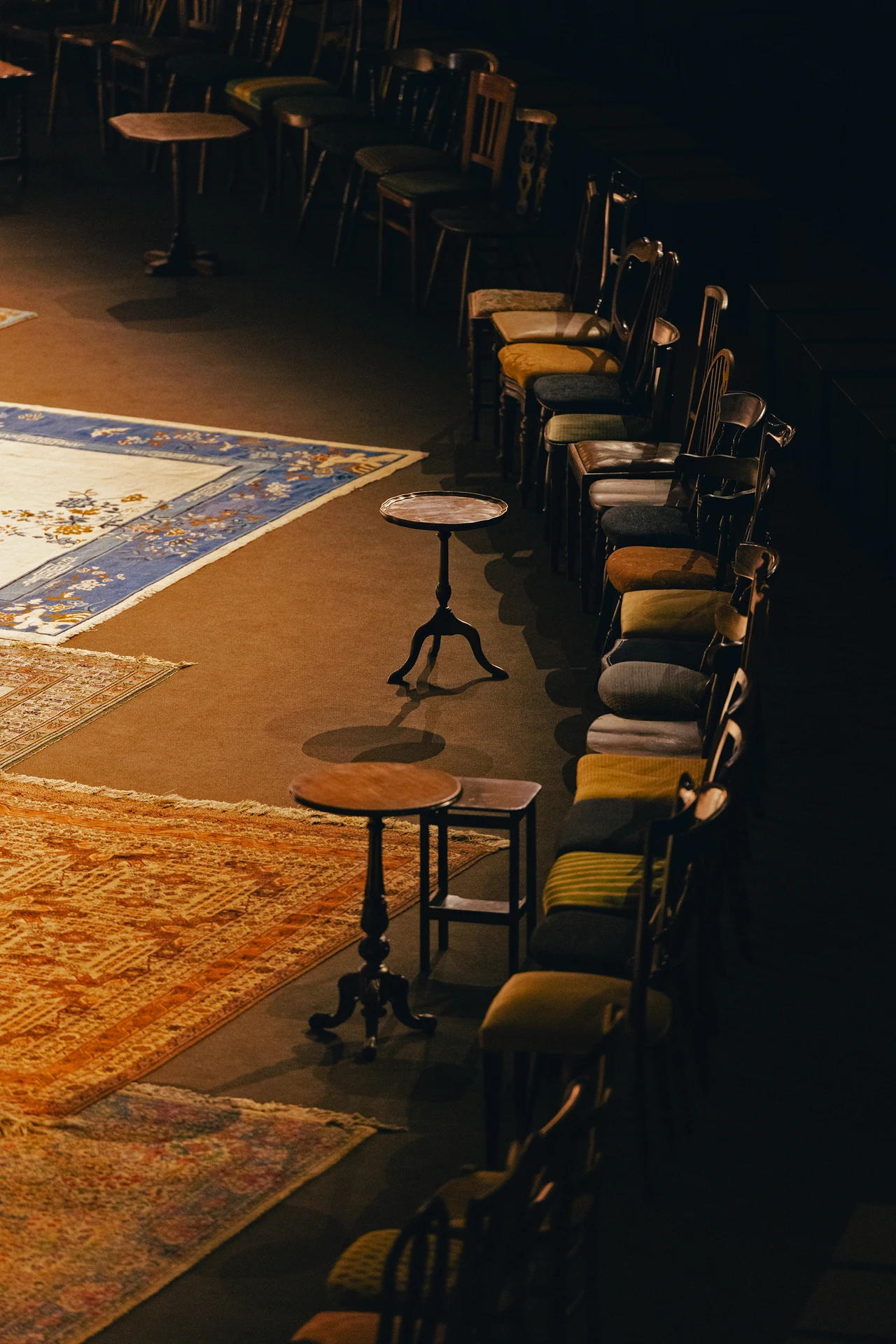
That is why the setting matters. The family wardrobe is presented across decades, not as costume, but as evidence, proof that a garment can outlive the mood that first justified it. The closet becomes an inheritance that keeps growing, precisely because it is worn.

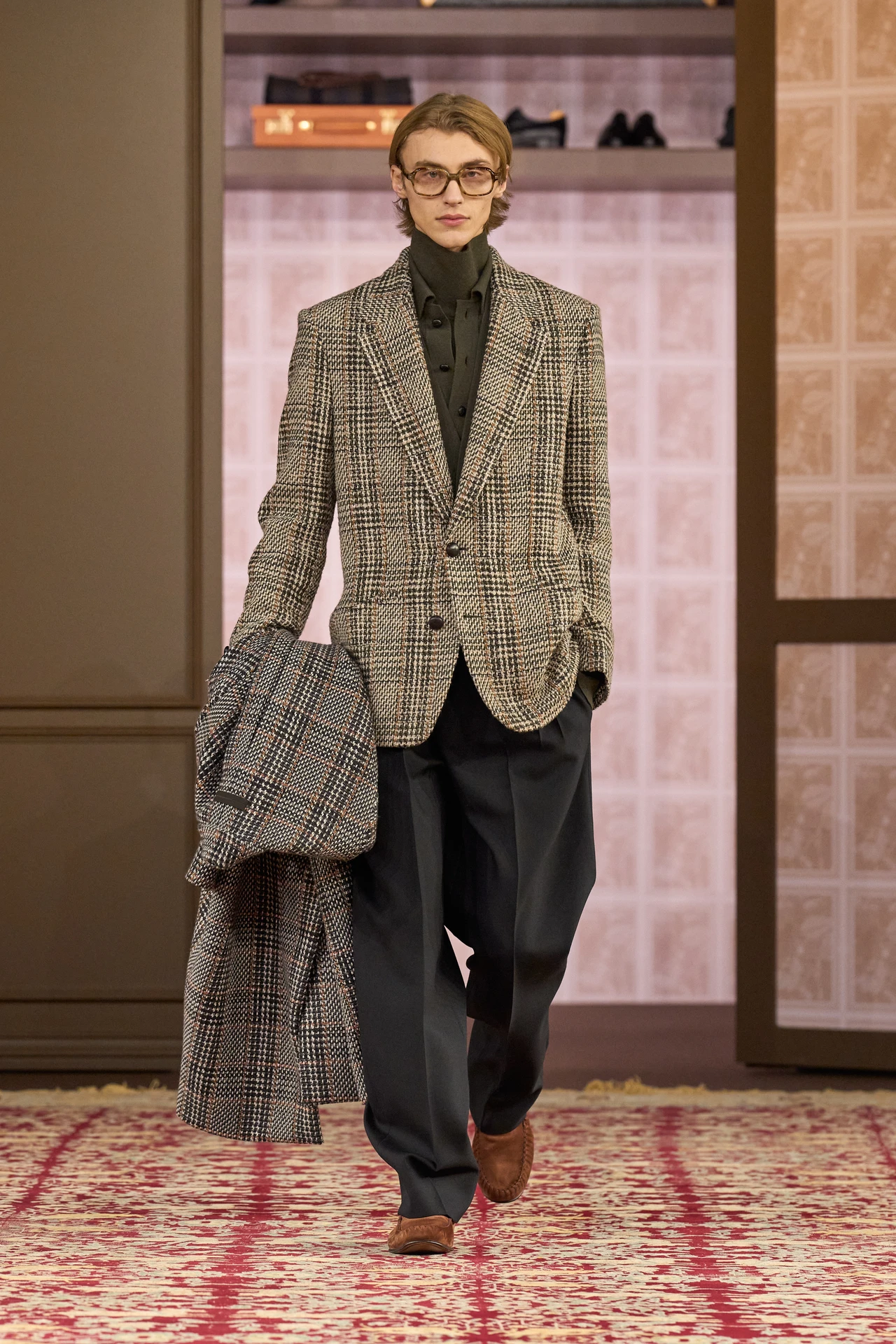
Dima Omelchenko opens Zegna Winter 2026

THE FONTANA FEELING, TAILORING AS INCISION


From the runway, the tailoring reads with a particular tension, cuts that recall Fontana. Not because they mimic his gestures, but because they share a sensibility, a controlled incision that changes the space around it. Sartori’s lines do that to classic menswear; they open it.

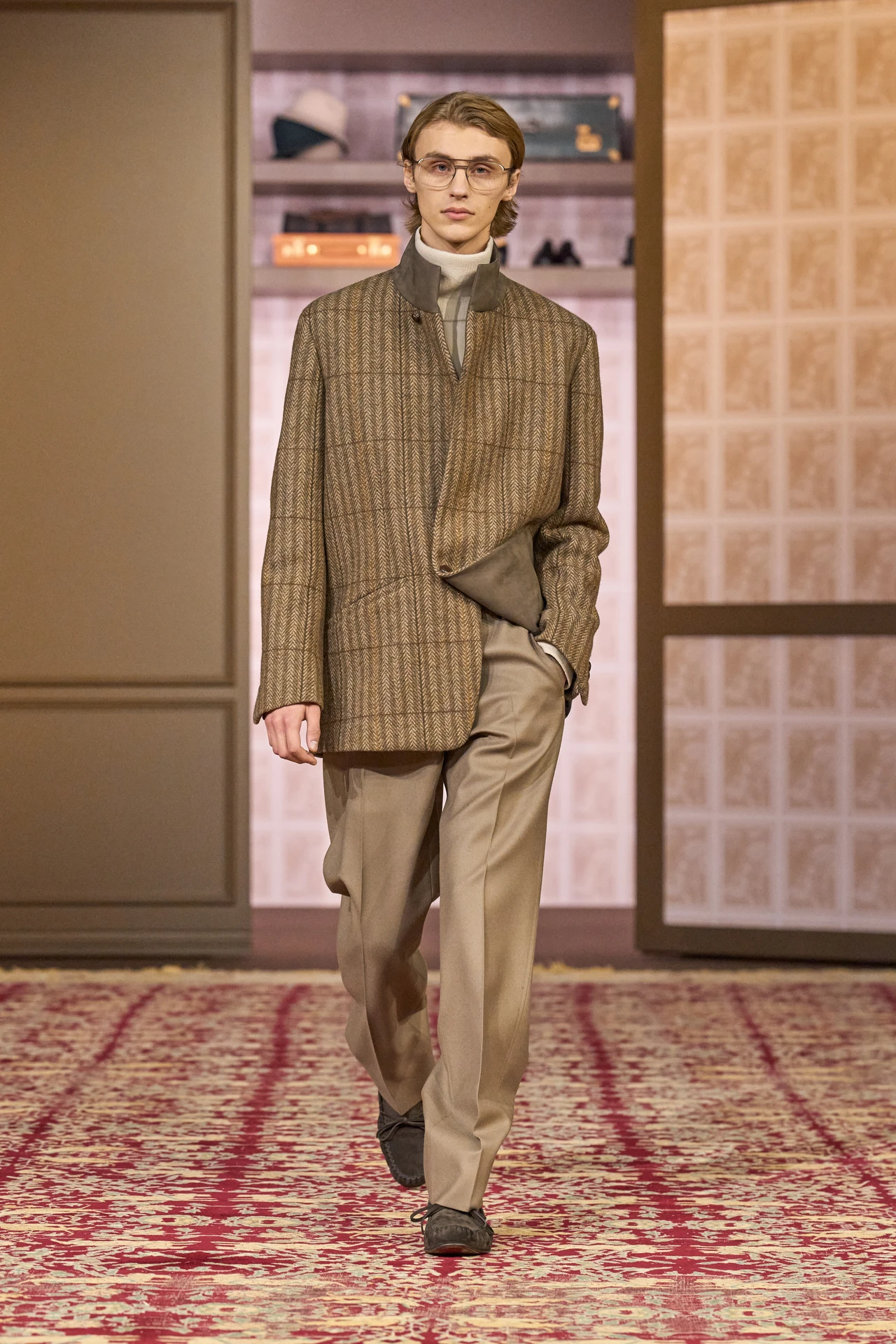
The silhouette is long and soft, the attitude deliberately dégagé, the carriage appropriate, never stiff. Coats and jackets grow longer and broader, shoulders squared. Trousers carry full volume, yet flow from a high, narrow waist, so ease is never a loss of structure.

Formality is present, then playfully re-argued. The double-breasted closure, usually a fixed signifier, becomes flexible. In some jackets it is reduced to one-third, a fragment of its old certainty. In others, Sartori inserts a central horizontal button placed between the traditional closures, allowing the jacket to be worn as a classic double-breasted piece or in an intermediate option that creates a softer, more open fit.

The theme of multiple ways to wear returns like a refrain. Blazers come with double lapels. Blousons have double collars. Overshirts remain fluid and elegant. Bombers in shearling or knit bring texture and warmth, but keep the line clean. Categories slip into one another, intentionally. Checks and small checks, usually reserved for suiting, become jacquard on washed silk shirts. The anorak shape appears halfway between underpinnings and outerwear, giving the classic blouson a new grammar. Polos are made in heavier fabrics, shifting them from sporty shorthand to something closer to daily uniform.

FABRIC AS ORIGIN, TROFEO AS SPINE


Zegna states it plainly : everything begins with fabric. In this closet, that base is combined with an intense process of fitting, styling, wearing, and refining, worked individually on each model, each time. The claim matters because it restores the body to the center of luxury. Not the logo, not the slogan, but the repeated trial of cloth against movement.

Trofeo wool, introduced in 1965, sits at the collection’s core, both as a sign of Zegna’s pursuit of excellence and as a bridge between generations. Reinterpreted to feel current, it becomes proof that continuity is not the enemy of modernity, it is modernity’s most disciplined form.

The color story, unmistakably Zegna in its restraint, is a blend of creamy notes, edelweiss, cornmeal, larch, grounded by organic tones of mahogany, brandy, earth, bark, birch, peat, and forest. Then come the accents: sapphire, mist, jade. Anthracite gray and desaturated black call back to the roots of classic clothing, the tones that refuse to shout because they do not need to.

Accessories stay faithful to the closet’s logic of lived-in elegance. Slippers. Suede loafers, also in wool felt. Squared eyewear. Leather rain hats lined in felt. Deconstructed duffels and briefcases that look built to travel, not to pose. There is warmth here, and quiet practicality, as if every object had been chosen because someone actually wanted to live in it.

A contemporary pivot arrives with the announcement of Chinese actor and singer William Chan as a new global brand ambassador, debuting on the Winter 26 runway.

The quiet provocation of this show is not aesthetic; it is ethical, though it never moralizes.


If a garment cannot be kept, reused, reinterpreted, and passed on, what exactly are we calling luxury?

Subscribe to our free newsletter!