PRADA BEFORE AND NEXT, AND THE ART OF WHAT REMAINS

PRADA BEFORE AND NEXT, AND THE ART OF WHAT REMAINS

Fall/Winter 2026 menswear collection sharpens the silhouette and lets history breathe at the surface, treating wear and time as raw material, not a flaw.

ALESSIA CALIENDO

This wasn’t staged as a reboot. It felt more like a return trip, the kind that makes you double back on what you thought you already knew. Inside the Deposito at Fondazione Prada, the mood was calm, almost domestic. The clothes, though, carried a faint, deliberate unease.


THE TITLE SAYS IT ALL


“Before and Next” is the rare collection name that reads like a statement, not a slogan. It rejects fashion’s favorite fantasy: wipe the slate clean, call it progress. Miuccia Prada and Raf Simons start from a tougher, more grown-up premise. 

In a season that feels unstable, what do you keep? What do you tweak? And what do you stop pretending never happened?

The answer here is clarity. The silhouette is elongated and precise, a line that treats the body as a moving thing: posture, gesture, a flash of hesitation. Familiar menswear components, the double-breasted jacket, trench, overcoat, shirt, aren’t tossed out. They’re re-entered, then pushed just far enough that convention no longer sits easy.


CLOTHES THAT KEEP THEIR FINGERPRINTS


The most contemporary idea in the show isn’t a new shape. It’s a new honesty. These garments behave like objects that have been handled, revised, carried from room to room. The surfaces don’t perform innocence. They allow evidence.

That evidence shows up as soft abrasion, lived-in texture, creases that read less like styling and more like biography. Even the prints follow the same logic: references pulled from different shelves of time, classical fragments, Renaissance echoes, modern interruptions, without the dead weight of quotation. This isn’t heritage as decoration. It’s continuity as craft.
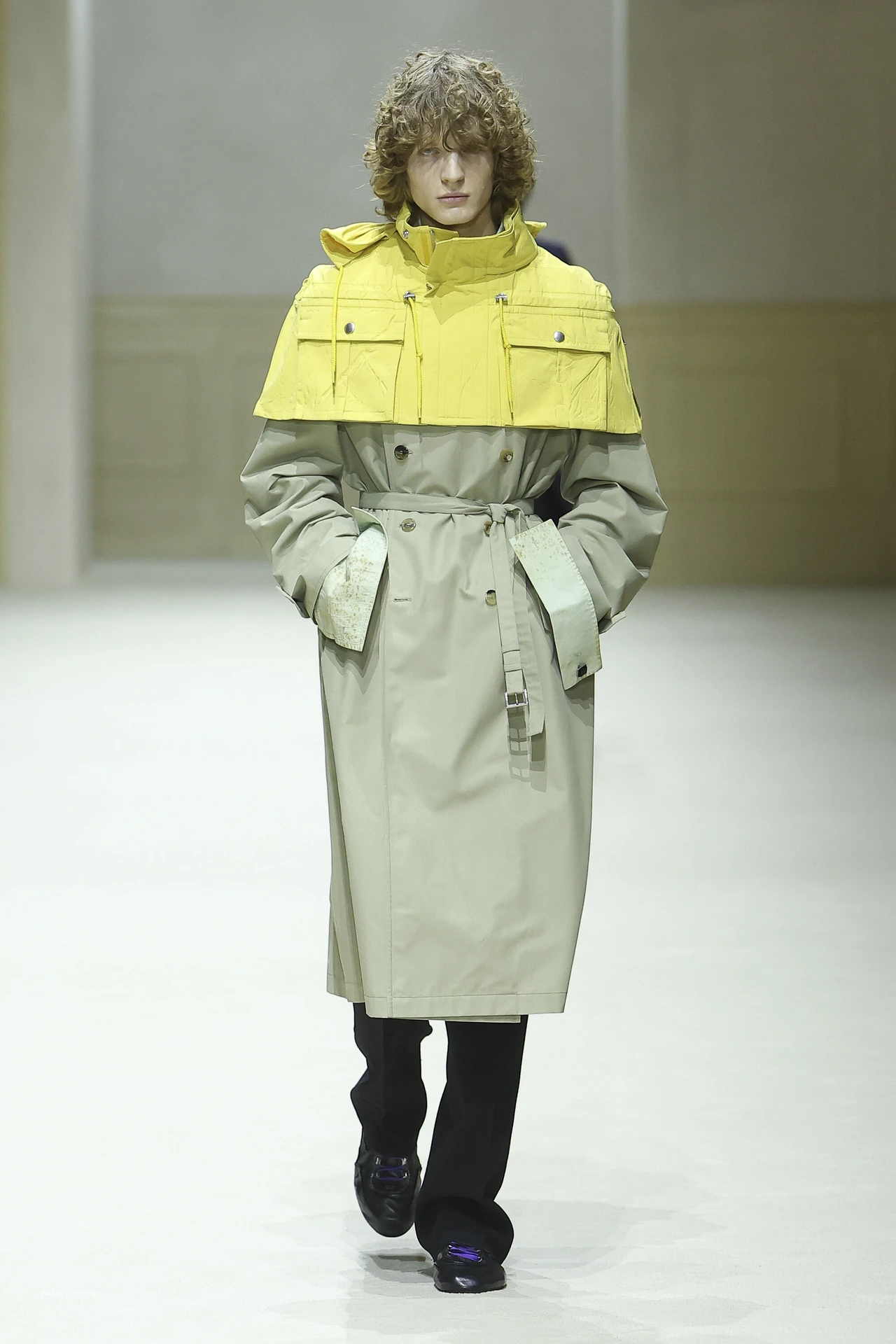
On the runway: Veles Nikitin.

THE ACCESSORY THAT REFUSES TO BEHAVE


For the sharpest Prada tell, look at the hats. They don’t act as polite finishing touches. They disrupt. Sometimes they seem fused to the garment’s top line. Other times they look compressed, like a hat caught between coats and shoulders, flattened by accident, left there on purpose.

Vogue Italia captured the feeling with a disarmingly real image: the family coat grabbed in a rush, the hat still crushed against it. That domestic mess isn’t a gag. It’s the point. Memory isn’t a ribbon tied on top. It’s a crease you can’t steam out.


TAILORING WITHOUT THE COSTUME OF AUTHORITY


One of Prada’s smartest moves is reclaiming menswear codes while stripping them of their usual social script. The collection is packed with items men recognize instantly, coats, suiting, trenches, shirts, and construction so precise it typically signals authority. Here, that authority is quietly declined.

Small shifts do the work. Hems drop. Layers land slightly off. The center of gravity moves, and suddenly the classic reads less like a uniform and more like a choice. The Guardian framed it as a rejection of power dressing. Simons, for his part, has been clear about not chasing the look of corporate dominance. Elegance stays. Entitlement goes.


A DOMESTIC LANGUAGE INSIDE AN INDUSTRIAL ROOM


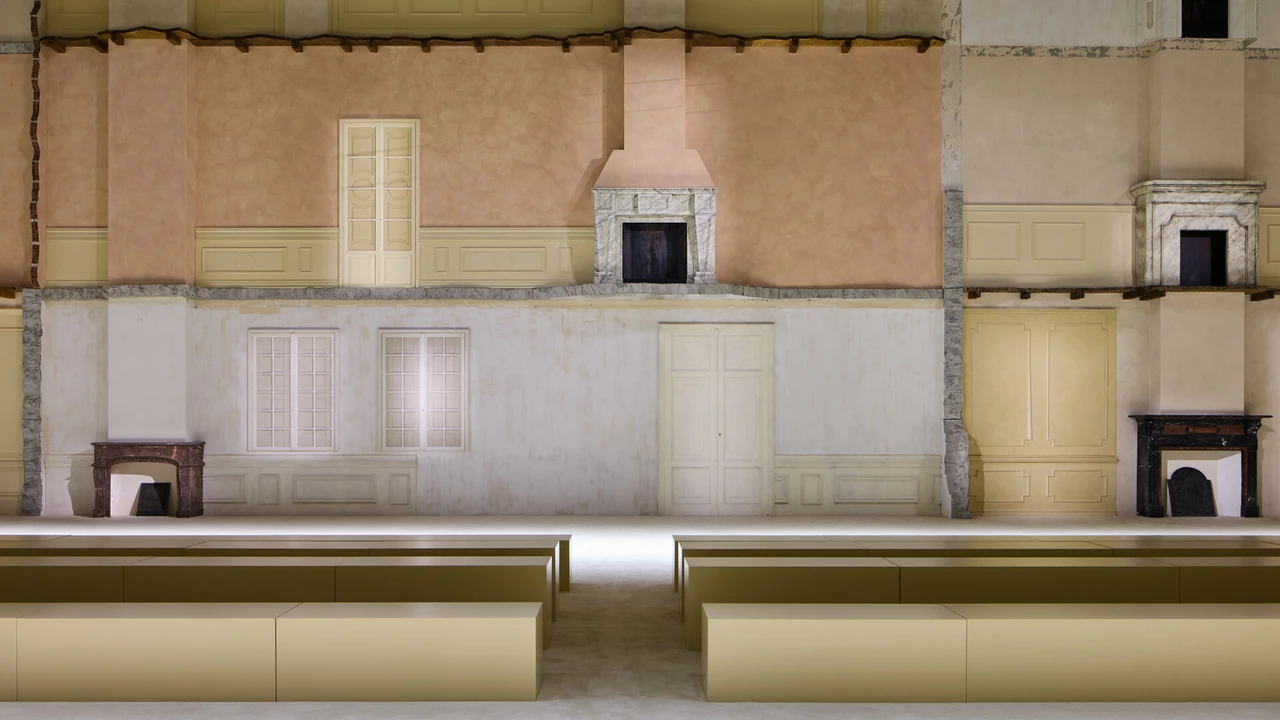
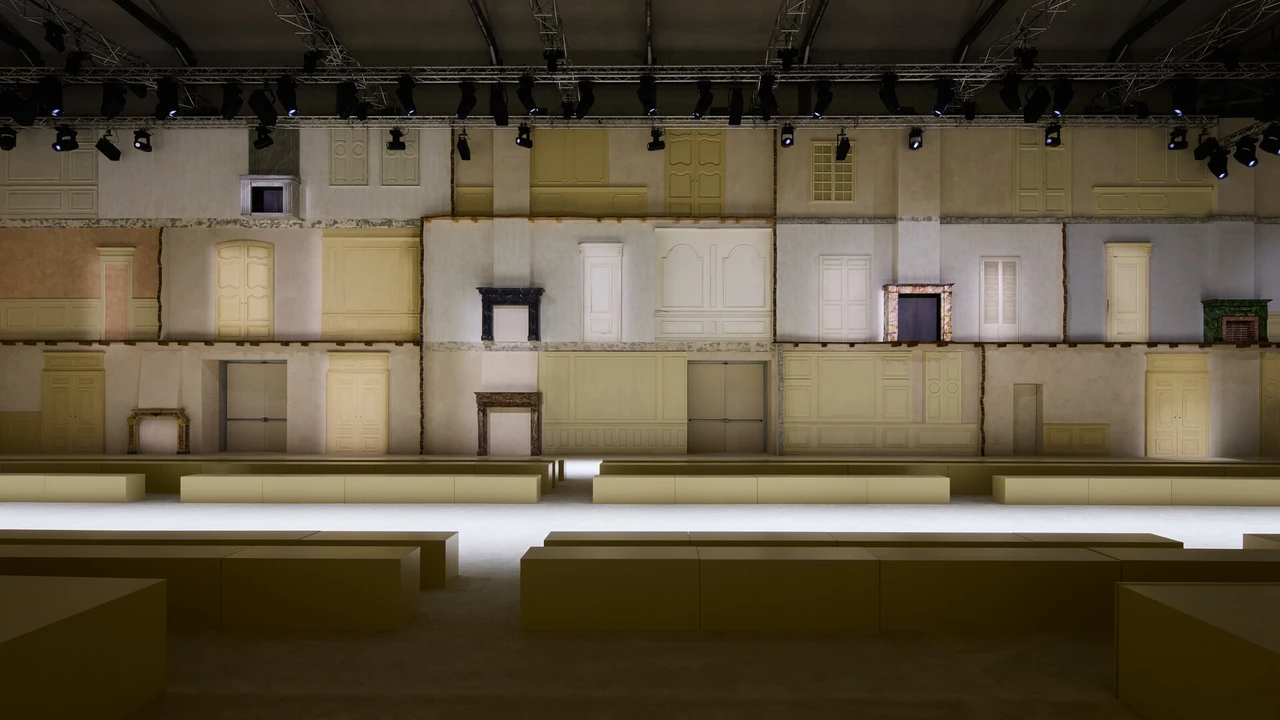
The set finished the argument, not as spectacle, but as syntax. The Deposito became a constructed interior: thresholds, fireplaces, floors, openings. A home suggested, never sealed. Private space, made public.

Prada’s notes described a place between states, where inside turns outward. Wallpaper spoke in emotional architecture, a residence translated into a hangar. Different registers, one substance. The collection isn’t trying to abandon the house. It’s trying to speak from inside it, doors open.

In a season when menswear often swings between costume and content, Prada offered something rarer: an insistence on duration, care, and the idea that culture and intelligence are values you can wear. The provocation is quiet. Prada isn’t asking for nostalgia. It’s asking for responsibility: to the body, to memory, to materials, to time. And that shift lands beyond aesthetics.

If a garment is allowed to carry marks, it rewires our relationship with luxury: less flawless display, more care, maintenance, and repair.


In other words, a future built by accumulation, not erasure.

Subscribe to our free newsletter!