QUIET TAILORING, BUILT FROM A SINGLE CLOTH

QUIET TAILORING, BUILT FROM A SINGLE CLOTH

In a medieval Paris hall, IM MEN from Issey Miyake rethinks menswear formality with modular coats, sculptural textiles, and dawn-toned dyeing that shifts as the body moves.

INDEPENDENT MAGAZINE

Stone, height, and a disciplined silence, this was the first thing you felt at the Collège des Bernardins. On Thursday, January 22, 2026, IM MEN stages its A/W 2026/27 show inside those vaulted cloisters and let the room set the tempo.


IM MEN titled the collection Formless Form, a phrase that sounds like a riddle until you watch it solved in real time. The starting point was not a heroic silhouette but a piece of cloth, the Miyake lineage premise that fabric is not a problem to tame; it is a partner to negotiate with. The show opened on a bodily thought, those liminal hours of dawn and dusk, when something begins and something ends, and posture changes without permission. 


Can that quiet adjustment, the desire to dress “properly” without turning the body into a statue, be expressed through cloth alone, without borrowing a uniform?


FROM ONE CLOTH TO MANY LIVES


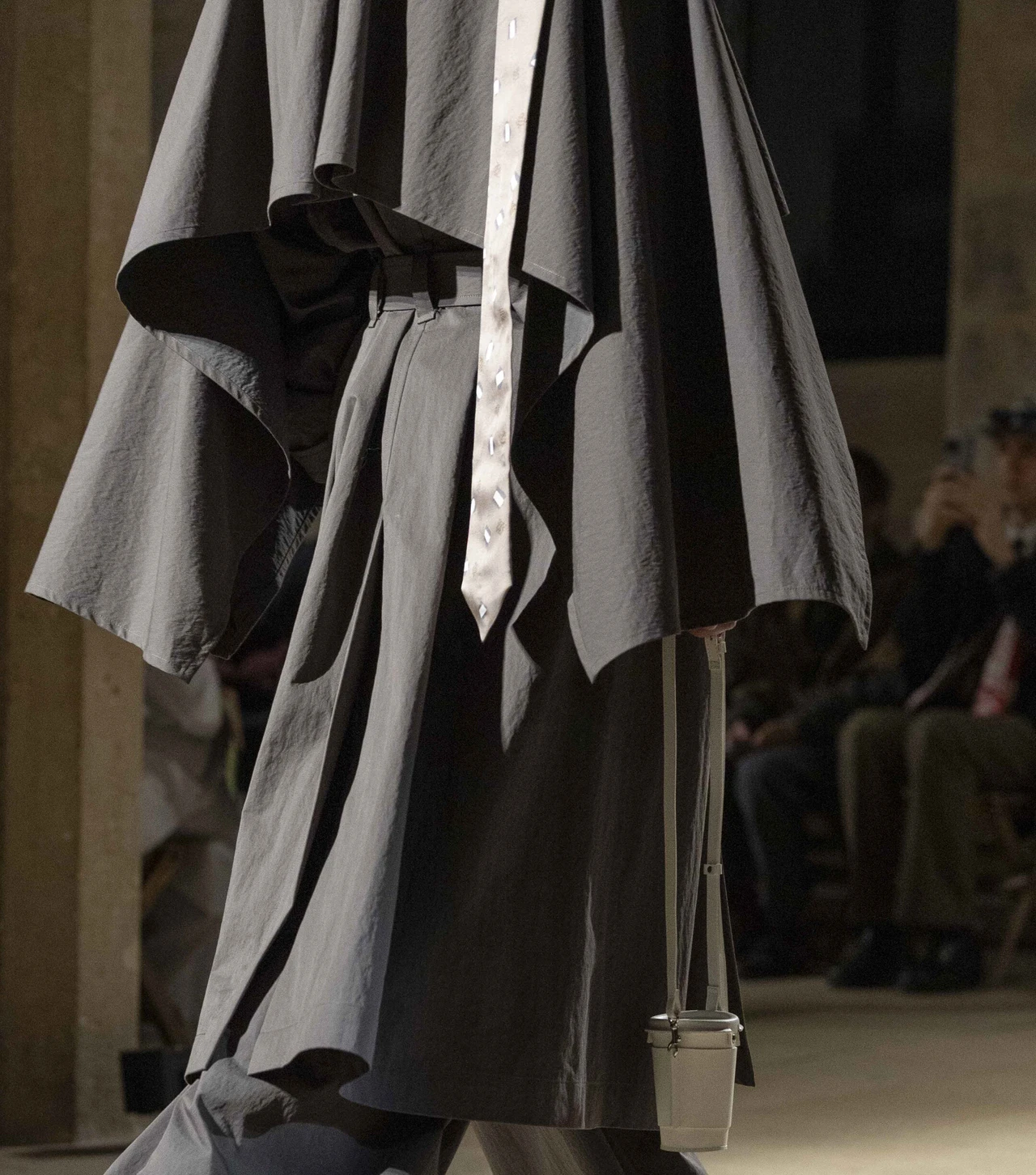
The answer arrived through construction, garments that behave like systems. OVERLAP began as a collared coat with a storm flap, cut from a single cloth, then, by releasing the fastened cuffs that hold the textile together, opened into a poncho. Straps can lift and redirect the cloth, producing an alternate outline without forcing the wearer into one fixed idea of themselves. The cotton-nylon blend, finished with a washed surface, keeps the feel organic while holding its structure, and the series extended into relaxed, voluminous trousers that made “formal” feel breathable again.


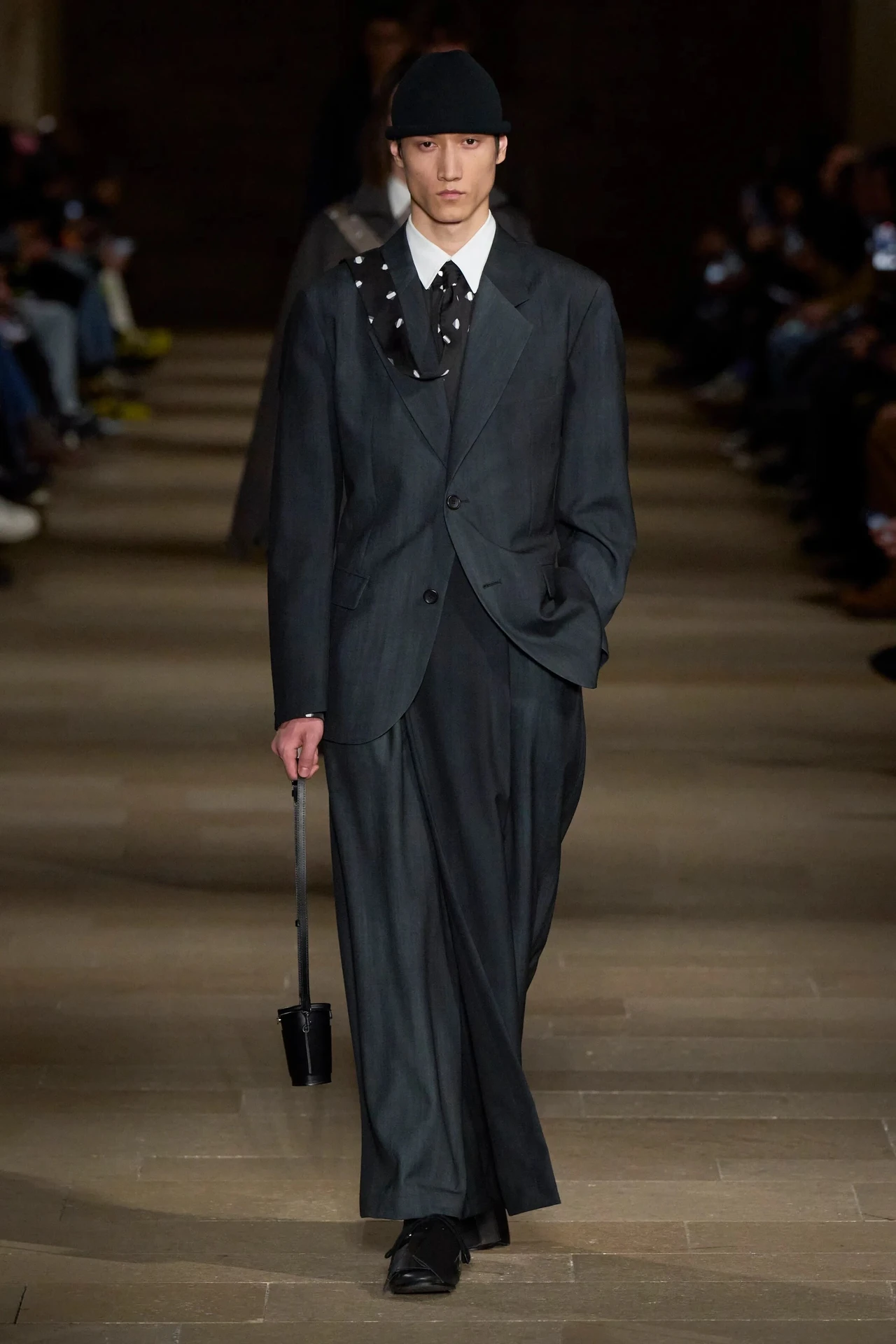
Even the dressier pieces insists on movement. GRADATION WOOL treated dye as an event rather than a finish, each roll dyed separately so colors and motifs remain singular. Side zips let a cropped jacket and a jumpsuit split into a two-piece ensemble, while wide-leg trousers carry a thick waistband that nods to a tuxedo cummerbund. Formality was not rejected; it was re-sourced, rebuilt from utility.
DAWN, CLAY, AND THE SOFT SCIENCE OF SCULPTURE


Material innovation arrived with an artist’s patience, and with the confidence to keep it human. CLAY used a textile engineered to hold two behaviors at once, a flat structure and a rib-like structure that contracts under heat, coexisting on a single cloth. The surface puckers into sculptural ridges that could never be fully predicted on a worktable, yet the fabric’s elasticity let it settle gently on the body, comfort first, posture second.


DAWN translates the sky’s in-between hours into a hand-worked, three-tone gradient that spreads gradually across a single cloth. To protect that slow shift of color, each piece was cut and sewn individually, finished with clean lines so the surface could do the storytelling. A front panel, designed to recall the layering of an oversized stole, can be worn as a double-breasted closure, multiplying styling options without piling on decoration.


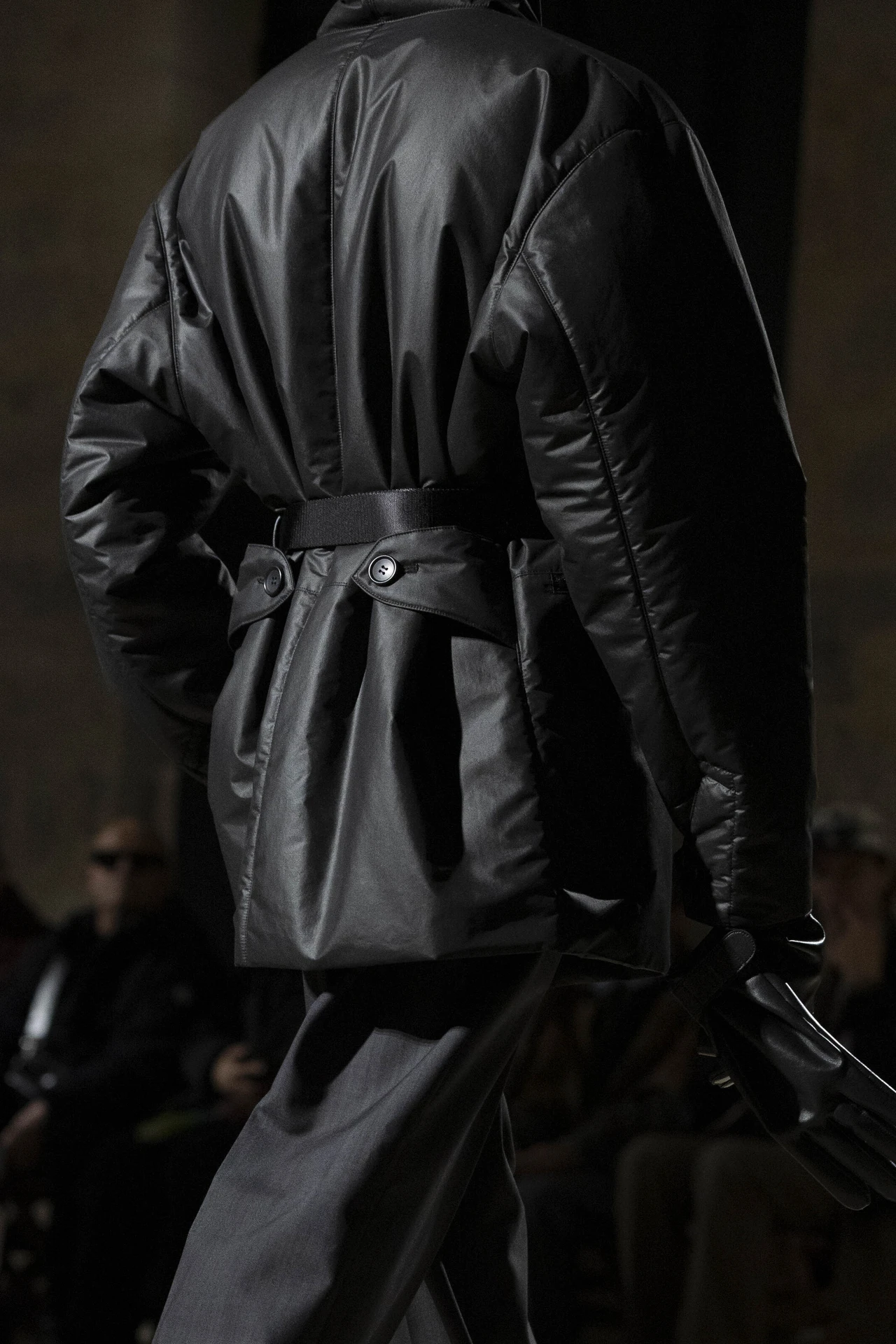
Warmth, too, was treated as volume rather than bulk. RAFT offers padded outerwear in a matte, textured cloth, insulated with recycled polyester cord for down-like heat, and shaped so the air itself becomes part of the garment. “Technical” is not clinical. It feels like shelter.

On the runway: Wanjie Gao and Deepak Gupta.

TRADITION AS INFRASTRUCTURE, NOT NOSTALGIA


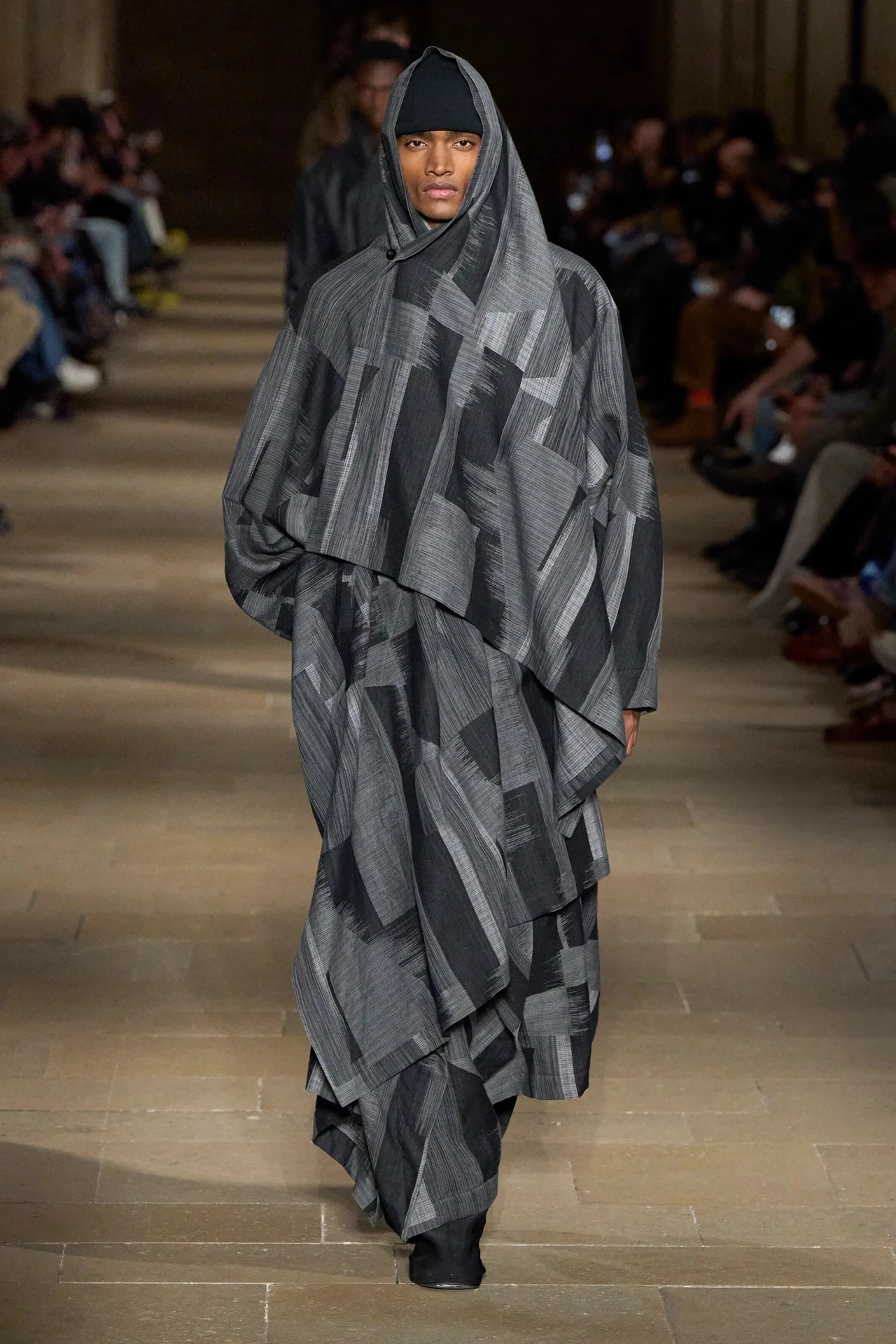
When IM MEN invoked KASURI, the traditional Japanese weaving method that sets partially pre-dyed yarns on the loom to create nuanced patterning, it did not use heritage as mood lighting. It used it as a living tool. Four yarn types, one dyed in three colors, three in shifting blues, and the slight drift of alignment that reveals the hand through the process. The blouson and asymmetric trousers were built from a rectangular cloth, producing drape that feels both deliberate and spontaneous. Adjustable buttons placed on the chest allows the blouson to shift into a hood or a stole, depending on mood, weather, or sheer play.


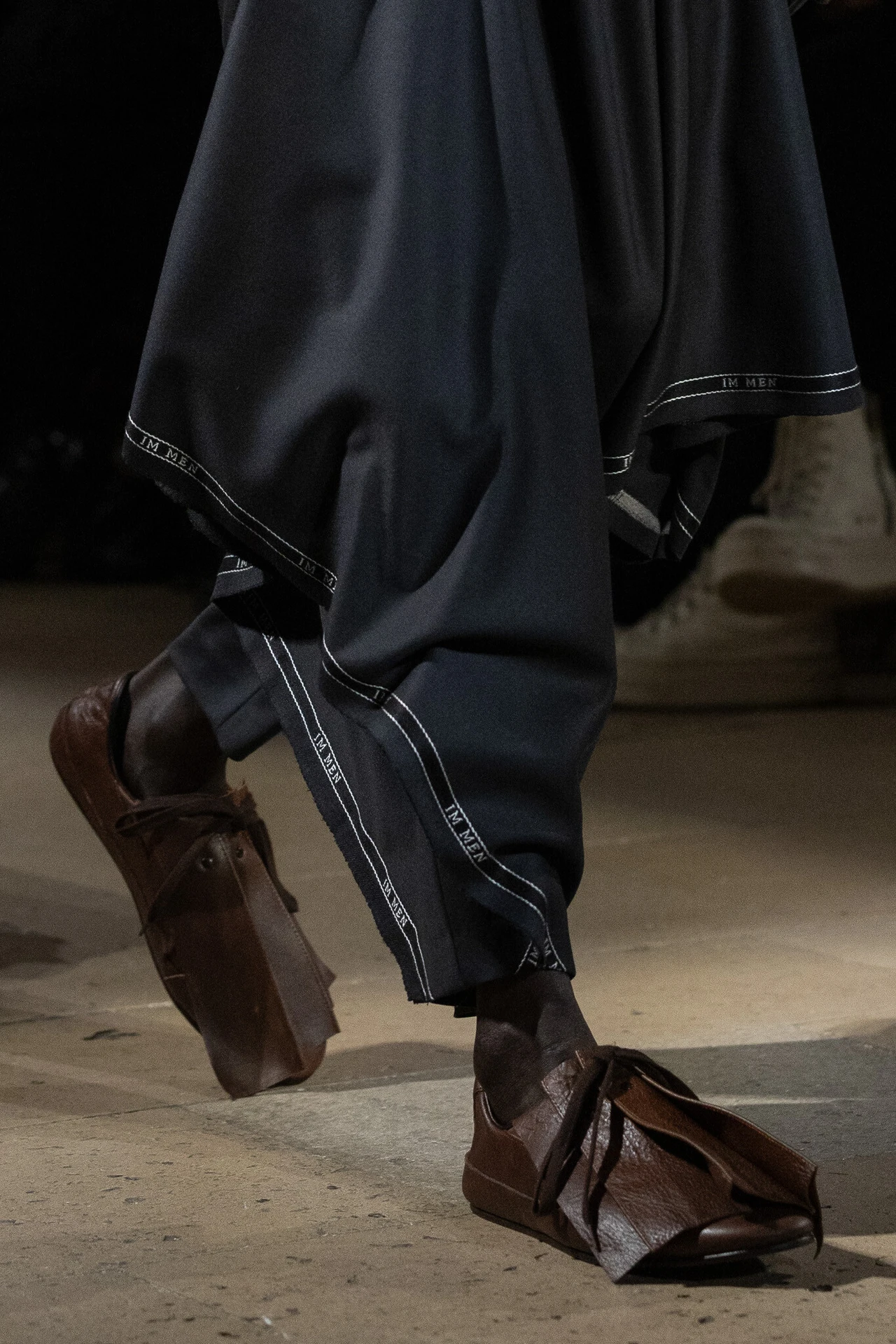
The same respect for craft appeared in SELVEDGE WOOL, made in Bishu, Japan, a region known for premium wool where production steps remain local. “IM MEN” was woven along the selvage as a quiet signature, then garments built from a folded-square logic opened on the body into fluid, organic drape. Accessories speak the same language. 

LEATHER PLEATS translated the brand’s broad folds into natural leather bags, where crisp cuts meet soft curves and time deepens the shine. TO GO, inspired by the disposable coffee cup, remade the everyday object in leather to prove a sharp point: change the material and you change the meaning.


What lingers after the last look is not a trend report but a proposition. Western tailoring often treats form as control, an outline imposed from the outside. IM MEN proposed another kind of control, a quiet direction that lets matter stay alive, guided freedom rather than constraint. 

Under those medieval arches, the most radical gesture is restraint. 

Then the clothes moved, and the paradox disappeared.

Subscribe to our free newsletter!