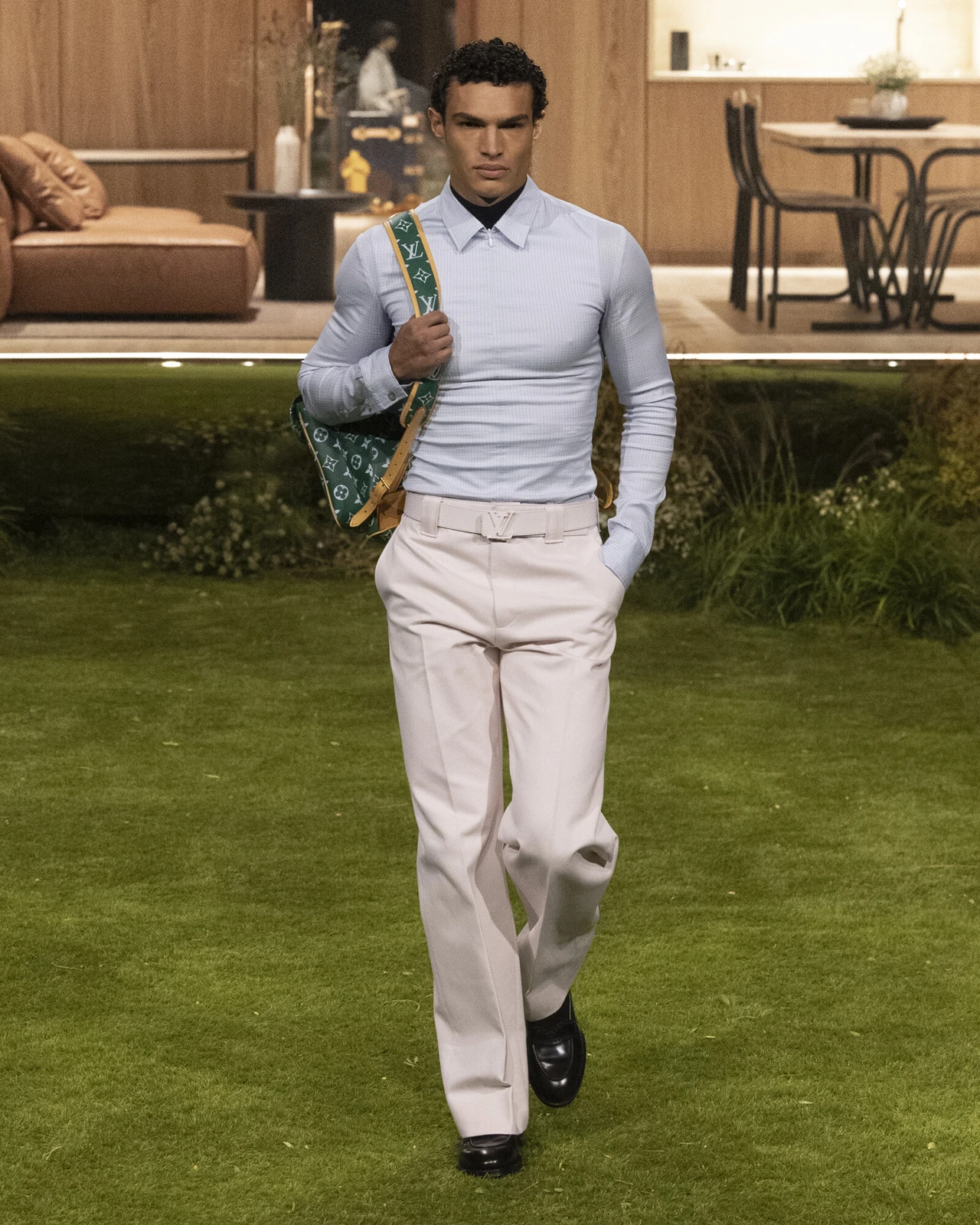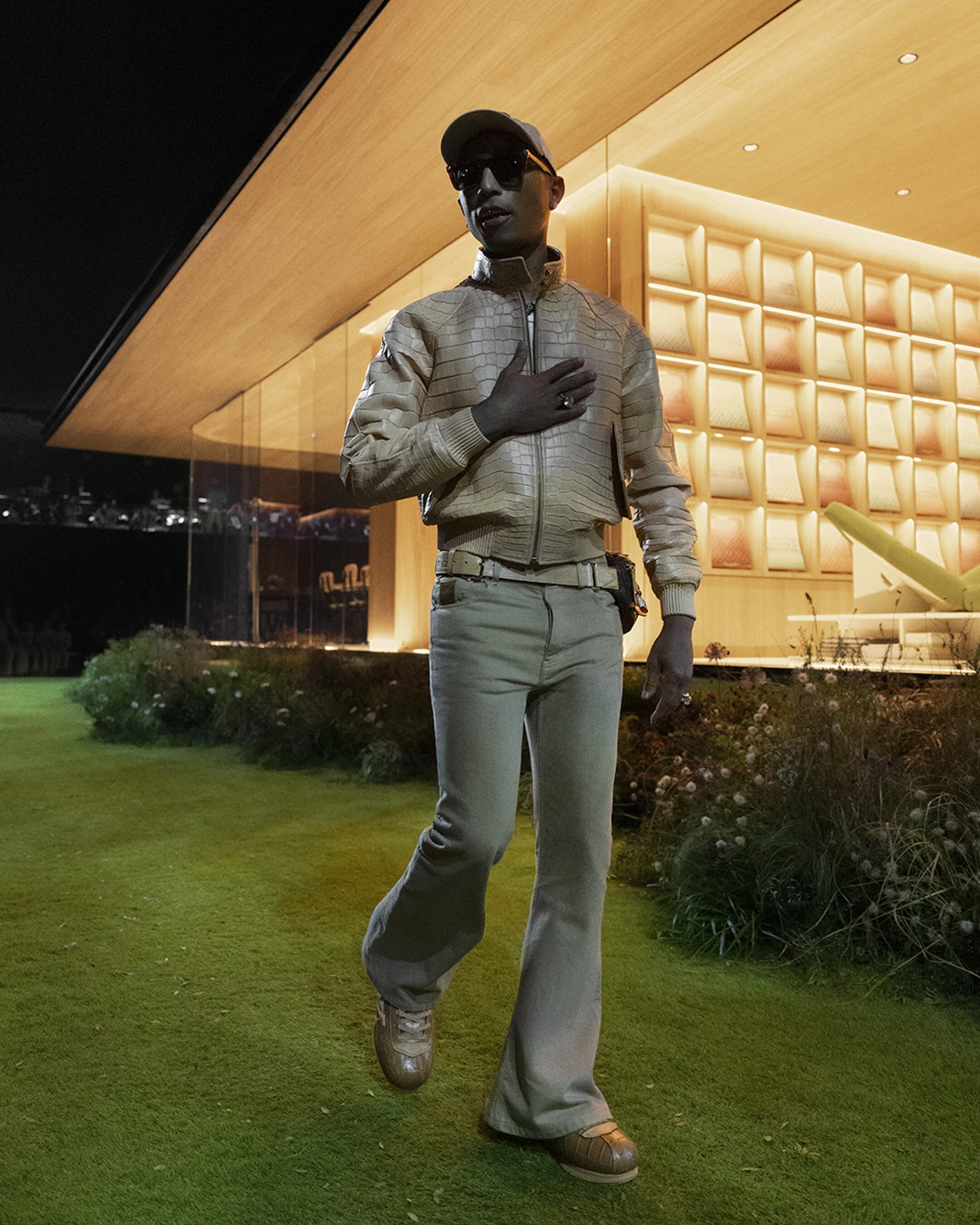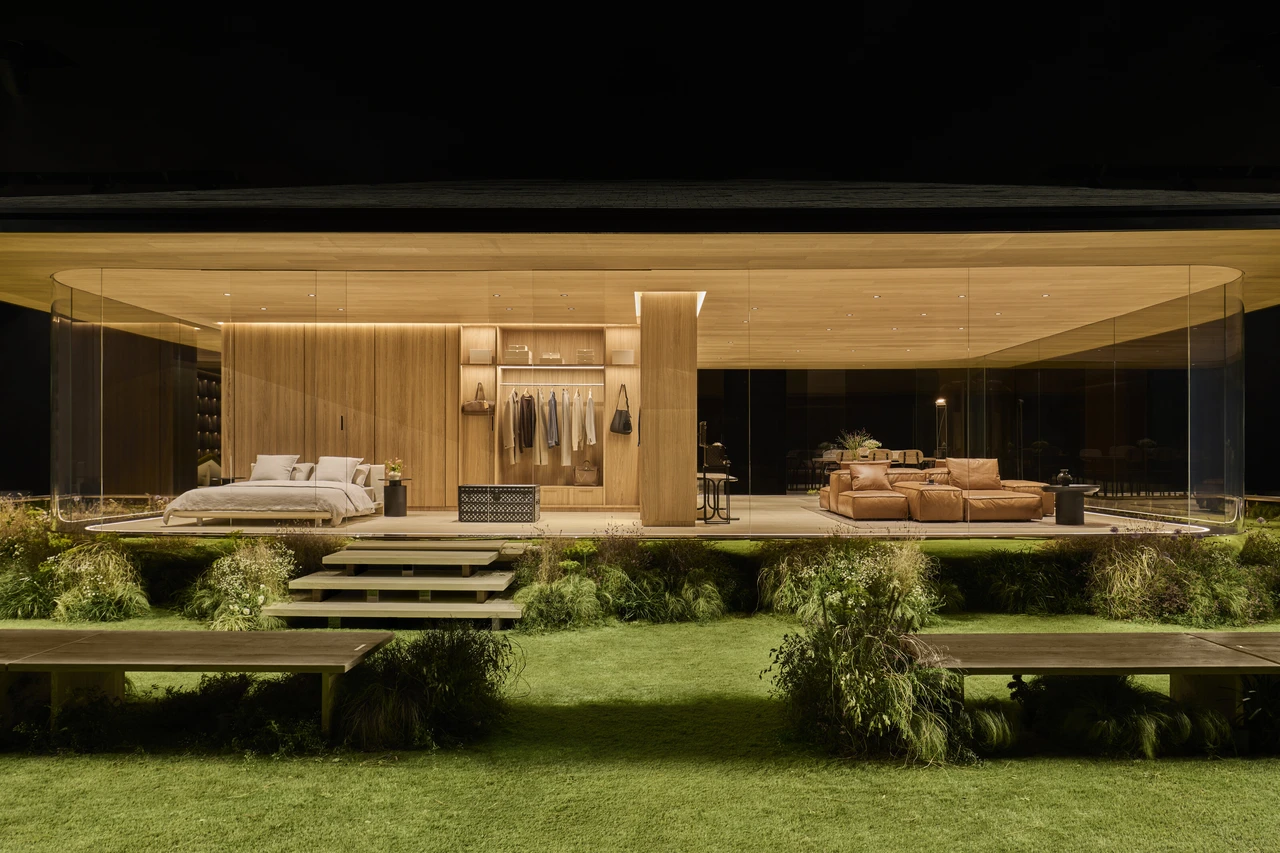
A glass house sits in a garden, transparent enough to feel like an idea, solid enough to feel like a promise. Around it, menswear moves, but not as a parade of outfits. More like a cast crossing a set where living is the plot. Louis Vuitton’s Men’s Fall–Winter 2026 show, under the direction of Pharrell Williams, asks a question that sounds simple until it becomes uncomfortable: if luxury is meant to last, should it look like a trend, or should it look like shelter?
DROPHAUS: WHEN A “FASHION HOUSE” STOPS BEING A METAPHOR
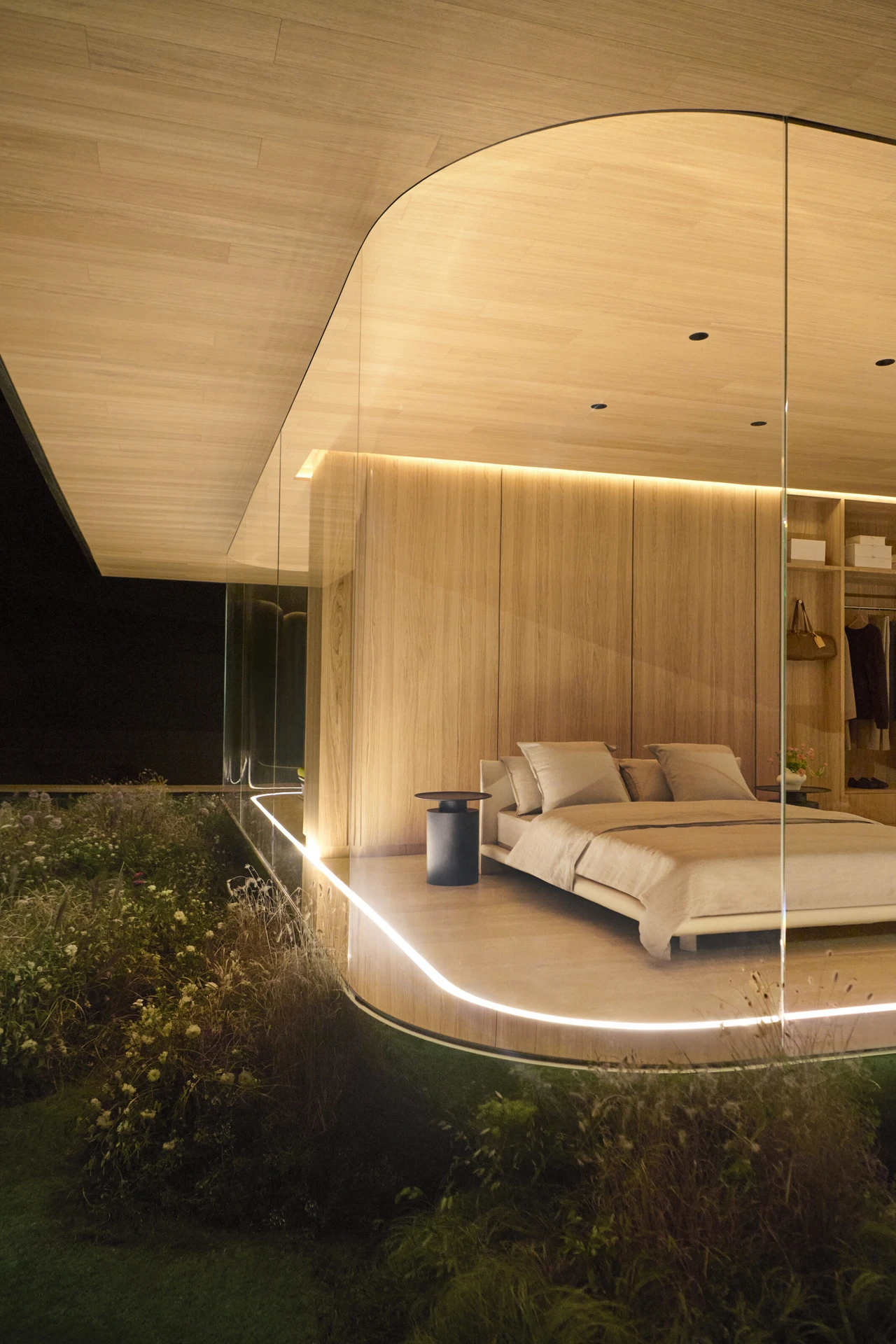
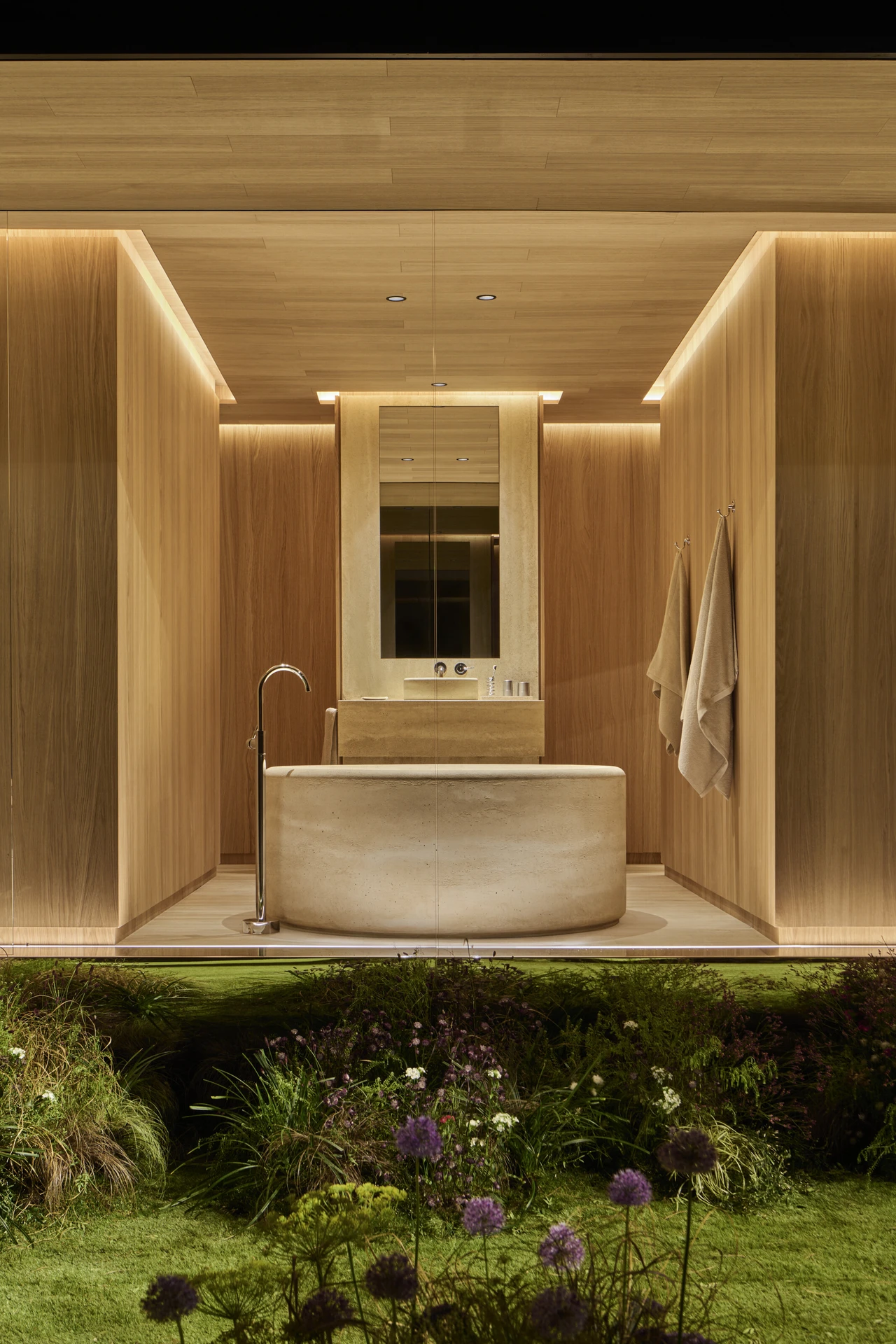
The scenography is called DROPHAUS: a prefabricated glass home conceived with the Japanese firm NOT A HOTEL and installed near the Fondation Louis Vuitton, within the Jardin d’Acclimatation.
That single gesture shifts the show’s grammar. Runways normally manufacture distance: the audience sits, the models pass, the clothes remain unreachable. A house does the opposite. A house implies entry, repetition, routine, a key in your pocket. A house is where clothing becomes behavior, not just appearance.
DROPHAUS as water-drop–inspired, with glass walls and lush vegetation, a structure that dissolves the line between interior and exterior. And that blurring matters, because it quietly reframes the collection as a system of thresholds: breathable versus protective, formal versus relaxed, office versus outdoors, spectacle versus utility.
The set also carries a cultural wink that’s easy to miss if you only watch the livestream for celebrity cameos. A prefabricated home in the middle of Paris, for a house whose heritage is travel trunks, suggests a new kind of itinerary. Not the voyage from city to city, but the voyage from object to environment. The brand’s craft is no longer only what you carry. It is what you inhabit.