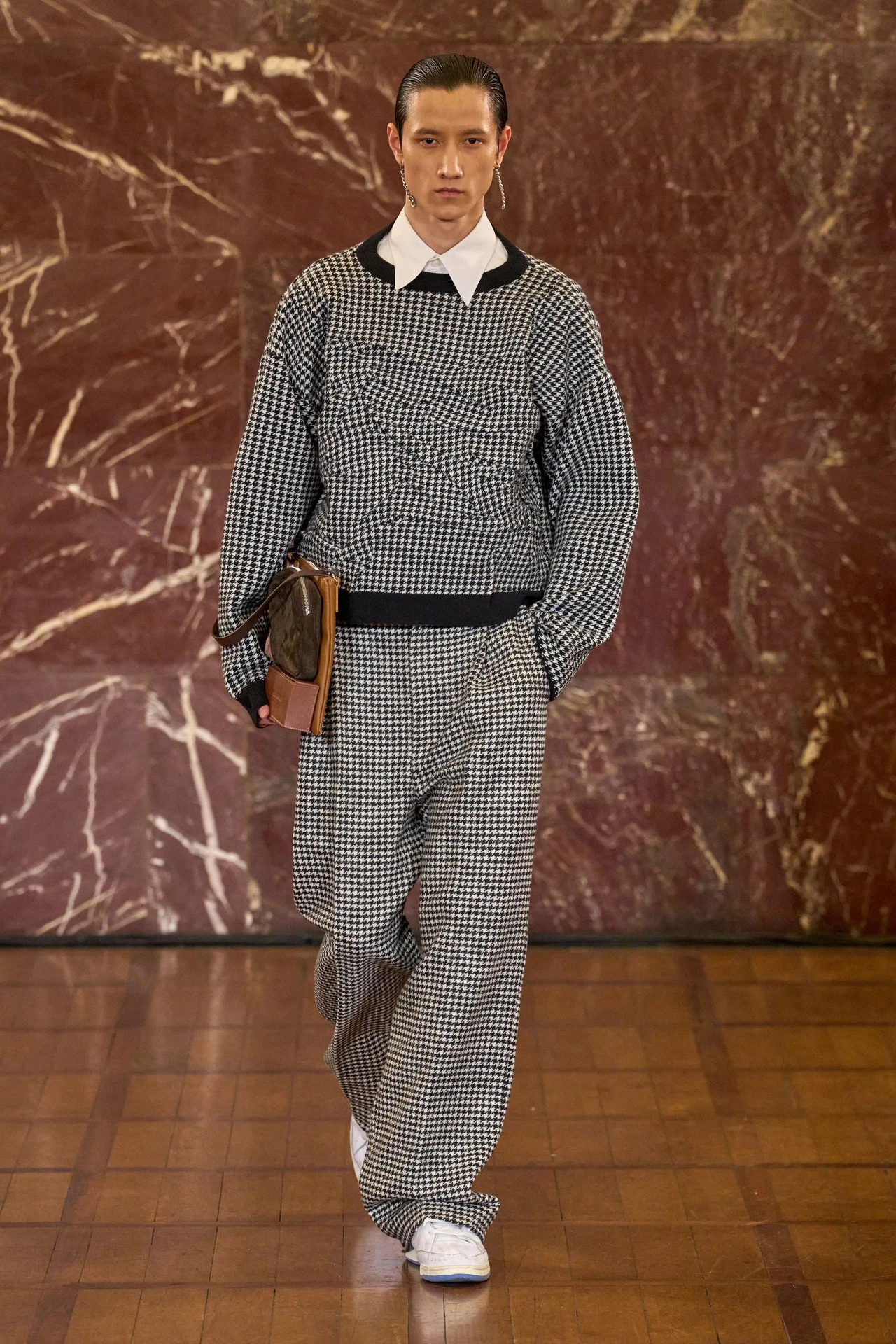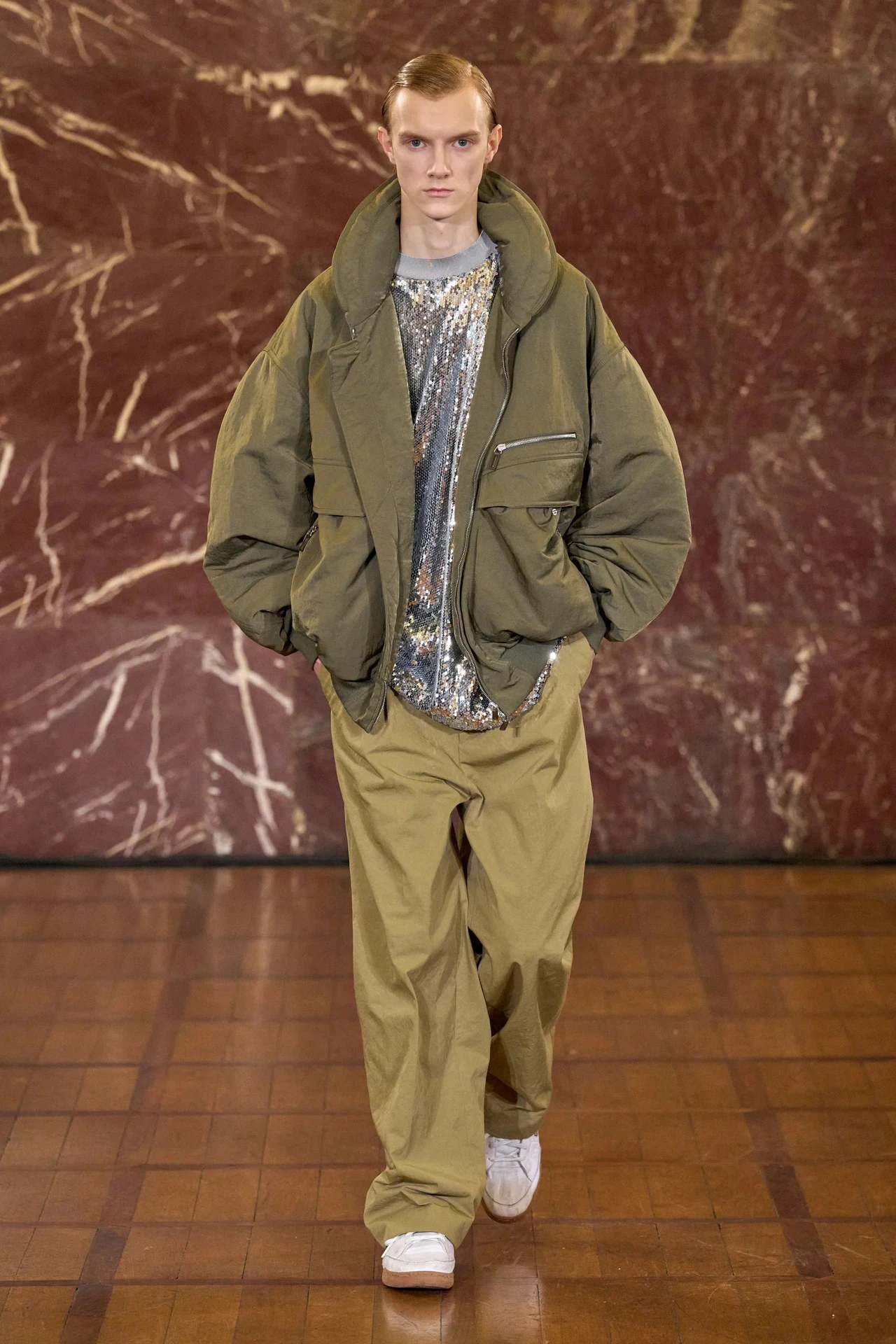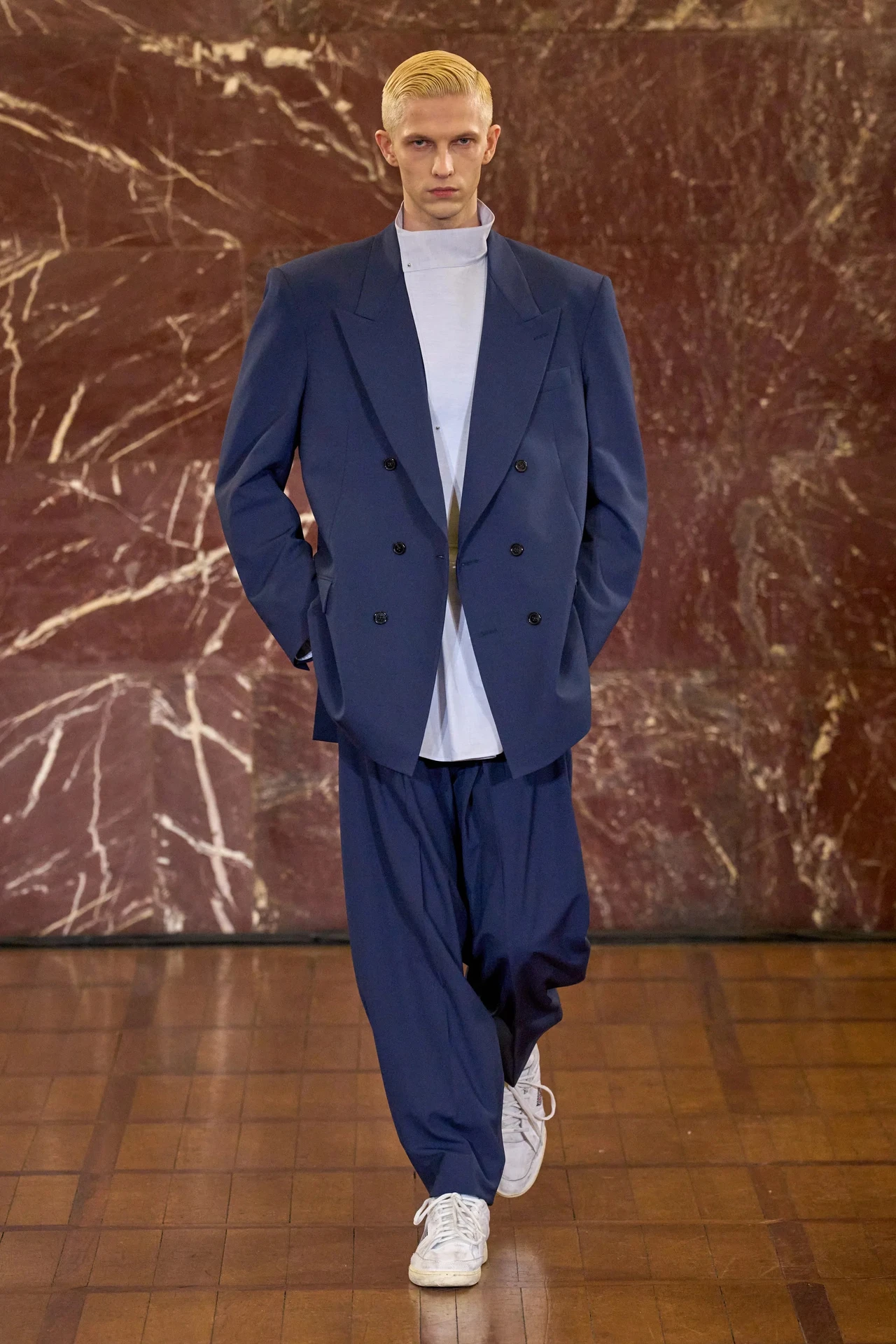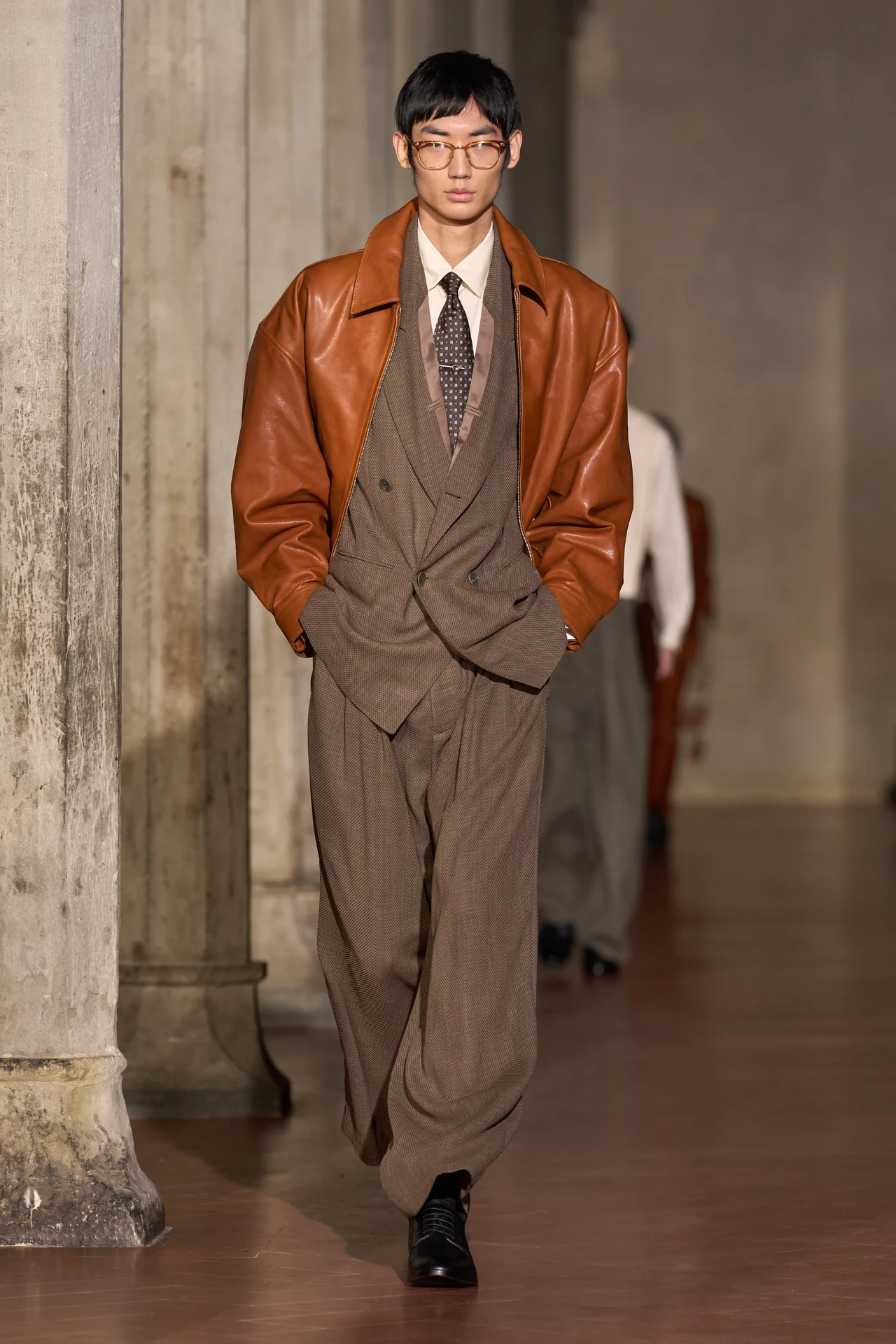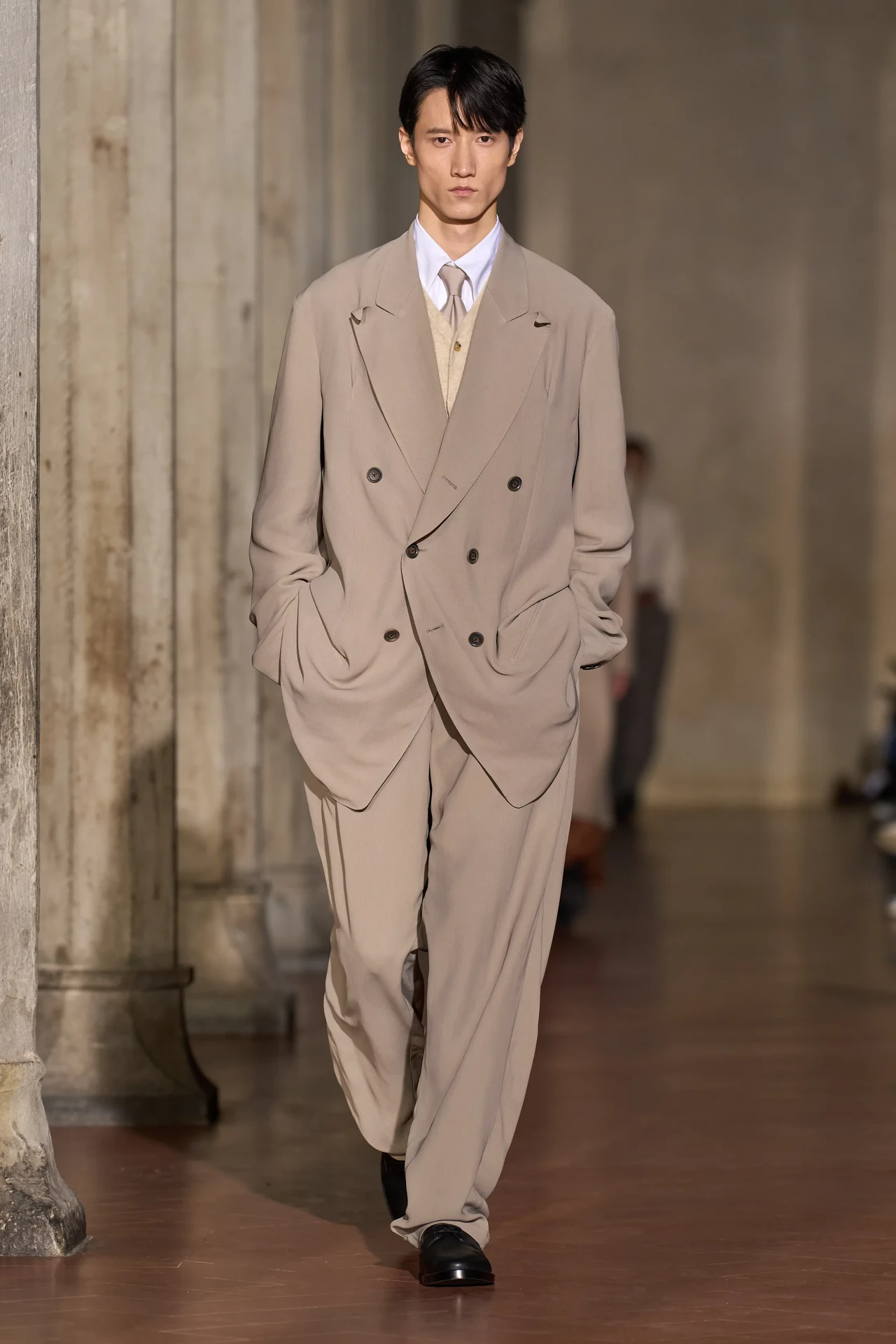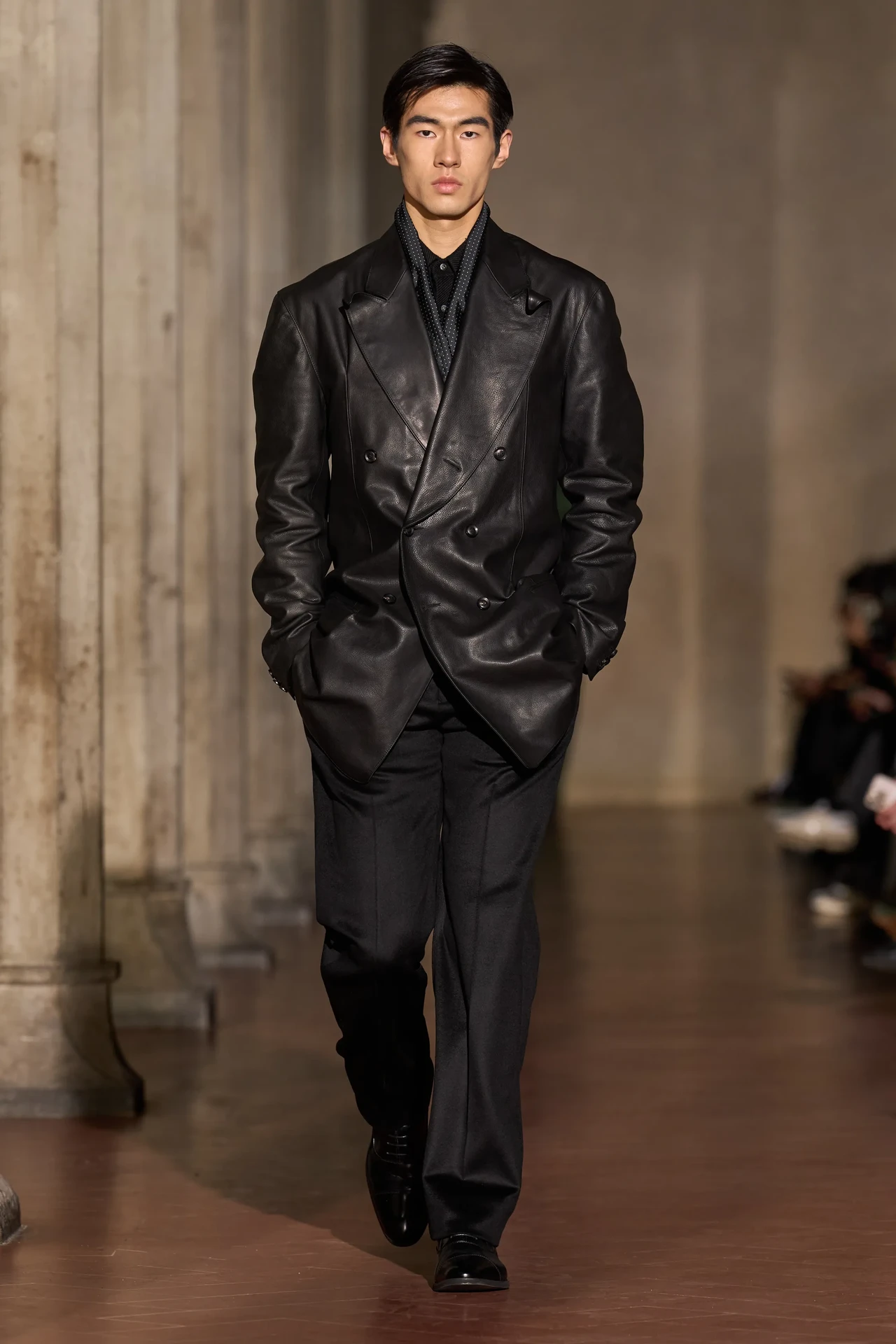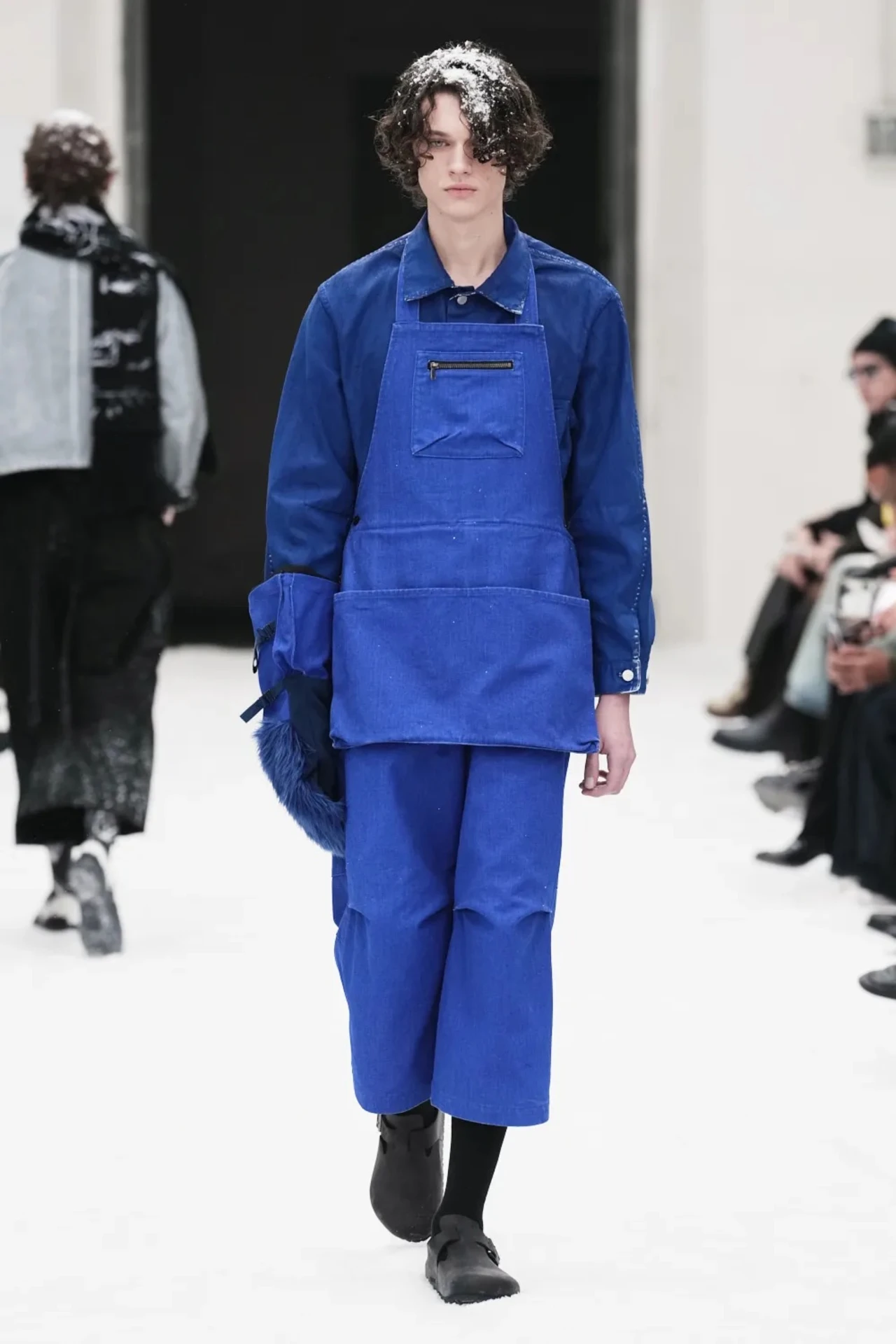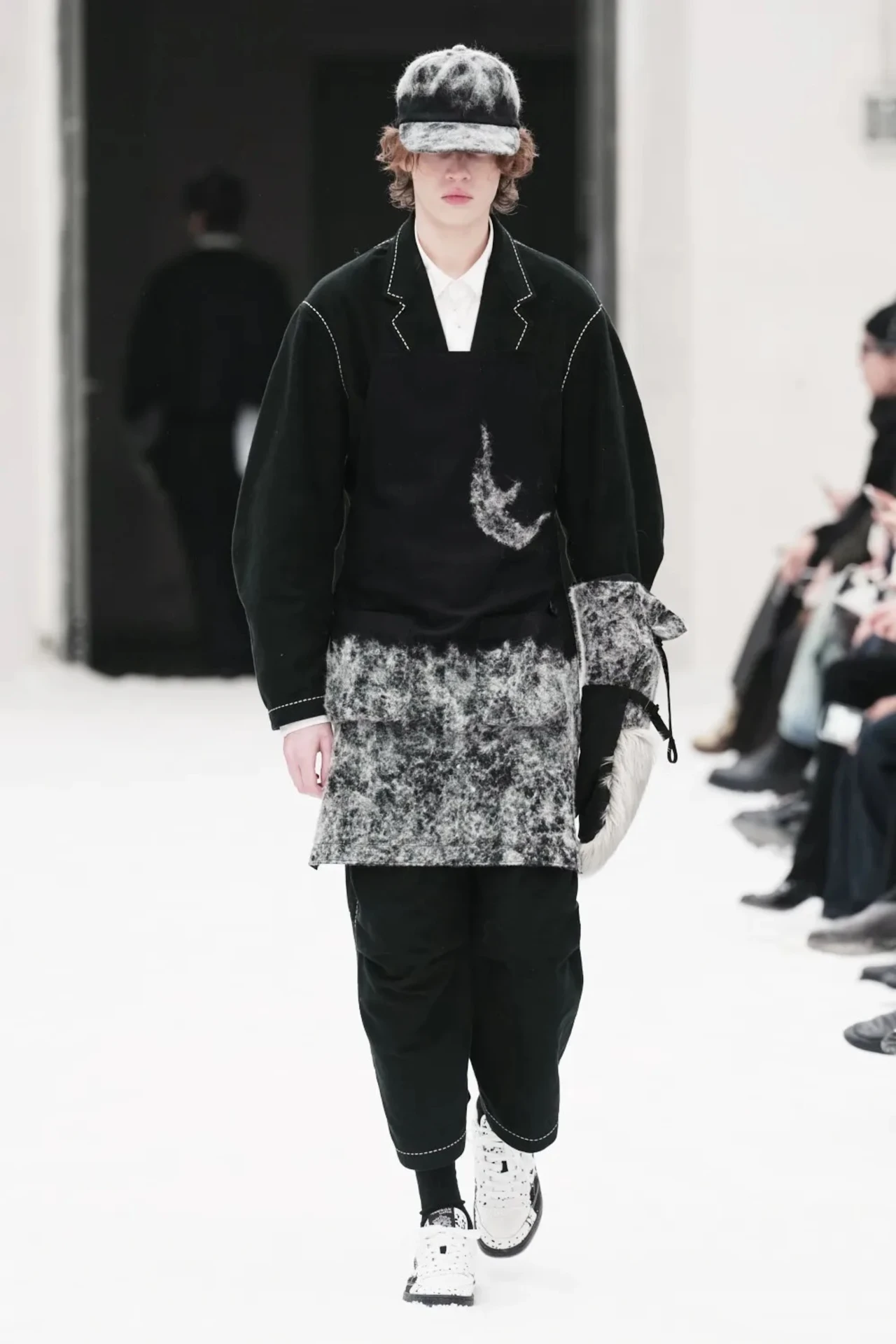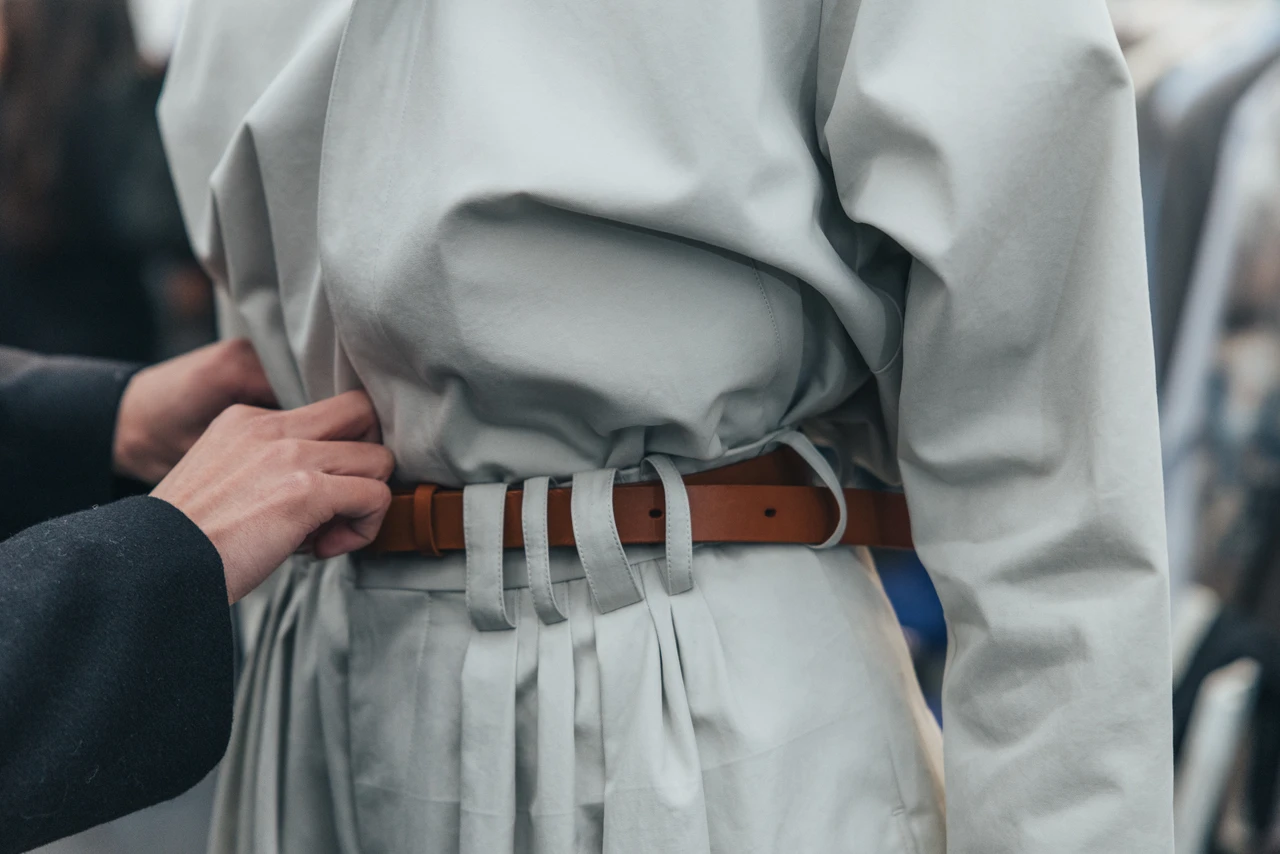
It happens in the space between a handshake and a hemline. In Florence, inside the Fortezza da Basso, the season’s first major menswear appointment doubles as a thermometer, measuring mood, money, and a certain kind of courage. Pitti Uomo 109 is running on an energy that feels almost stubborn. That matters, because the numbers behind Italian menswear aren’t dramatic but they are decisive.
THE YEAR THE NUMBERS WHISPER, AND LEATHER REFUSES TO
The backdrop is a year that begins under pressure. Confindustria Moda describes 2025 as marked by high uncertainty, geopolitical tensions, market volatility, and a renewed turn to protectionism—particularly from the United States—with no concrete signs of a rebound. The result isn’t a crash, but a continuation of the slowdown already visible in 2024. In this scenario, Italian menswear is expected to close 2025 at about €11.2 billion, down 2.1% year over year, still representing 19.3% of the turnover of Italy’s textile and apparel supply chain. Nearly every menswear subsegment is expected to decline, with one pointed exception that reads less like a footnote than a clue: leather apparel.
Zooming out, the curve tells a story of recovery, then recalibration. After the pandemic low of €8.17 billion in 2020, menswear climbed to a peak of €11.85 billion in 2023, then slipped to €11.43 billion in 2024, and to an estimated €11.18 billion in 2025. What changes now is the tone. Confindustria Moda’s table shows not only easing revenue, but also a slight retreat in the engine room: production value is projected at €4.63 billion in 2025, and final consumption at €5.84 billion, both modestly down versus 2024. It reads like a sector learning to breathe differently and asking itself an uncomfortable question: in an era of cautious consumers and cautious geopolitics, what does menswear still dare to promise, and to whom?