A doorbell rings. A stranger stands in the hallway, polite, with almost disarmingly calm. The request is simple, and impossible to take lightly: Can I come in? Can I use your bathroom? Can I borrow your soap?
In Suwa Shin ’s practice, the awkward pause is not collateral damage. It is the material. Suwa Shin (South Korea, 2000) studied theater and film before graduating with a BFA in Photography and Sociology, then beginning an MFA in Fine Art. Her work has been shown in local museums and international institutions, from Photo Elysée in Lausanne to the Seoul Photo Festival. It stays loyal to a single obsession: how strangers negotiate closeness, and what we reveal when we choose distance.
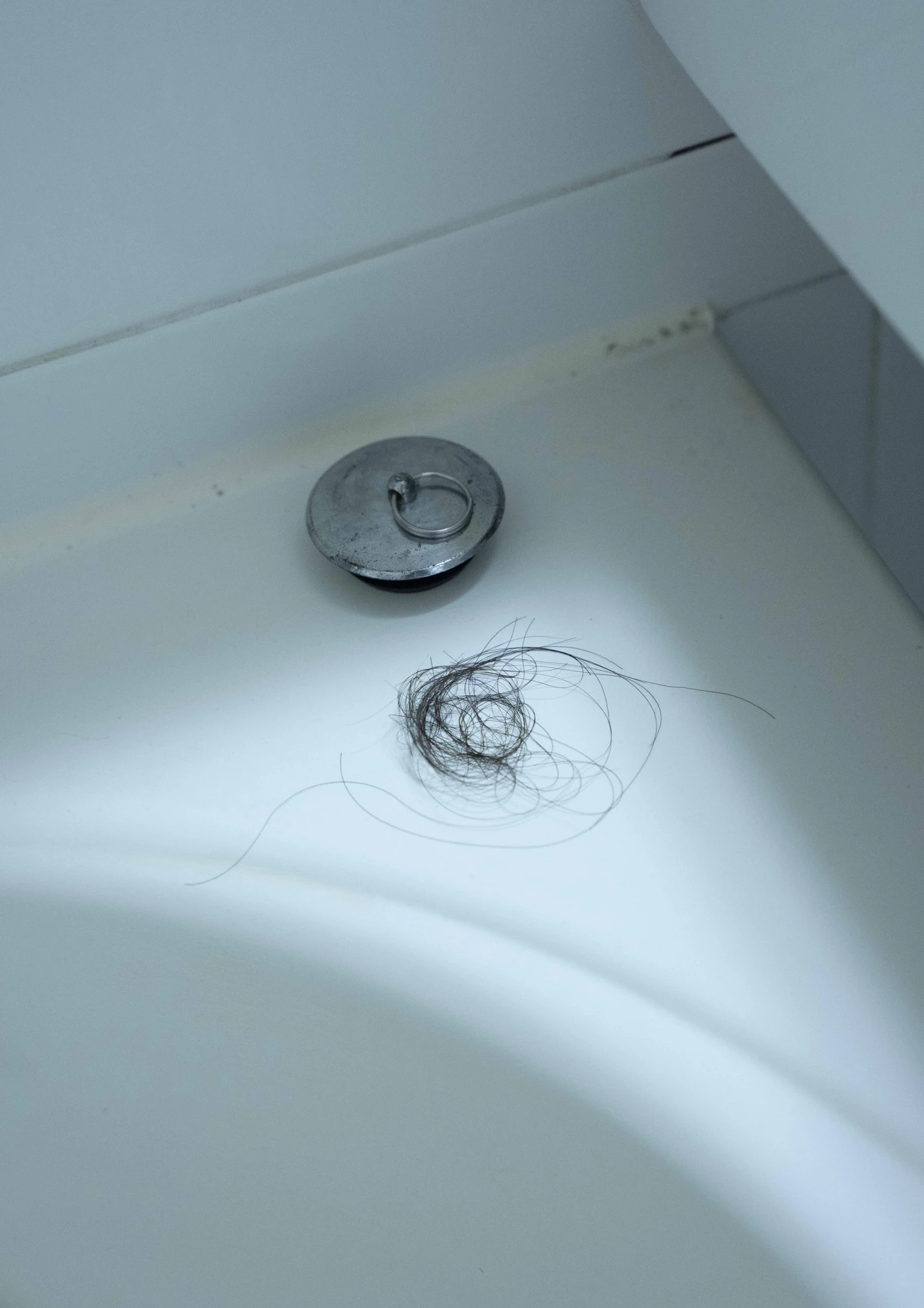
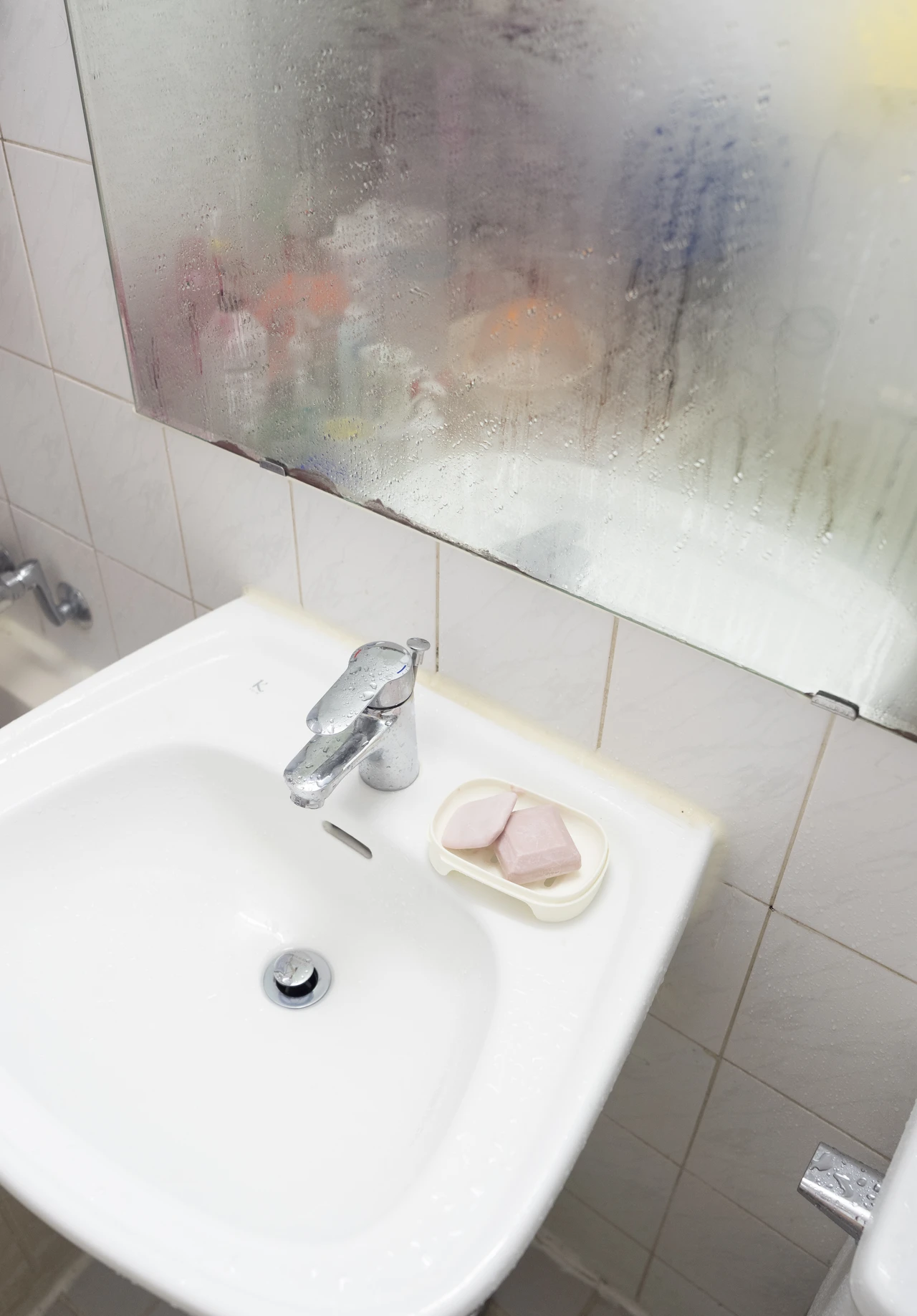
On the left. Second Shower, Pigment Print, 23x33inch. On the right. Seventh Shower, Pigment Print, 23x33inch
HOW HAVE YOUR STUDIES IN THEATRE, FILM, PHOTOGRAPHY, AND SOCIOLOGY SHAPED THE WAY YOU “STAGE” REALITY, NOT AS FICTION, BUT AS A SOCIAL SITUATION WITH REAL CONSEQUENCES?
I always wanted to become a presence moving inside small stories, so the stage felt like a natural beginning. Then I realized something unsettling: a stage can exist without any real engagement with lived reality. At that point, the stories unfolding there started to feel too small. My turn toward film and photography was a way of moving closer to reality. Sociology was an attempt to engage much larger plots and structures. In the end, I chose art, rather than becoming a problem-solving sociologist or a social activist, because art is the only field that lets me stay in real dialogue with people while still retaining authorship over the situation. I carry a small stage within the span of my outstretched arms and invite people to seep into it. Observing individuals who, often without realizing it, step onto this stage and begin to respond, or perform improvisationally, sometimes takes the form of a social experiment with real consequences. If I had to summarize my practice, I would call it a lens-based practice that records sociologically analyzable improvisational theater.
YOUR WORK OFTEN TURNS VULNERABILITY INTO A PRACTICAL TOOL FOR MEETING STRANGERS. WHERE DO YOU DRAW THE ETHICAL LINE BETWEEN OFFERING INTIMACY AND QUIETLY PRESSURING IT, AND HOW DO YOU PROTECT THE OTHER PERSON’S DIGNITY WHEN THE WORK DEPENDS ON THEIR RESPONSE?
Have you ever received a survey call where a mechanical voice lists dozens of questions, asking whom you support and whom you do not. Hanging up as soon as you hear “Hello…” and suddenly becoming someone who answers “strongly agree,” both are counted as valid data. I often think of my work as a form of social survey. I observe whether my proposal is received as an offer of intimacy or felt as a form of pressure. The silence of hesitation between acceptance and refusal, the brief glances that move between indifference and interest, already generate narratives without a single spoken word. Because of this, my work can function without extracting personal stories from someone’s private life. Of course, I am always willing to listen. But even for an artist, I am still only a stranger. Deciding which stories one might share with a woman they have just met, stories they will not later regret revealing, takes more time than we often assume. I want to respect that time, so I tend to avoid personal questions during a first encounter.
IN PLANT A KISS (2025), THE DESIRE FOR A CHILD BECOMES AN EXCHANGE OF SEEDS, HELD MOUTH TO MOUTH FOR ABOUT 266 SECONDS. WHAT DOES THIS SUBSTITUTION REVEAL ABOUT CONTEMPORARY INTIMACY, ESPECIALLY WHEN LOVE MUST NEGOTIATE ECONOMICS, BODIES, AND TIMING?
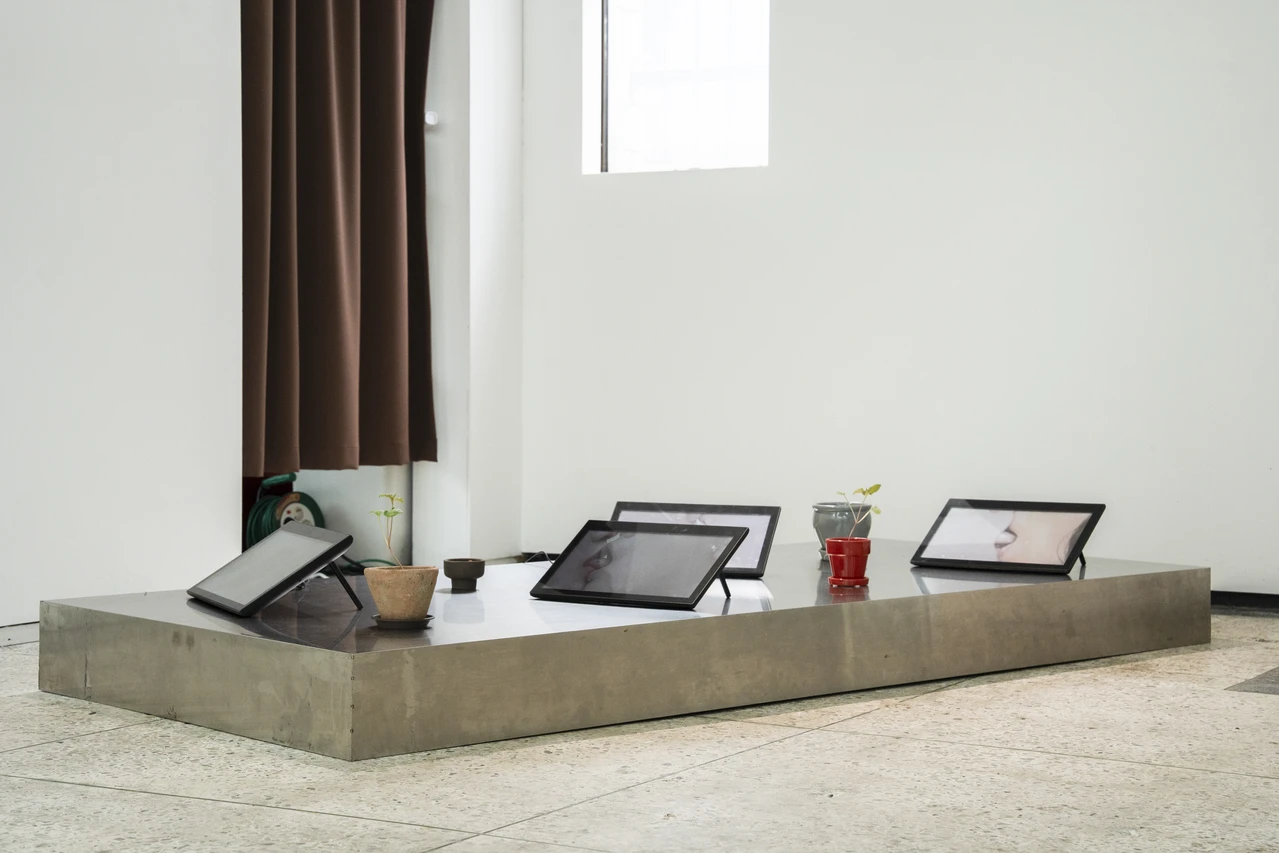
Living with an immune disorder since childhood, the COVID-19 pandemic brought me to the threshold of death through physical contact. My body became one that struggled to touch another, and even more so to carry new life. Then I met someone I could not help but love. To avoid passing a cold to me, he would walk at a distance. Yet I noticed he was still stepping forward with the same foot as mine, at the same rhythm, and I decided to accept the risk of getting sick. A kiss came to feel like more than an act of love. It resembled a vow made at the edge of life and death, a willingness to risk all forms of infection transmitted through saliva. Even if there is someone I love enough to risk infection for, my body was not strong enough to endure the approximately 266 days of pregnancy, nor did I have the financial stability to provide a secure environment for a child. I could not choose parenthood in the present. Around me were many couples in similar situations, if not marked by illness, then by other constraints. For LGBTQ+ couples in particular, having a child in South Korea is almost impossible. In this context, contemporary love becomes entangled with patriarchal conservatism, capitalism, and post pandemic regimes of contact control. Plant a Kiss emerges from this entanglement. When desire for a child must be postponed or denied, intimacy is redirected into another form of care: nurturing a seed. Holding seeds mouth to mouth for 266 seconds becomes a substitute gesture, one that reveals how love today is continuously negotiated through bodies, economies, and timing, often allowing us to cultivate only what can survive within those limits.
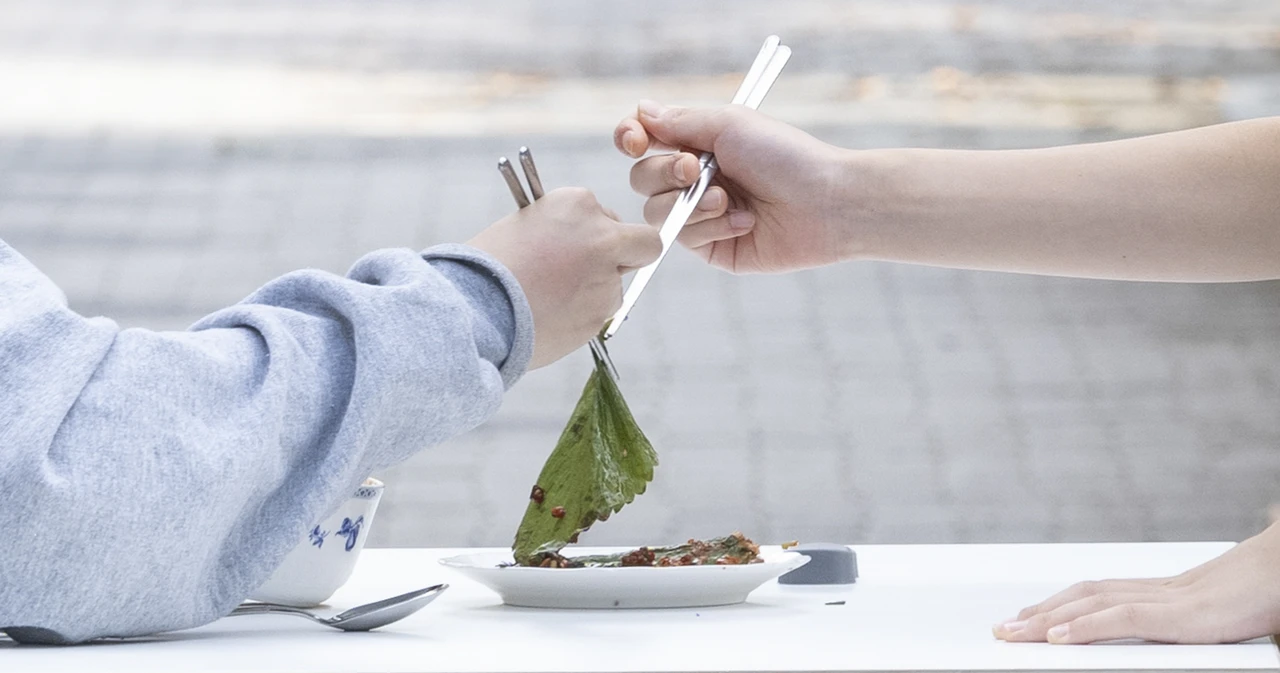
THE “PERILLA LEAF DEBATE” IS OFTEN TREATED AS POP CULTURE, ALMOST A JOKE, YET YOU APPROACH IT AS A SERIOUS GRAMMAR OF CLOSENESS. WHY DO YOU THINK A MICRO-GESTURE CAN BECOME A SOCIAL TEST WITH REAL EMOTIONAL STAKES?
The “perilla leaf debate” mixes the degree of kindness one extends to a stranger with the emotional expectations embedded in a romantic relationship. It is juvenile, confusing, and precisely for that reason, compelling. Seemingly trivial acts, peeling a perilla leaf for someone else, offering the passenger seat, become indicators through which we measure how a person defines and grades intimacy. What interested me was imagining this indicator being used almost like a sociological research method. The artistic question, “How many neighbors in a village would peel my perilla leaf,” can be translated into a research question such as, “How many samples within a sample group will perform a behavior that aligns with a given hypothesis.” In this sense, a micro gesture becomes a social test because it condenses unspoken rules, expectations, and emotional risks into a single everyday action, one that carries real stakes precisely because it is never formally agreed upon.
IN BE NU (累) / SOAP (2024), YOU RANG 500 DOORBELLS, RECEIVED 100 REFUSALS, AND TOOK NINE SHOWERS, USING SOMEONE ELSE’S SOAP AND TOWEL. WHAT DID REFUSAL TEACH YOU ABOUT TRUST, AND HOW DID YOU KEEP “NO” FROM BECOMING EITHER A STATISTIC OR A WOUND THE WORK EXPLOITS?
When people around me heard I was going door-to-door asking to shower in my neighbors’ homes, they were deeply concerned. “What if you meet someone dangerous,” was a common reaction. I realized I did not fully share this fear, because I held an inexplicable sense of trust toward the village. At first, I wanted to build intimacy on the basis of that trust. As the work unfolded, I came to understand that this sense of trust was not maintained through closeness, but through a calibrated indifference and distance, one that allows people to protect themselves without harming an outsider. Then my aim shifted. Rather than producing intimacy, I wanted to fully experience the village’s existing sense of safety. This shaped how I treated refusal. I chose not to calculate refusals as indicators of success or failure, nor to interpret them emotionally. Instead, I preserved the notes of refusal exactly as recorded, unaltered, unclassified, without hierarchy, and installed them at the same height and equal spacing, regardless of sequence. I wanted each “no” to remain not as a case study or a wound, but as an expression of how each neighbor maintains their boundary. In Be Nu (累), refusal was not the absence of trust. It was the moment when the conditions of trust became visible. The fact that someone could say no, and that this no was respected and not followed by further demand, was the form of trust I ultimately learned through the work.
IN YOUR WRITING, SCENT BECOMES A SLOW FORM OF KNOWLEDGE, A SOCIAL MEMORY THAT CAN’T BE CAPTURED THE WAY AN IMAGE CAN. HOW DO YOU TRANSLATE SMELL, HEAT, HUMIDITY, AND EMBARRASSMENT INTO PHOTOGRAPHS AND PIGMENT PRINTS WITHOUT FLATTENING THE LIVED MOMENT?
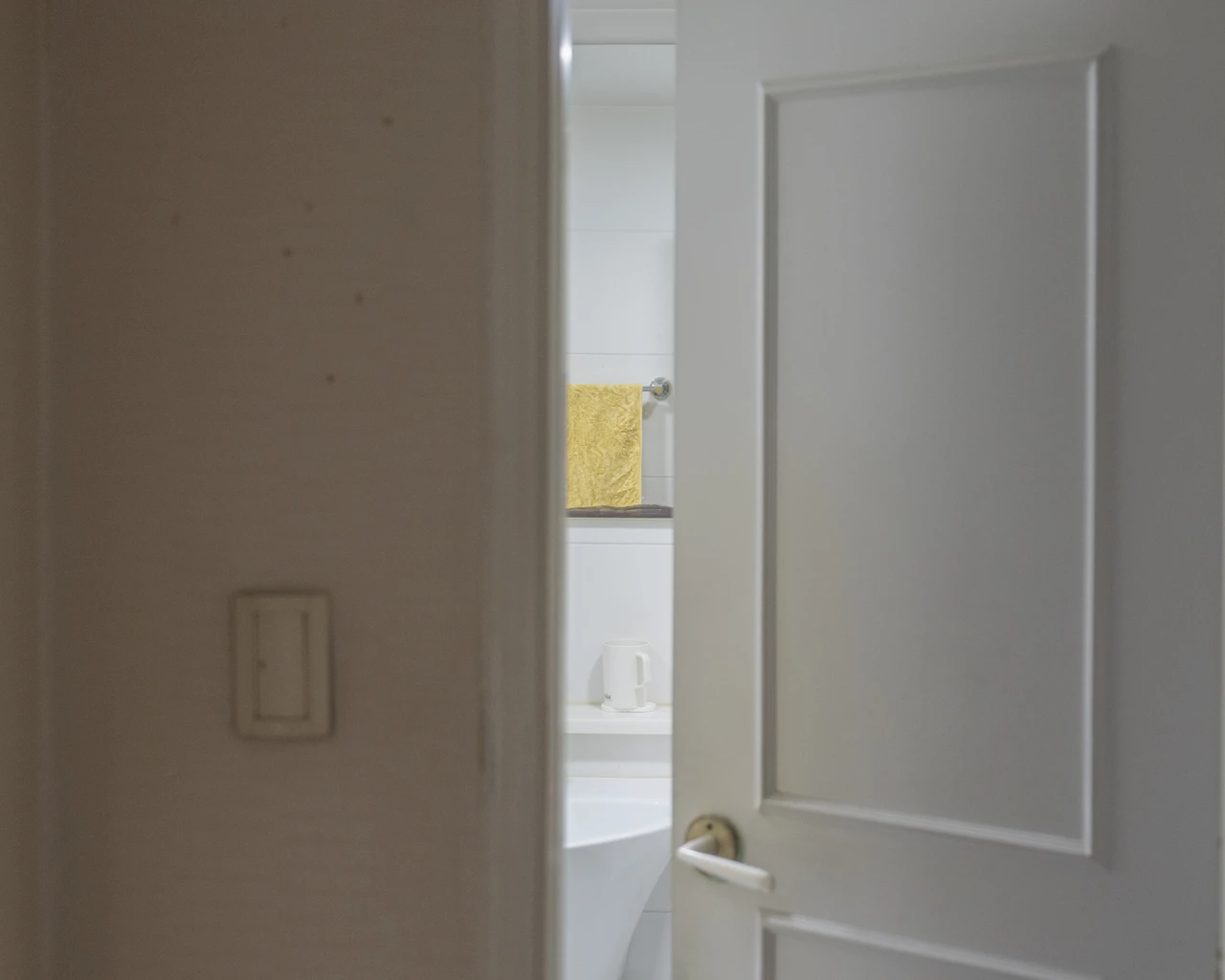
Be Nu (累) is structured around four groups: photographs of moving through apartment buildings, images of encounters with neighbors, photographs of bathrooms inside neighbors’ homes, and notes of refusal. Through the size, height, and spacing of the prints, I try to convey the rhythm of the three -month working period, letting the process unfold visually in as unembellished and immediate a way as possible. Rather than attempting to directly represent scent, heat, humidity, or embarrassment, I translate these sensations through scale and bodily correspondence. Bars of soap are printed close to their actual size. Photographs of touching a neighbor’s doorknob are installed at the height of a hand reaching out. These decisions anchor the viewer’s body in positions that echo my own physical experience during the work. Because the project is fundamentally documentary, I avoid overly stylized or design-driven installation strategies. I prefer arrangements that remain ordinary and legible, allowing the sensory weight of the lived moment to surface without flattening it into an image alone. What cannot be photographed, —smell, warmth, moisture, embarrassment— lingers not inside the frame, but in the viewer’s embodied encounter with the work.
YOUR WORK HAS MOVED FROM SOUTH KOREA TO SWITZERLAND, INCLUDING GEN Z. SHAPING A NEW GAZE AT PHOTO ELYSÉE, AND YOU’RE HEADING TO THE SEOUL PHOTO FESTIVAL AT THE PHOTOGRAPHY SEOUL MUSEUM OF ART. HOW DOES AN INSTITUTIONAL FRAME CHANGE THE READING OF WORKS THAT BEGIN AS FRAGILE ENCOUNTERS, AND WHAT DO YOU WANT A GLOBAL AUDIENCE TO MISUNDERSTAND LESS ABOUT “RELATING” AS AN ARTISTIC ACT?
In South Korea, the dominant form of housing is the apartment, where people live in close physical proximity, separated by little more than a door. Yet contemporary individualistic lifestyles have produced an atmosphere where even basic greetings between neighbors are rare. When I began conceiving this project, the COVID 19 pandemic and a series of violent incidents targeting neighbors had intensified mutual suspicion and fear. It was within this climate that I decided to knock on my neighbors’ doors. The proposal was first supported by a local cultural foundation, realized through relationships formed within a specific neighborhood, and initially exhibited at a local museum. As this locally grounded relational practice moved into institutional spaces, the work began to be read differently. It no longer functioned primarily as a set of encounters with individual neighbors, but as a case study of contemporary Korean housing structures, social anxiety, and emotional distance. In international institutions and large-scale festivals especially, where audiences do not fully share the immediate context, the project was often interpreted less as personal experience and more as a socially translated symptom, or a generational sensibility framed by the institution. This shift expanded the meaning of the work, and revealed a risk: fixing what I valued most, the fragile quality of encounter, into stable discourse. In response, I keep the installation and accompanying texts deliberately rough and open, allowing the work to remain unresolved rather than delivering a closed message. For me, the institution is a structure that protects and amplifies the work, while also creating a productive tension around how its vulnerability can be preserved. Finally, what I hope a global audience will be less likely to misunderstand about “relating” as an artistic act is the assumption that relationships must be deep, intimate, or enduring to be meaningful. I consider fleeting encounters, brief exchanges, even the quiet co-presence of sitting in the same café, as forms of relation. It is not about forcing closeness. It comes from something simpler. I am drawn to romance and chance, and I enjoy paying careful attention to small, easily overlooked moments.